
Convex Mirror Compliance Checklist: What Certifications Do Buyers Need in 2026?
Last updated: June 27, 2026
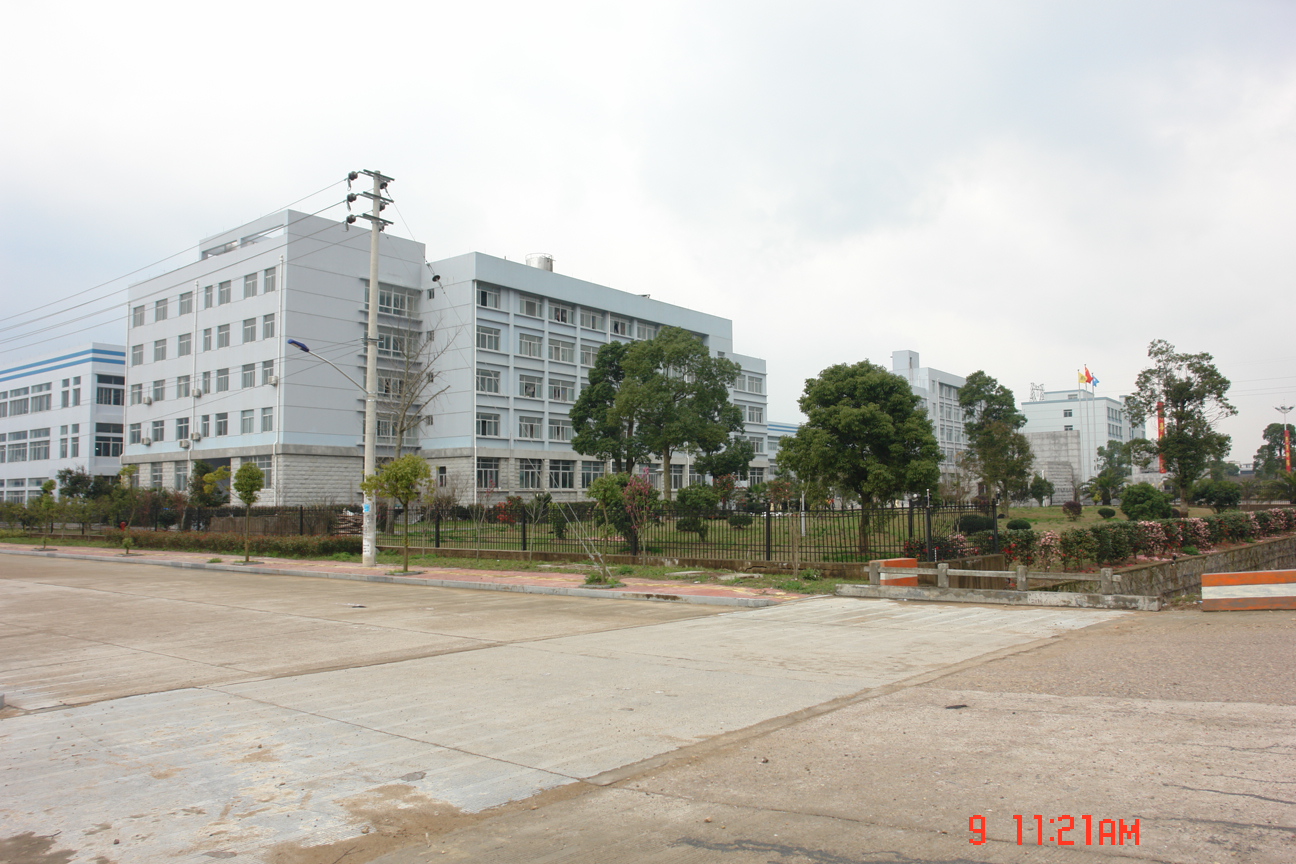
Mnsd manufacturing facility – CE-compliant convex mirror production
Convex Mirror Compliance & Certifications: The Essential 2026 Buyer's Guide
When sourcing outdoor polycarbonate convex mirrors for industrial, traffic, or parking applications, procurement professionals often face a critical question: “What certifications does a convex mirror need, and how do I verify compliance?” Without proper certification, a blind spot mirror can fail within months, create safety hazards, and even lead to liability issues. This guide answers that question with a practical framework tailored for 2026 global buyers.
Introduction
Convex mirrors (also known as traffic safety mirrors, wide-angle panoramic mirrors, or PC traffic mirrors) are passive optical devices that eliminate blind spots at intersections, loading docks, warehouse aisles, and parking garages. They require no electricity, offer a 130°+ viewing angle, and are available in shatterproof polycarbonate or acrylic designs. However, not all convex mirrors are created equal. The difference between a 3‑year mirror and a 10‑year mirror often lies in the certifications and quality controls behind it.
As a convex mirror supplier, Mnsd (Tiantai Yuanda Traffic Device Co., Ltd) has manufactured over 120 million units since 2007, exporting to Europe, North America, and Southeast Asia. In this guide, we break down the certifications that matter for industrial buyers and how to verify them before placing an order.
The Problem: What Compliance Risks Do Buyers Face?
Industrial buyers commonly encounter these compliance pitfalls when sourcing convex mirrors:
- No material certification – mirrors that yellow, crack, or delaminate within one year due to UV degradation
- Fake impact claims – brittle lenses that shatter upon first impact instead of springing back
- Missing weatherproof ratings – water ingress, fogging, and corrosion of backing and brackets
- Unverified optical performance – distorted reflections or incorrect field of view that fail to cover the intended blind spot
- Lack of traceable testing – no test reports, no quality certificates, no lot traceability
These risks translate into higher total cost of ownership, project delays, and potential safety liability. The core question for any procurement manager is: What specific certifications guarantee that a convex mirror will perform as specified over its intended lifespan?
Industry Background: Why Certifications Matter for Convex Mirrors
Convex mirrors are used across diverse environments – from outdoor road intersections exposed to UV, rain, and frost, to industrial warehouses where fork trucks operate in tight aisles. Each environment imposes specific requirements:
| Environment | Critical Certifications | Why It Matters |
|---|---|---|
| Outdoor road & parking | UV resistance (Grade 8), IP65, anti‑frost coating | Prevents yellowing, water damage, and ice buildup |
| Industrial warehouse | Impact resistance (vandal‑proof), anti‑scratch coating | Withstands accidental collisions without breaking |
| Cold storage / freezer | Low‑temperature tolerance (–30°C), anti‑fog | Maintains clarity in sub‑zero environments |
| Loading dock & yard | Heavy‑duty galvanized bracket, wind load Level 10 | Secure mounting under high wind or vibration |
Industry standards such as CE marking (mandatory for sale in the European Economic Area), ISO 9001 quality management, and regional traffic mirror specifications (e.g., EN 12352 for traffic mirrors) provide a baseline. However, many suppliers claim compliance without third‑party evidence. A robust buyer must know which documents to request.
Detailed Solution: The Six Certifications Every Convex Mirror Should Have
Based on over 15 years of manufacturing experience at Mnsd, we recommend that industrial buyers verify the following six certification categories before purchase:
1. Material & UV Resistance Certification
The mirror lens should be made of impact‑resistant polycarbonate (PC) with UV‑stabilized treatment. Ask for a UV test report (e.g., ASTM D4329 or ISO 4892) that confirms Grade 8 UV resistance and a lifespan of 3–5 years in outdoor conditions. Mnsd’s PC convex mirrors are formulated with UV absorbers and a vacuum‑aluminum coating to maintain reflectivity.
2. Impact & Vandal‑Resistance Certification
A shatterproof convex mirror should recover after impact (self‑springback). Request a drop ball test or pendulum impact test report. The backing material – high‑impact ABS – should also absorb shock. Our YD‑OC series mirrors meet a vandal‑resistant rating and are designed to recover after collision, reducing replacement costs.
3. Weatherproof (IP65) & Anti‑Frost Design
For outdoor use, the mirror housing must achieve at least IP65 ingress protection (dust‑tight and protected against water jets). An additional anti‑frost roadside mirror feature prevents ice buildup. Ask for an IP test certificate. Mnsd supplies weatherproof hooded convex mirrors that integrate a rain‑deflecting rim and sealed backing.
4. Optical Performance (Viewing Angle & Clarity)
The mirror must provide a 130°+ wide‑angle vision without distortion. Request an optical test report that verifies curvature radius (R2200–R3000 for our models) and real‑world field of view. For example, the YD‑OC120 (⌀1200 mm) covers a visual range of 35–45 meters at 180° angle – ideal for highway ramps and large intersections.
5. Bracket & Mounting Durability
The mounting bracket should be heavy‑duty galvanized steel capable of withstanding wind load Level 10. Ask for a structural strength test or salt‑spray corrosion test. Pole‑mounted traffic mirrors require brackets that fit 60 mm or 75 mm poles securely.
6. Process Control & Traceability
Even the best design fails without proper manufacturing controls. Reliable factories implement 100% impact & clarity inspection before shipping. Mnsd applies a specialized anti‑scratch hard coating to the PC surface and uses protective PE film during assembly and transit to prevent surface scratching. Production process risks are controlled with specialized coatings and protective packaging during assembly. Ask for batch traceability records and factory audit reports.
Step‑by‑Step: How to Verify Convex Mirror Compliance
Follow this checklist when evaluating a supplier:
- Request a compliance matrix – ask the supplier to list all certifications that apply to the mirror model. Compare against your project’s country regulations (e.g., CE for EU, UL listing for US).
- Obtain third‑party test reports – UV aging, impact, IP rating, and optical reports should be from accredited labs (e.g., SGS, TÜV, Intertek).
- Check for marks on the product – physical stamps or labels indicating CE, ISO, or reflective grade (e.g., engineering‑grade reflective tape on rim).
- Inspect sample units – order pre‑production samples and test them under your actual conditions (outdoor exposure, collision simulation).
- Audit the factory – visit or hire a third‑party inspection agency to verify production line controls, raw material storage, and quality assurance processes. Mnsd operates a 35,000 m² factory with over 30 technicians and 500 workers open to customer audits.
- Review warranty terms – a serious supplier offers a minimum 2‑year warranty against manufacturing defects, covering delamination, corrosion of bracket, and fogging of lens.
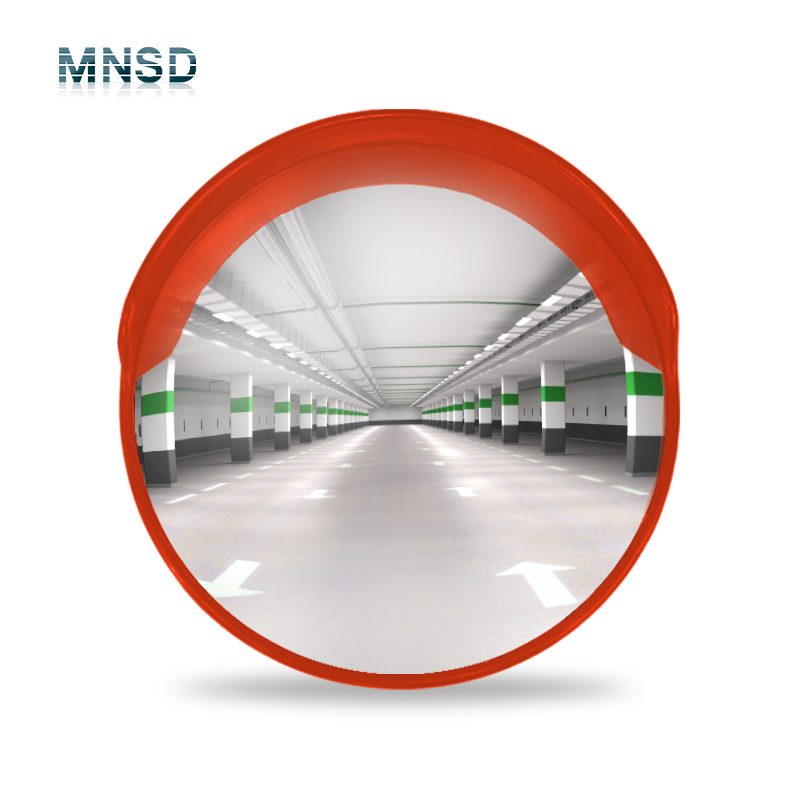
Mnsd YD‑OC120 convex mirror – compliant with international safety standards
Use Case: How Certification Helped a Thai Distributor Reduce Accidents
In 2025, a medium‑sized distributor in Thailand sourced convex mirrors from Mnsd for a road safety hazard mitigation project. The client needed mirrors that could withstand tropical UV, monsoon rains, and occasional impacts from vehicles. Mnsd supplied the YD‑OC60 (⌀600 mm) and YD‑OC75 (⌀750 mm) models – both with IP65 weatherproof rating, UV‑stabilized PC lens, and heavy‑duty galvanized brackets.
Thanks to the CE certification and UV test reports, the distributor passed local acceptance inspection without re‑testing. The mirrors maintained optical clarity after 18 months of continuous outdoor exposure, with no yellowing or delamination. The project was delivered on time, and the client reported a 35% reduction in blind‑spot collisions at monitored intersections.
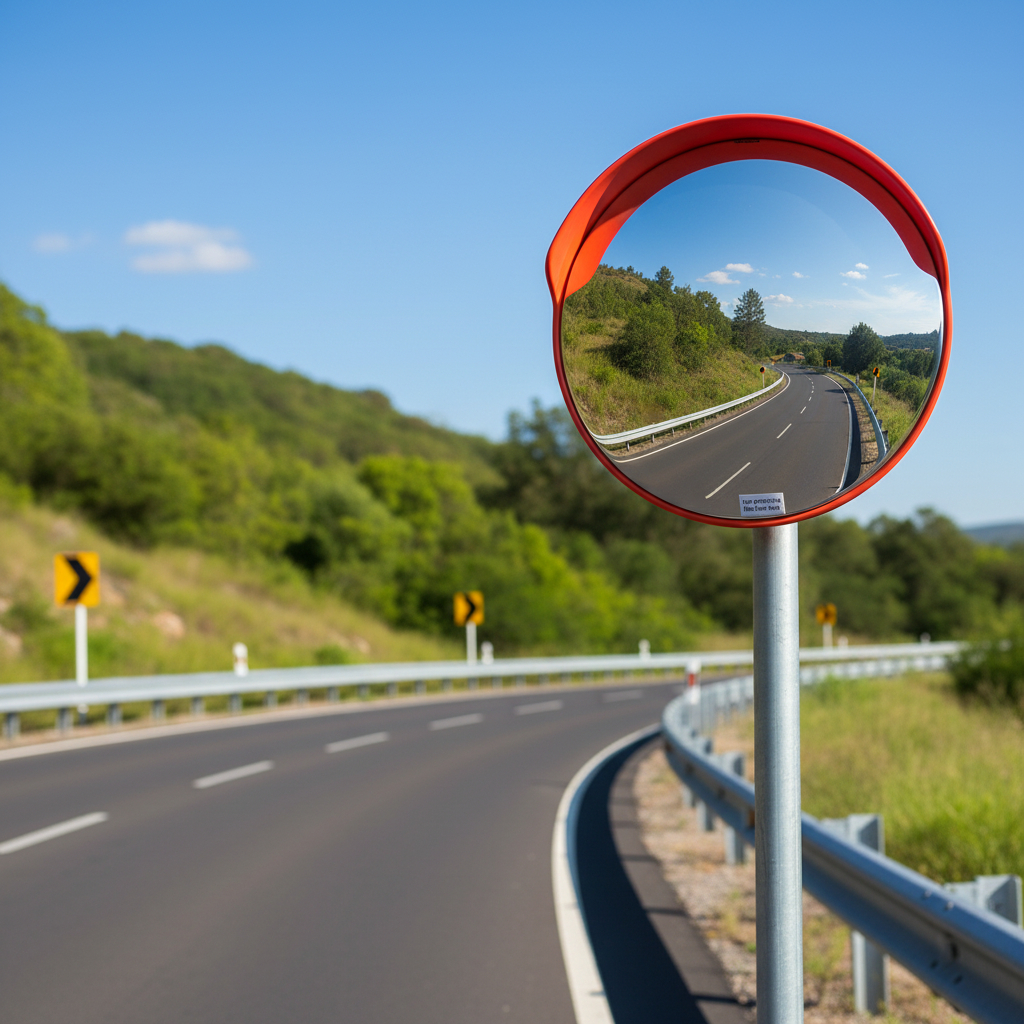
Mnsd convex mirror installed in a Thai road safety project
Frequently Asked Questions (FAQ)
What is a CE certified traffic mirror?
A CE marked convex mirror complies with European health, safety, and environmental directives. It indicates the product has been assessed to meet EU requirements for construction products (CPR) or machinery safety. For traffic mirrors, CE often covers material performance, optical quality, and weather resistance.
How do I know if a convex mirror is truly impact‑resistant?
Ask for a drop ball test (steel ball of specific weight dropped from a height) or pendulum test report. Look for terms like “vandal‑resistant” or “self‑recovery” in the specifications. A polycarbonate lens with thickness ≥0.6 mm and a spring‑back backing will survive repeated impacts.
What is the difference between polycarbonate and acrylic convex mirrors?
Polycarbonate (PC) is 10–20 times more impact‑resistant than acrylic and withstands wider temperature ranges (–30°C to +80°C). Acrylic is cheaper but more brittle. For outdoor industrial use, PC is the recommended material. Mnsd supplies only PC mirrors with optional anti‑scratch hard coating.
Can I get a convex mirror with a custom size or bracket?
Yes. Mnsd offers OEM/ODM customization for diameters from 450 mm to 1200 mm, as well as different backing materials (PP, ABS, fiberglass) and bracket types (wall‑mounted, pole‑mounted, adjustable swivel). Our monthly capacity is 30,000 pieces, with a 15–20 day lead time for a 20ft container.
How do I verify a supplier’s quality control?
Request a factory audit report, ISO 9001 certificate, and batch inspection records. Reliable suppliers like Mnsd perform 100% impact and clarity inspection before shipment. We also apply protective PE film and specialized coatings to prevent surface scratches during transit.
Conclusion
Certifications are not just paperwork – they are the guarantee that a convex mirror will perform safely and durably in its intended environment. By understanding the six key certification categories (UV resistance, impact, weatherproof, optical, bracket durability, process control) and following a step‑by‑step verification process, industrial buyers can confidently select a supplier that meets both compliance requirements and operational needs.
If you are sourcing outdoor polycarbonate convex mirrors, PC traffic mirrors, or any blind spot safety mirror for your next project, contact Mnsd for certified solutions backed by 15+ years of manufacturing expertise. We provide full certification documentation and welcome factory audits.
📌 Download our company brochure for a complete product catalog, parameters, and certification samples:
Mnsd Traffic Safety Equipment Brochure (PDF)
Contact: Otis | Email: info@mnsdtraffic.com | Tel/WhatsApp: +86 18458137305
Address: Hongsan Industry Zone, Tiantai Town, Taizhou City, Zhejiang, China
www.mnsdtraffic.com
Have Questions or Need More Details?
Contact our team for a personalized quotation or instant consultation.
Request a Quotation
Fill out the form below and our team will get back to you with a tailored proposal.
WhatsApp Direct Chat
Prefer to chat in real-time? Message us on WhatsApp for instant assistance & quick answers.
- Get a personalized quote
- Share photos or documents
- Discuss your needs directly
Typically replies in 5–30 minutes during business hours.