
Warning Post Compliance: YD-WP45 & WPS75 Specs Explained
Warning Post Compliance: YD-WP45 & WPS75 Specs Explained
A regional warning-post requirement almost never names a product. It names a performance: a reflective class, a visibility distance, an impact behaviour, a temperature range, a fixing method. Compliance is therefore the match between a written clause and a documented specification, not a logo printed on a datasheet. This guide shows how to make that match, using two Mnsd models as worked examples: the YD-WP45 and the YD-WPS75.
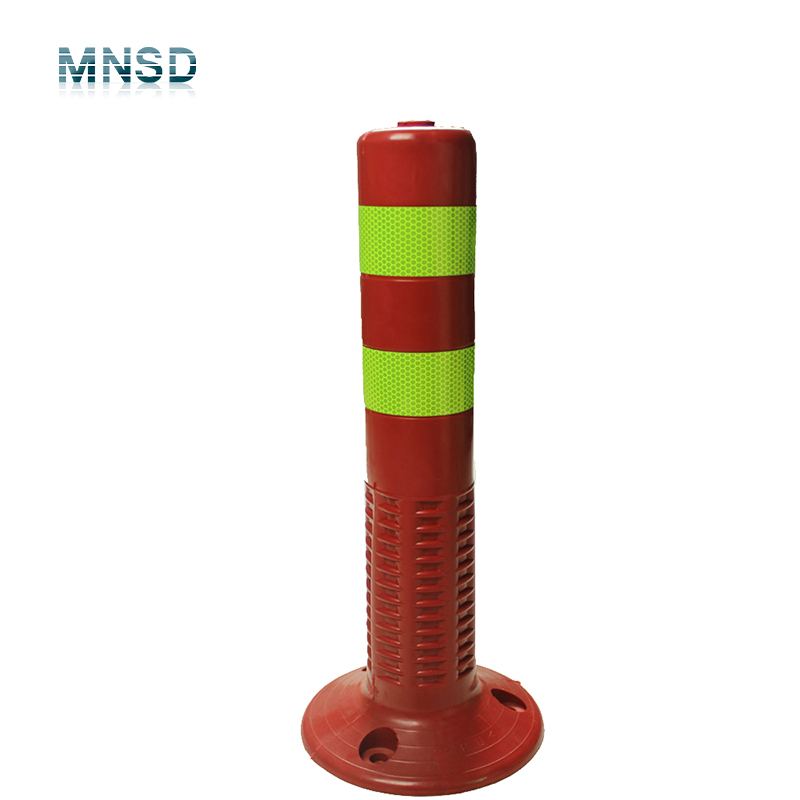
A flexible warning post has to satisfy a written clause, not only a visual one.
Mnsd is the traffic safety brand of Tiantai Yuanda Traffic Device Co., Ltd, a road safety equipment manufacturer based in Tiantai, Zhejiang, China. The company designs and produces warning posts, convex mirrors, speed humps, rising bollards and traffic lights, and serves importers, distributors, wholesalers, contractors and infrastructure project suppliers worldwide.
Why a Certificate and a Clause Rarely Match on Their Own
The problem is structural, not commercial. Tender documents are written as measurable outcomes because road owners have to compare bids objectively. Suppliers, in turn, answer with whatever document is easiest to produce. Between those two habits sit three mismatches that cause most compliance disputes on warning posts.
- The certificate covers a different object. A quality management certificate describes how a factory is run. It says nothing about the retroreflective performance of one post on one road at one viewing angle.
- The standard is referenced, not applied. In the US market, distributor catalogs list delineator products against MUTCD-related criteria, MASH acceptance and NCHRP 350 acceptance, and the same catalogs note that state and local regulations may impose additional requirements. That is a pointer to a test regime, not proof that a specific item was tested.
- The clause is regional, the specification is global. Reflective grade names such as HIP or Class 1 are used differently from market to market. A grade name without the sheeting datasheet and the measurement basis cannot be compared across borders.
For a distributor, the cost of these mismatches shows up later as rejected shipments, re-testing and lost tenders. For a project buyer, it shows up as posts on site that the inspector will not accept. Both outcomes are avoidable at the specification stage, before money changes hands.
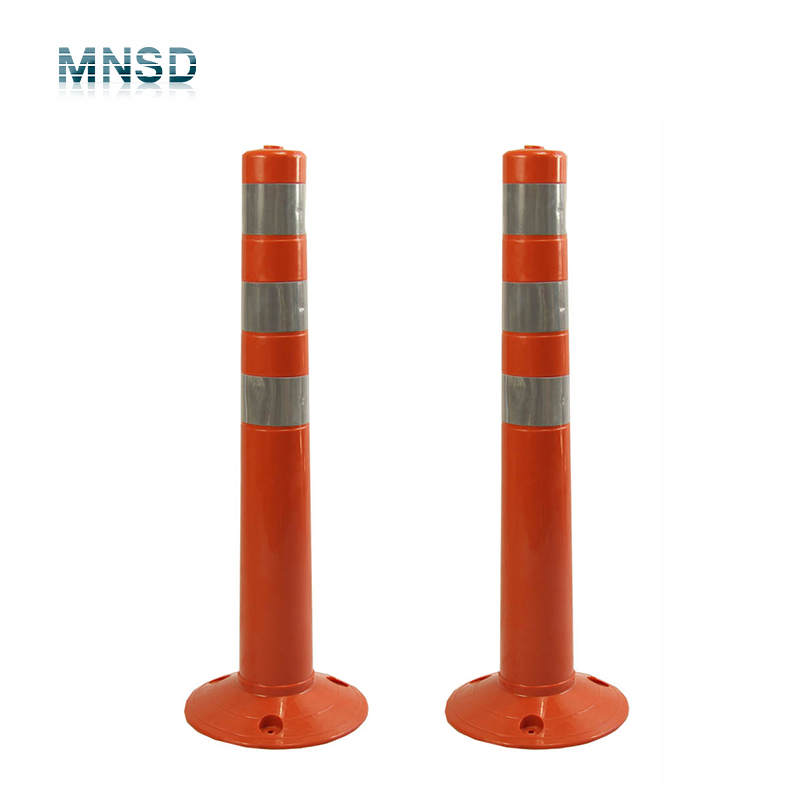
Visibility and rebound are properties of the assembled post, not of the material alone.
What Regional Rulebooks Actually Regulate
Warning posts sit inside the wider road safety hardware market. MarketsandMarkets values that market, hardware and solutions combined, at USD 7.62 billion in 2026. No separately verified public figure exists for warning posts alone, which is precisely why procurement in this category is driven by specification documents rather than by market averages.
The functional definition is fairly consistent across markets. Pexco describes flexible roadside delineator posts as impact-resistant plastic posts that warn drivers of a change in alignment and help them track the roadway. That definition is what most regional clauses try to encode: colour, height, stability and visibility on a public road.
The documents themselves vary. EN 13422:2019 is the European standard covering portable traffic cones and cylinders and is frequently cited in deformable warning device discussions. In the United States, MUTCD-related criteria, MASH acceptance, NCHRP 350 acceptance and NTPEP test protocols appear in delineator procurement. The existence of any of these documents does not establish that a particular post has been tested to it, or that the local road authority accepts it. That distinction is the whole job of a buyer.
A second, less obvious layer is trade classification. Plastic delineator posts are declared under HS 3926.90 in trade documentation, with 3926.90.9880 used in the United States. The code affects duty and paperwork, not performance, but it has to be correct on the commercial invoice for the shipment to clear cleanly.
Five Specifications That Carry Compliance Weight
Almost any warning-post clause can be reduced to five measurable attributes. Each one has to be answered twice: once as a product value, and once as a document the buyer can file.
1. Temperature resistance
Temperature clauses exist because two failure modes are climate-driven: sagging in sustained heat and brittle fracture in sustained cold. Mnsd states a range of -40 °C to +70 °C for the YD-WP45. That number is useful, but it is only a starting point, because it does not by itself state the test method, the dwell time, or whether the figure applies to the compound or to the finished post.
Thermal distortion under sustained heat is a recognised risk in hot climates, and wall-thickness design is one of the control measures manufacturers use against it. Buyers in hot markets should therefore ask for heat-ageing data with the method and duration stated, and buyers in cold markets should ask for low-temperature impact and rebound data, not only for a tensile figure at room temperature.
2. Visibility distance
Both YD-WP45 and YD-WPS75 are stated at 200+ m visibility. Treated carelessly, that figure becomes a marketing number. Treated properly, it is a test result that only means something with its conditions attached.
Visibility distance is a system outcome. It depends on the sheeting, the width and geometry of the reflective band, driver eye height, headlight output, the observation angle, and weather. The practical question is not "is it 200 m?" but "200 m measured how, with which sheeting, at which observation angle?" A supplier who can answer that question is a supplier who can support a tender submission.
3. Reflective grade
YD-WPS75 is stated at HIP / Class 1 reflective grade. Grade names travel badly between markets, so the safe procurement rule is to treat the reflective grade as a property of the sheeting rather than of the post. Specify the sheeting product and the grade designation it was certified under, and let the post be the carrier.
When the clause and the datasheet use different grade vocabularies, request the sheeting manufacturer's datasheet and map it to the clause wording yourself, in writing, before the order. If the mapping cannot be made, the product cannot be defended at inspection, however good the post is.
4. Impact recovery
Mnsd states 360° flexibility and a tensile strength of 15.0 MPa for the YD-WP45, and self-recovery for the YD-WPS75. These describe related but different things, and the difference matters at the roadside.
Tensile strength describes how much pull a compound withstands before it fails. It does not describe how quickly a post returns to vertical after a vehicle clips it, or whether that return still happens at -10 °C. The questions to ask are the rebound test method, the number of impact cycles applied, the residual angle after impact, and the temperature at which the test was run. Self-recovery is the behaviour the road owner actually wants; the tensile figure is only evidence that supports it.
5. Mounting method
YD-WPS75 is fixed with expansion bolts. That is a substrate-dependent decision rather than a universal answer. Expansion anchors suit sound concrete or well-compacted asphalt. Loose, cracked or surface-dressed substrates require a different base arrangement, and no post specification compensates for a fixing that pulls out of the ground.
Ask for the installation drawing, the anchor diameter and embedment depth, and the substrate assumption behind it. A compliant post on an unsuitable fixing is still a non-compliant installation, and the road owner will treat it that way.
A Six-Step Verification Workflow
The workflow below converts a regional clause into a purchasing decision that can be defended in an audit. It works for one container or for a multi-year distribution agreement.
- Obtain the clause text, not the summary. Ask the road owner or main contractor for the written clause and the acceptance criteria behind it. Summaries lose the measurement method, and the method is where most disputes start.
- Convert the clause into an attribute sheet. Four columns: attribute, required value, measurement method, acceptable evidence. A clause that cannot be entered in the fourth column is not yet a purchasing requirement.
- Map each attribute to the supplier's claim. Mark every value as stated, tested, or unknown. Unknown is a legitimate entry and it drives the next step.
- Request documents by name. Test report with method and date, reflective sheeting datasheet, installation drawing, material declaration, packing list. Pre-shipment testing is the acceptance mechanism Mnsd applies to orders; it should be written into the purchase order before production begins rather than negotiated at loading.
- Verify a physical sample against the same sheet. Check the sheeting batch and datasheet, the height against the drawing, the fixing hardware, and the rebound behaviour by hand at ambient temperature. A sample that matches the document is the cheapest risk control in the process.
- Lock the commercial terms around the document pack. For Mnsd orders the standard terms are a minimum order quantity of 100 units, FOB or CIF delivery, and 30/70 payment terms. Bulk lead time is typically 10 to 15 days, against a monthly production capacity of 50,000 pieces on high-speed injection molding.
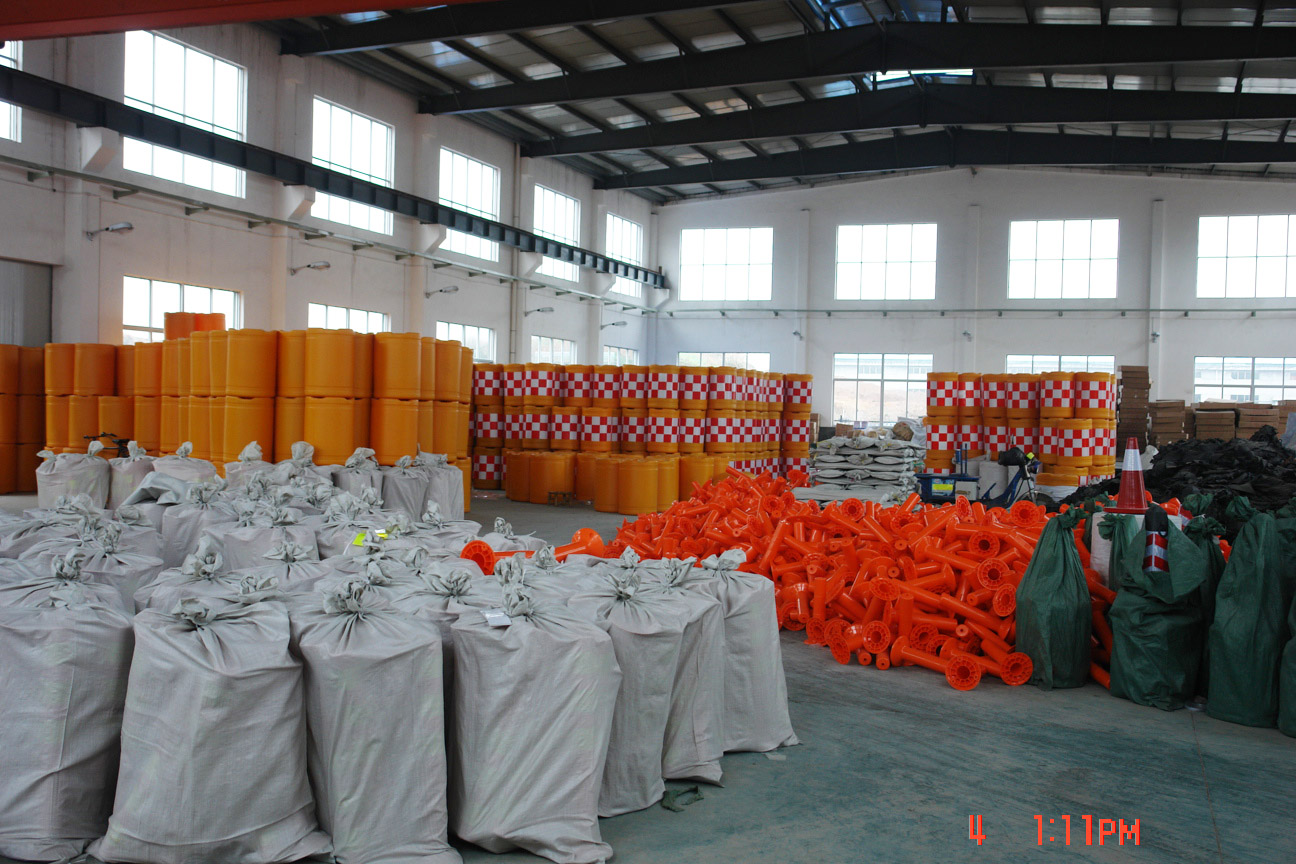
Production continuity is part of compliance: a specification that cannot be repeated is not a specification.
For distributors, the real deliverable of this workflow is not one approved order but a document pack per model. When the clause mapping, the drawing and the test report stay together, the next tender in the same market can be answered from the pack instead of being re-engineered. That is also how a sourcing relationship becomes a supply relationship: the second order is cheaper to place because the evidence already exists.
Where the Five Attributes Change the Answer
- Cold-climate roadside below -20 °C. Temperature range outweighs reflective grade as a selection criterion, and low-temperature rebound matters more than a room-temperature tensile figure.
- Hot-climate parking areas and industrial yards. Sustained heat plus vehicle contact makes thermal stability and wall-thickness design the deciding attributes; base and fixing stability under repeated impact become the practical test.
- Urban lane closures with tight geometry. Visibility distance and reflective grade dominate, and the sheeting datasheet is the only evidence that survives inspection.
- Municipal projects in Southeast Asia. Documentation and physical delivery have to land together. A road safety project in Vietnam using Mnsd warning posts was completed and accepted by local authorities, which illustrates the point: acceptance is a documentation milestone as much as a delivery milestone.

In tight geometry, sheeting performance decides acceptance; the post only carries it.
YD-WP45 and YD-WPS75: Stated Specifications and the Evidence to Request
| Attribute | YD-WP45 | YD-WPS75 | Evidence to request |
|---|---|---|---|
| Temperature range | -40 °C to +70 °C (stated) | Not stated in the specification brief | Heat-ageing report with method and duration; low-temperature rebound data |
| Visibility distance | 200+ m (stated) | 200+ m (stated) | Measurement conditions: sheeting used, observation angle, test geometry |
| Reflective grade | Not stated in the specification brief | HIP / Class 1 (stated) | Sheeting datasheet with the certified grade designation |
| Impact behaviour | 360° flexibility; 15.0 MPa tensile strength | Self-recovery | Rebound test method, number of cycles, residual angle, test temperature |
| Fixing method | Not stated in the specification brief | Expansion-bolt fixing | Installation drawing, anchor diameter, embedment depth, substrate assumption |
| Body construction | Confirm from drawing | 75 cm PU post, per Mnsd product listing | Material declaration and dimensional drawing |
| Trade classification | HS 3926.90 (3926.90.9880 in the United States) for plastic delineator posts | Correct HS code on the commercial invoice | |
Only stated values appear in this table. Blank entries are confirmation items, not defaults.
Frequently Asked Questions
How can I confirm that a warning post meets a specific regional standard?
You cannot confirm it from a supplier's certificate alone. Standards such as EN 13422:2019 for portable traffic cones and cylinders, or US references such as MUTCD-related criteria, MASH and NCHRP 350, describe requirements and test regimes. The product-specific evidence is a test report that names the product, the method and the date. Start by asking the road owner which clause applies, because state and local requirements can add conditions that a national reference does not cover.
What do the YD-WP45 temperature range and 15.0 MPa tensile strength actually prove?
They prove the stated operating window of -40 °C to +70 °C and a tensile strength of 15.0 MPa for the compound. They do not prove low-temperature rebound, long-term UV stability or reflective performance. Treat both figures as specification inputs that must be supported by a test report stating the method, the duration and the temperature at which the measurement was taken.
What are the minimum order and payment terms?
Mnsd orders start at a minimum order quantity of 100 units, with FOB or CIF delivery terms, 30/70 payment terms, and pre-shipment testing as the acceptance criterion. Unit pricing is quoted per order because fixing configuration, sheeting grade and packing change the cost base. No verified public price benchmark exists for these models, so quotations should be compared on the same attribute sheet rather than on headline unit price alone.
Can I validate a sample before placing a bulk order?
Yes, and a sample checked against the attribute sheet and the drawing is the cheapest way to catch a mismatch. Check the sheeting batch and datasheet, the height against the drawing, the fixing hardware, and the rebound behaviour by hand. Once the sample is approved, the same checkpoints become the acceptance criteria applied at pre-shipment testing.
How long does production take for a bulk order?
Monthly production capacity is 50,000 pieces, produced on high-speed injection molding, and the typical lead time for bulk orders is 10 to 15 days. Confirm that schedule against the specific fixing configuration and sheeting grade before committing to a site programme. To start a compliance-based quotation, send the clause text, the site conditions and the required fixing method to Mnsd at info@mnsdtraffic.com or through www.mnsdtraffic.com, and request the document pack with the quotation.
Conclusion: Compliance Is a Document, Not an Adjective
Regional warning-post rules are written to be measurable, and the YD-WP45 and YD-WPS75 illustrate how a buyer can respond in the same language. A stated temperature range, a visibility distance, a reflective grade, an impact behaviour and a fixing method each become a clause, a value and a document. Where a value is not stated, the correct action is to request it in writing rather than to assume it.
Three actions carry most of the risk reduction: obtain the clause text before the quotation, request evidence by name for every attribute, and write pre-shipment testing into the purchase order. Buyers who do this once can reuse the same document pack for the next tender in the same market, which is where specification discipline turns into supply continuity.
Next Step
Send Mnsd the clause text and your site conditions, and request a quotation with the matching specification, drawing and test documentation for YD-WP45 or YD-WPS75. Contact: info@mnsdtraffic.com | WhatsApp +86 184-5813-7305 | www.mnsdtraffic.com
The full product catalogue is available for download: Mnsd Traffic Product Catalogue (PDF)
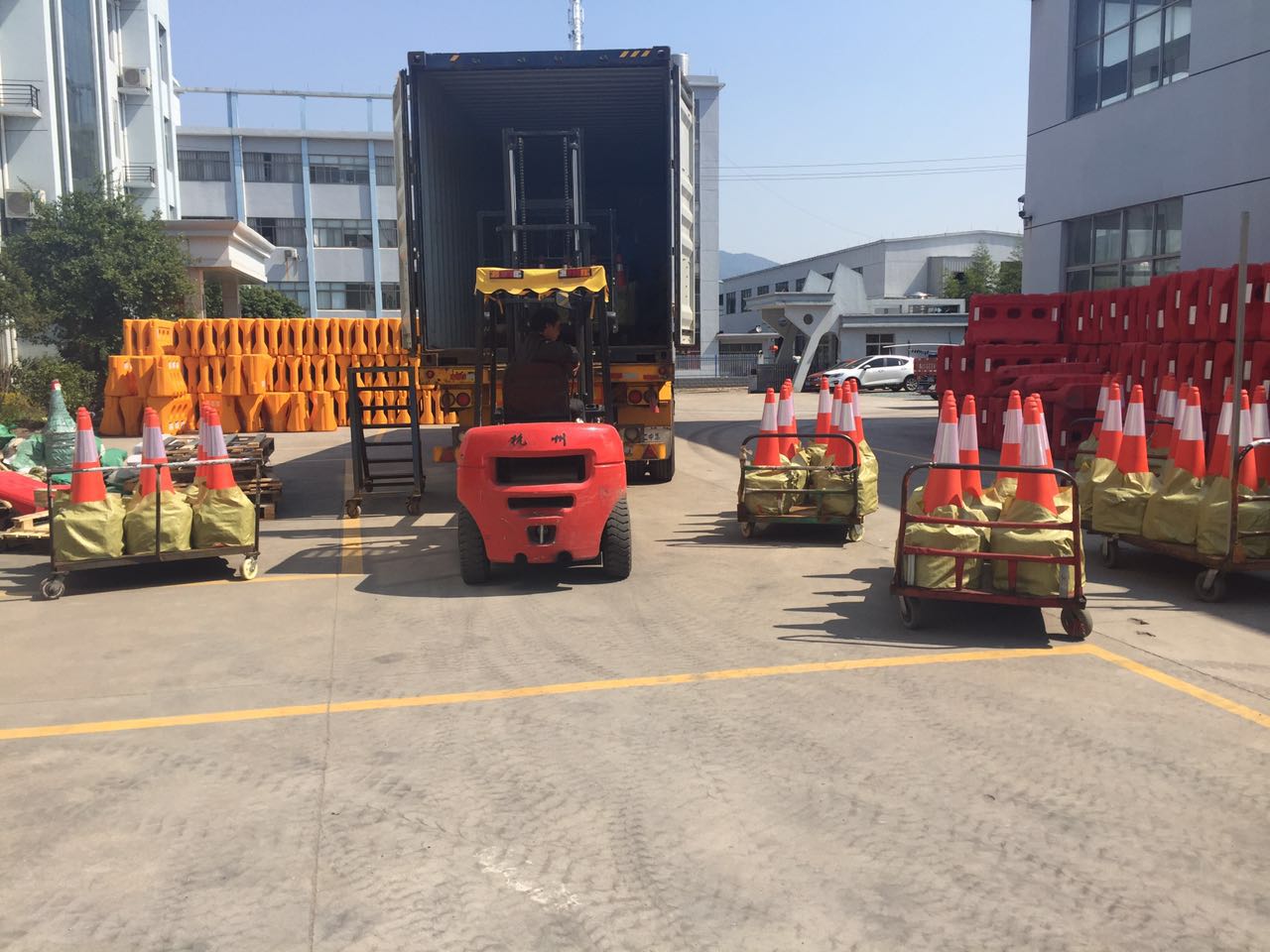
Documentation and dispatch have to arrive together for acceptance to happen on site.
Have Questions or Need More Details?
Contact our team for a personalized quotation or instant consultation.
Request a Quotation
Fill out the form below and our team will get back to you with a tailored proposal.
WhatsApp Direct Chat
Prefer to chat in real-time? Message us on WhatsApp for instant assistance & quick answers.
- Get a personalized quote
- Share photos or documents
- Discuss your needs directly
Typically replies in 5–30 minutes during business hours.