
450mm vs 750mm PU Warning Posts: A Technical Guide to Impact, Visibility, and Mounting
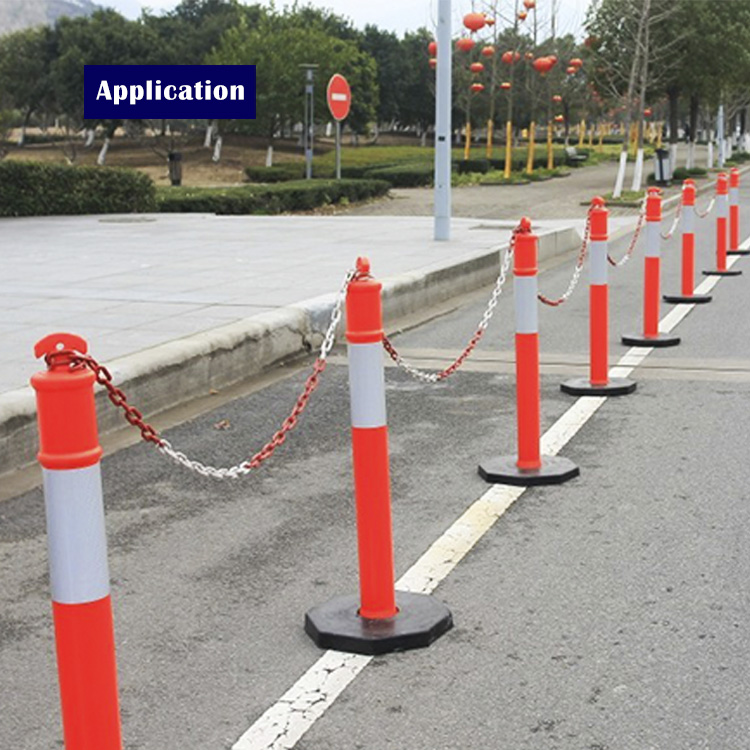
Choosing between a 450mm and a 750mm flexible PU warning post is a height decision, not a materials decision. The two Mnsd models that buyers compare most often — YD-WP45 (450 × 80 × 200 mm) and YD-WPS75 (750 × 80 × 200 mm) — are built on the same polyurethane platform. Both share an 80–85 Shore A hardness, 15.0 MPa tensile strength, 400% elongation at break, 360° flexibility with rapid rebound after vehicle crush, High-Intensity Prismatic (HIP) / Class 1 reflective tape in a 250 mm width, a stated visibility distance of 200+ metres, a 200 × 80 mm base footprint, and expansion-bolt mounting through 3 or 4 holes.
What genuinely changes with height is the elevation of the reflective sleeve in a driver’s vertical field of view, the amount of body exposed to the next vehicle that drifts across a lane edge, and the way the unit behaves at the moment of contact. This guide explains what each verified parameter controls, then gives a five-step selection process, a site-type checklist and a side-by-side parameter table for road traffic, parking lots and construction sites.
Short answer. Select the 450mm YD-WP45 where the striking vehicle is a passenger car at low speed and the decision distance is short — parking aisles, garage entries and depot lanes. Select the 750mm YD-WPS75 where the reflective band must clear occluding objects such as parked vehicles, kerbs or low vegetation at longer approach distances, or where posts are linked with chains through the ring top across an open area. Because the reflective grade is identical on both models, height and mounting — not tape grade — are the real variables.
Problem Definition: Where Height Selection Goes Wrong
Sourcing teams rarely get the material wrong on this product family. They get the geometry wrong. The recurring failure modes are predictable:
- Buying by habit. Re-ordering the height that was stocked last season without re-checking the site, the vehicle mix or the applicable local standard.
- Assuming taller is automatically safer. A 750mm body used where the approach distance is only a few metres puts reflective material above the zone a driver is actively scanning, and can bring the post into conflict with low structures and overhead clearances.
- Ignoring occlusion. A post rated at 200+ m of visibility can still disappear behind a parked SUV at 15 m if the reflective sleeve sits below that vehicle’s roofline.
- Treating mounting as an afterthought. Both models are fixed with expansion bolts through 3 or 4 holes. If the hole pattern does not match the substrate on site, installation becomes a retrofit.
- Leaving the base unspecified. Both models ship with either a recycled rubber base or an integrated plastic base. This is a purchasing decision and should appear on the purchase order.
Because the elastomer and reflectivity specifications are identical across the YD-WP45 and the YD-WPS75, every on-site performance difference traces back to geometry: how high the reflective band sits, how the post is anchored, and which base is fitted.
Industry Background: A Growing and Increasingly Standardised Category
The category is expanding. The global road marker posts market was valued at USD 3.4 billion in 2024 and is projected to reach USD 5.4 billion by 2032, according to Road Marker Posts Market Size Analysis. Traffic safety products overall are expected to expand at a compound annual growth rate of 6.6% from 2026 to 2034, driven by urban population growth and infrastructure investment, according to Dataintelo.
Two standards are worth citing in a specification. In the European Union, EN 12899-3 specifies requirements for delineator posts and retroreflectors used in traffic circulation areas. In the United States, the MUTCD requires delineators to be retroreflective and visible from 1,000 feet when illuminated by high-beam headlights. These two references describe different illumination conditions and should not be treated as interchangeable figures; a manufacturer’s own visibility rating, such as the 200+ m figure on Mnsd specification sheets, is measured under its own stated conditions.
Material expectations have converged as well. Thermoplastic polyurethane (TPU) is preferred for high-impact warning posts because of its elastic recovery and durability compared with standard polyethylene (PE), according to OPTRAFFIC’s material guide. That is the underlying reason a flexible PU body returns to shape after a vehicle crush, while a rigid post or a straight PE moulding may not.
Detailed Solution: What Each Verified Specification Controls
Both models are documented on the same specification sheet. Reading that sheet as a set of engineering controls — rather than a list of numbers — is what makes height selection straightforward.
Hardness, tensile strength and elongation at break
An 80–85 Shore A hardness places the body in a firm-but-flexible elastomer range: stiff enough to stand upright without a metal spine, flexible enough to deflect when a bumper makes contact and then return. A 15.0 MPa tensile strength defines the stress the material tolerates before structural failure, and 400% elongation at break means the body can stretch to roughly four times its original length before it tears. Together, these three figures explain why the same post can be driven over and still stand afterwards.
360° impact resistance and self-recovery
Both YD-WP45 and YD-WPS75 are rated 360° flexible and impact resistant, with rapid rebound after vehicle crush. In practice this means recovery behaviour does not depend on which side of the post is struck — relevant where traffic approaches from more than one direction, or where the post sits at a merge or turning point. Production quality control includes 1,000+ compression and rebound cycles per unit evaluation.
Reflective grade and 200+ m visibility
Both models carry High-Intensity Prismatic (HIP) / Class 1 reflective tape, 250 mm wide, supplied as double or triple sleeves in silver white or fluorescent yellow, with a stated visibility distance of 200+ metres. The reflective material itself is therefore not a differentiator between the 450mm and the 750mm post. What differs is the elevation of that reflective sleeve above the road surface once the post is mounted, and how much of the sleeve remains visible when the sight line is partially blocked.
Base options: recycled rubber or integrated plastic
Both models are offered with a recycled rubber base or an integrated plastic base, on the same 200 × 80 mm base footprint. Base type is a specification decision made at ordering and should be written into the RFQ together with the hole count, because the base and the bolt pattern are what connect the post to the real world: asphalt, concrete or a paved platform.
Weather and ageing performance
Both posts are rated from -40°C to +70°C, with a UV-stabilised coating, anti-oxidant and colourfast performance over three years, and water and oil resistance. This temperature band covers cold-weather installations and hot-climate road projects without a specification change.
Mounting interface and top design
Installation uses expansion bolt fixing with 3 or 4 holes. The top of both posts is designed as a ring top for chain attachment, which matters when posts must be linked into a continuous line rather than read individually. Standard colour options are traffic orange, yellow, red and black.
Step-by-Step: How to Choose Between 450mm and 750mm
- Classify the site by strike risk and approach speed. List the vehicles that will actually touch the post: passenger cars in a parking aisle, delivery vans at a loading dock, or heavy machinery on a construction access road. Low-speed, short-approach environments and open, higher-speed environments lead to different height answers.
- Measure the occlusion line, not just the road. Record what sits between the driver and the post: parked vehicles, kerbs, planters, low vegetation, temporary barriers. The reflective sleeve has to sit above that line at the point where the driver first needs to read it.
- Translate that into a body height. Where the occlusion line is low and the approach is short, the 450mm YD-WP45 keeps the reflective band inside the driver’s near field of view. Where the band must clear vehicles or furniture at distance, the 750mm YD-WPS75 places the same HIP / Class 1 sleeve higher. Validate the outcome against the applicable local standard.
- Fix the base and the bolt pattern. Decide between the recycled rubber base and the integrated plastic base, then confirm whether the site needs the 3-hole or the 4-hole expansion-bolt pattern. Check the substrate before the order is placed, not after delivery.
- Lock the commercial specification. Record model, height, base type, hole count, colour, reflective tape grade and quantity on one line of the purchase order. Bulk orders are quoted from an MOQ of 200 pieces with a 10–15 day lead time, produced by high-speed injection moulding at a monthly capacity of 50,000 pieces.
Use Cases: Road Traffic, Parking Lots and Construction Sites
Road traffic and highway edges
On road edges, medians and ramps, the post competes with a long sight line and a higher approach speed. A 750mm body places the reflective sleeve higher, which helps where the band would otherwise be masked by kerbs, guard rails or roadside growth. Chain-linking through the ring top keeps a continuous delineation line visible around bends.
Parking lots and parking garages
In parking aisles and garage entries, approach distances are short and vehicles are slow. A 450mm body is often the practical answer: the reflective band stays inside the driver’s forward scan while the post occupies less vertical space in a constrained environment. Expansion-bolt mounting with 3 or 4 holes suits concrete garage decks, and the flexible PU body with 360° impact resistance absorbs contact from manoeuvring vehicles rather than transferring the load.
Construction sites and temporary works
Construction access roads combine heavy vehicles, dust, temporary layouts and frequent re-positioning. Both heights are used: 750mm units for open access roads where delineation must be read from a distance, and 450mm units for internal partitioning of pedestrian and plant routes. The ring top allows rapid chain re-configuration as the site layout changes.
Field evidence: a contractor project in Vietnam
A contractor client in Vietnam used Mnsd warning posts for a road safety project, to warn vehicles and pedestrians and to mark road edges and dangerous areas. The project was completed and accepted by the local authority, with a stated service duration of 5–8 years. The buyer’s stated highlights were high visibility, durability, impact resistance and ease of installation.
Selection Checklist by Site Type
| Site type | Height to evaluate | Key selection criteria | Base & mounting checks |
|---|---|---|---|
| Road traffic, highway edges, medians | 750mm (YD-WPS75) | Reflective sleeve must clear kerbs, rails and roadside growth at distance; chain-linking for continuous delineation | Recycled rubber or integrated plastic base; confirm 3-hole or 4-hole expansion-bolt pattern against the substrate |
| Parking lots and garages | 450mm (YD-WP45) | Short approach distance and low speed; band must stay in the immediate forward scan; 360° impact resistance for manoeuvring contact | Concrete-deck bolt pattern; confirm base type at quotation; check ring-top position for lane separation chains |
| Construction sites and access roads | 750mm for open lanes; 450mm for internal partitioning | Dust and re-layout tolerance; visibility from plant cabs; fast reconfiguration | Base type matched to temporary or semi-permanent fixing; confirm hole count with the site engineer |
YD-WP45 vs YD-WPS75: Side-by-Side Parameters
| Parameter | YD-WP45 | YD-WPS75 |
|---|---|---|
| Overall height | 450 mm | 750 mm |
| Body size | 450 × 80 × 200 mm | 750 × 80 × 200 mm |
| Base footprint | 200 × 80 mm | 200 × 80 mm |
| Body material | High-elasticity polyurethane (PU) or heavy-duty PE | High-elasticity polyurethane (PU) or heavy-duty PE |
| Base options | Recycled rubber base or integrated plastic base | Recycled rubber base or integrated plastic base |
| Hardness | 80–85 Shore A | 80–85 Shore A |
| Tensile strength | 15.0 MPa | 15.0 MPa |
| Elongation at break | 400% | 400% |
| Flexibility / impact | 360° flexible and impact resistant | 360° flexible and impact resistant |
| Self-recovery | Rapid rebound after vehicle crush | Rapid rebound after vehicle crush |
| Reflective grade | High-Intensity Prismatic (HIP) / Class 1 | High-Intensity Prismatic (HIP) / Class 1 |
| Reflective tape width | 250 mm (double or triple sleeves) | 250 mm (double or triple sleeves) |
| Reflective colours | Silver white / fluorescent yellow | Silver white / fluorescent yellow |
| Visibility distance | 200+ m | 200+ m |
| Temperature resistance | -40°C to +70°C | -40°C to +70°C |
| Ageing resistance | Anti-oxidant and colourfast over 3 years | Anti-oxidant and colourfast over 3 years |
| Mounting | Expansion bolt fixing (3 or 4 holes) | Expansion bolt fixing (3 or 4 holes) |
| Top design | Ring top for chain attachment | Ring top for chain attachment |
| Colour options | Traffic orange / yellow / red / black | Traffic orange / yellow / red / black |
The table makes the engineering point explicit: the difference between these two posts is 300 mm of body height. Every other performance parameter is identical, which is why site geometry — not the data sheet — should decide the model.

Frequently Asked Questions
Which standards apply to flexible PU warning posts, and what should buyers verify?
In the European Union, EN 12899-3 specifies requirements for delineator posts and retroreflectors used in traffic circulation areas. In the United States, the MUTCD requires delineators to be retroreflective and visible from 1,000 feet when illuminated by high-beam headlights. Mnsd holds a Business License issued by the Market Supervision Administration (No. 91331023669153260K), with a scope covering all items, valid from 13 November 2007 to 13 November 2107. Both YD-WP45 and YD-WPS75 use HIP / Class 1 reflective tape. Buyers should confirm which standard applies in the destination market and record the reflective grade and acceptance test method in the purchase order.
Can the 450mm and 750mm posts be customized, and what capacity stands behind the order?
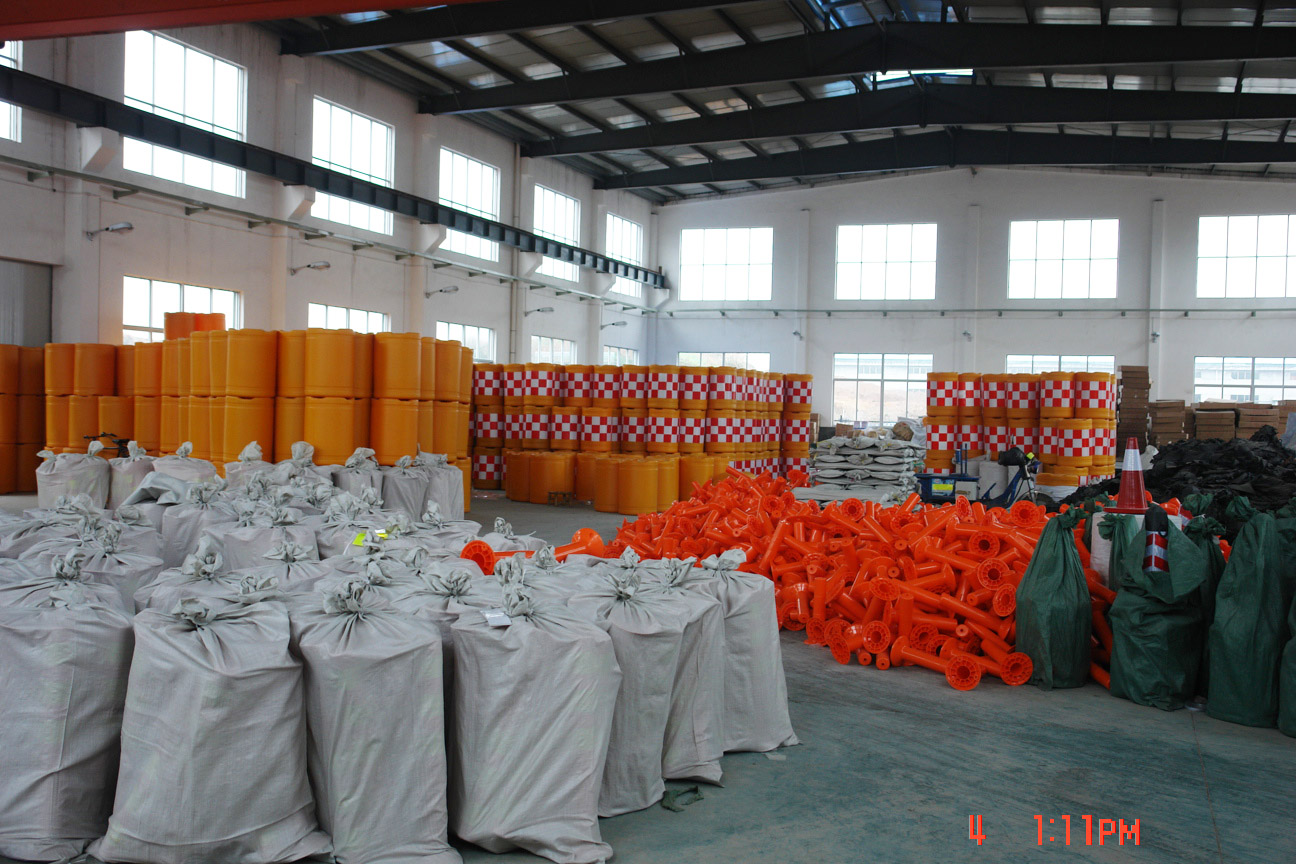
Customization covers height, colour and reflective tape brand. The customization list names orange, yellow and green, while the standard product colour chart lists traffic orange, yellow, red and black. Reflective tape brands include 3M and Grade A. Production runs on high-speed injection moulding with a monthly capacity of 50,000 pieces, and quality control includes 1,000+ compression and rebound tests. The UV-resistance guarantee covers no fading for three years, and Mnsd serves global export markets.
What drives the cost difference between the two models, and what are the commercial terms?
Because both models are built on the same material platform with the same reflective grade, cost variation comes from body height, base type (recycled rubber or integrated plastic), reflective tape brand, colour and order volume. Published sourcing terms list an MOQ of 100 units with FOB/CIF delivery, 30/70 payment terms and pre-shipment testing as the acceptance criterion. Bulk production documentation for customized runs lists an MOQ of 200 pieces with a 10–15 day lead time.
How should a buyer validate the two heights before committing to a bulk order?
Since hardness, tensile strength, elongation and reflective grade are identical across both models, sample evaluation should focus on geometry rather than material. Mount a 450mm and a 750mm unit on the actual substrate using the expansion-bolt pattern (3 or 4 holes), then measure where the reflective sleeve falls relative to the occlusion line at the site. Compression and rebound performance forms part of pre-shipment acceptance testing. Buyers can request samples and the full specification sheet as the first step of evaluation.
What is the lead time for bulk orders?
Bulk orders have a typical lead time of 10–15 days, produced by high-speed injection moulding at a monthly capacity of 50,000 pieces. Mnsd exports to global markets, so buyers should confirm the delivery term (FOB or CIF) and the pre-shipment test schedule at the time of quotation.
Conclusion: Match the Height to the Sight Line, Then Lock the Specification
The 450mm YD-WP45 and the 750mm YD-WPS75 are not two different grades of warning post. They are the same post at two heights, and the selection question is therefore a geometry question: at what elevation must the reflective sleeve sit so that a driver reads it before the vehicle reaches the post? Answer that from the site — approach distance, vehicle mix, occlusion line — and then write the answer into the purchase order as model, height, base type, hole count, colour and tape grade.
Next step: confirm the specification and request a sample
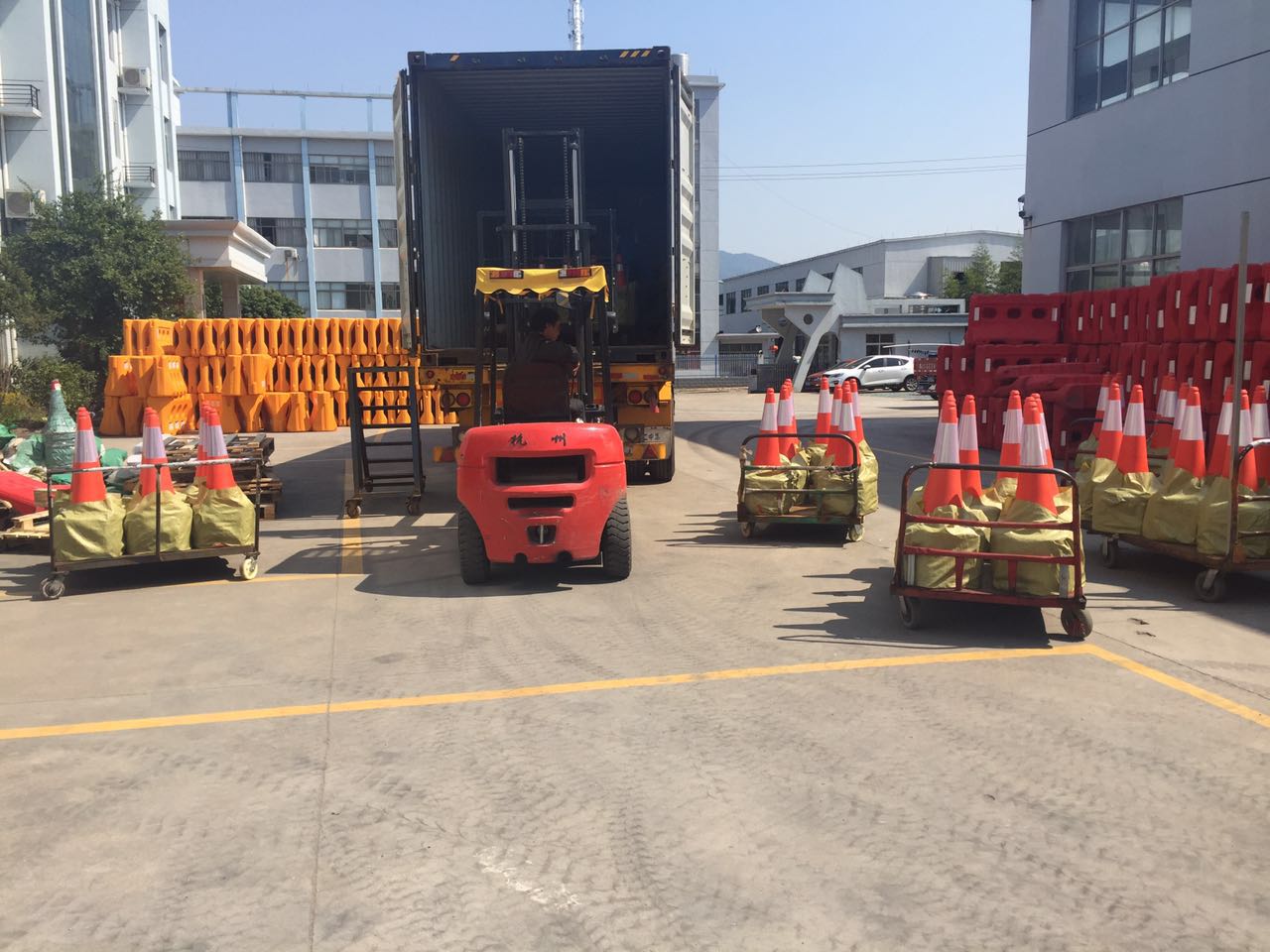
Tiantai Yuanda Traffic Device Co., Ltd (Mnsd) manufactures flexible PU warning posts, traffic cones, convex mirrors, speed bumps and rising bollards for global importers, distributors and contractors. To compare the YD-WP45 and the YD-WPS75 on your own site, request a sample and the current specification sheet, or download the product catalogue.
Download the Mnsd product catalogue (PDF): Mnsd Catalogue 2026
Email: info@mnsdtraffic.com · WhatsApp: +86 184-5813-7305 · Website: www.mnsdtraffic.com
Have Questions or Need More Details?
Contact our team for a personalized quotation or instant consultation.
Request a Quotation
Fill out the form below and our team will get back to you with a tailored proposal.
WhatsApp Direct Chat
Prefer to chat in real-time? Message us on WhatsApp for instant assistance & quick answers.
- Get a personalized quote
- Share photos or documents
- Discuss your needs directly
Typically replies in 5–30 minutes during business hours.