
Ranked: Top Outdoor Polycarbonate Convex Mirror Models for Every Blind Spot
Choosing an outdoor convex mirror comes down to one question before anything else: how large is the blind spot it has to cover? Mnsd builds its outdoor polycarbonate range around four sizes — YD-OC60, YD-OC75, YD-OC100 and YD-OC120 — on a single lens platform and a single mounting interface. They differ mainly in diameter and visual range. The ranking below positions each model against the site conditions it actually fits, so a buyer can move from an unmeasured corner to a specified part number without working through the whole catalogue first.
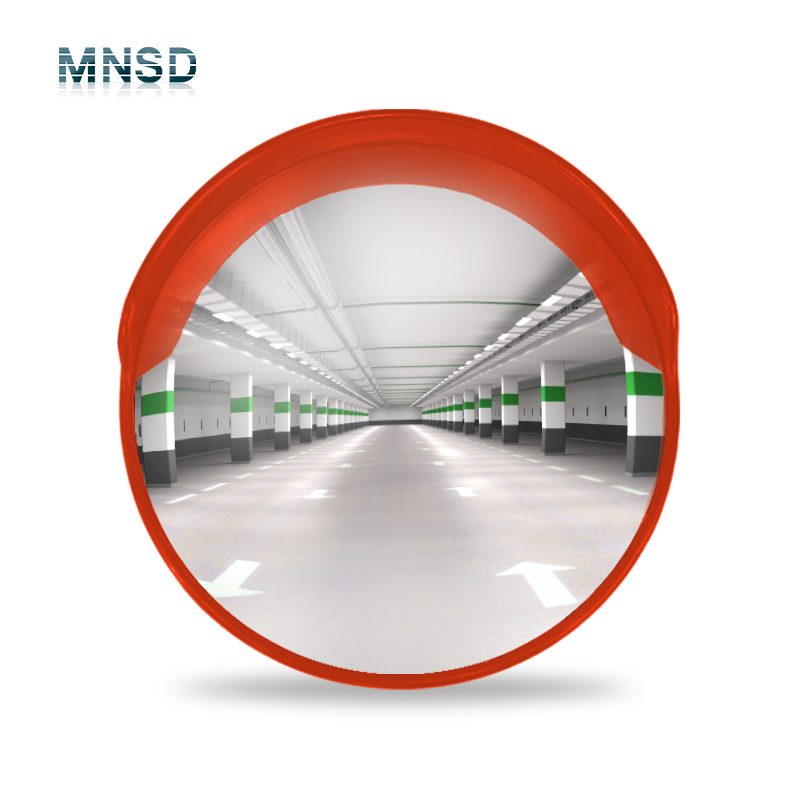
Mnsd outdoor polycarbonate convex mirror — the shared lens and mounting platform behind the YD-OC series.
The Shortlist at a Glance
- Rank 1 — YD-OC75 (⌀750 mm, 20–25 m visual range): the default industrial size. Warehouse aisle intersections, loading dock approaches, site entrances and campus road junctions.
- Rank 2 — YD-OC100 (⌀1000 mm, 30–35 m): multi-lane internal roads, logistics park intersections and hospital or school main driveways.
- Rank 3 — YD-OC120 (⌀1200 mm, 35–45 m): ports and docks, container yards, highway ramps and large logistics yards.
- Rank 4 — YD-OC60 (⌀600 mm, 15–18 m): parking garage ramps, garage corners, narrow driveways and tight internal corridors.
All four models carry the same weatherproofing, UV ratings, temperature range and wind load rating. What changes is coverage: 15–18 m at the bottom of the range and 35–45 m at the top.
Problem Definition: Why Blind Spots Survive on Industrial Sites
A blind spot is not a visibility failure caused by carelessness. It is a geometric condition. On an industrial site, sight lines are broken by racking uprights, building columns, parked trucks, container stacks, boundary walls and vegetation, and the driver's eye height sits well above the pedestrian or the small vehicle hidden inside that break. Two vehicles can approach the same corner correctly and still not see each other, because neither driver's forward view contains the other vehicle.
Most persistent blind spots share a small number of physical causes. Corners formed by walls and racking conceal approaching traffic behind the structure that creates the corner. Loading docks conceal pedestrians and forklifts behind parked trailers. Garage ramps conceal oncoming vehicles behind the ramp's structural wall. Port and yard junctions conceal crossing traffic behind container rows. In each case the hidden object sits close to the corner and the sight line is short — which is why a correctly sized mirror resolves the problem where signage and floor markings alone do not.
What convex mirrors do is relocate the line of sight. A polycarbonate convex lens gathers a wide field and compresses it onto a single surface the driver can read at a glance. The practical failure mode on site is rarely the mirror type: it is a reflector too small for the distance involved, or one mounted where the reflected zone falls outside the driver's natural approach angle. That distinction drives the rest of this shortlist, because sizing — not specification depth — decides whether an outdoor polycarbonate convex mirror works.
Industry Background: Where Convex Mirrors Sit in 2026 Safety Procurement
Convex mirrors are a mature product category with a growing application segment. The global convex mirror market was valued at approximately USD 1.04 billion in 2025 and is projected to reach USD 1.73 billion by 2034, according to Dataintelo. Asia Pacific held the largest regional position, with a 42.5% revenue share in 2025, and traffic and safety applications represent the single largest application group at 38.2% of the market.
Those headline numbers deserve one caveat. Published market estimates for this category diverge widely depending on how broadly the definition is drawn — some trackers include integrated camera and sensor systems, which produces figures many times larger than a mirror-only scope. For a buyer, the useful reading is directional: traffic and safety is the largest application group, and outdoor installation is where most specification decisions are made.
Commodity mirror trade has moved differently. Global trade in unframed mirrors declined 9.2% in 2023 compared with 2022, according to Business Research Insights — a signal that general-purpose mirror products are exposed to demand and supply-chain swings, while application-specific traffic safety products continue to be specified project by project.
Mnsd is the brand of Tiantai Yuanda Traffic Device Co., Ltd., a road safety equipment manufacturer based in Tiantai, Zhejiang, China, producing convex mirrors alongside warning posts, rising bollards, speed humps and traffic lights. The company serves importers, distributors, wholesalers, contractors and infrastructure project suppliers, and exports to Asia, Europe and the USA.
How This Shortlist Was Ranked
This is a fit ranking, not a quality hierarchy. All four models in the YD-OC series share the same lens material, coating process, protective ratings and mounting interface, so none of them is built to a lower standard than the others. They are ranked by how frequently each size matches a recognisable site condition, using four criteria:
- Coverage fit — visual range measured against the concealed distance at the blind spot.
- Outdoor durability — IP65 weatherproofing, Grade 8 UV resistance with a 3–5 year lifespan, an operating range of -30°C to +80°C, and Level 10 wind load resistance.
- Installation flexibility — wall or pole mounting, a heavy-duty galvanized steel bracket, and a 60 mm / 75 mm pole fit across the series.
- Deployment frequency — how often the diameter suits a common industrial, municipal or institutional site type.
The result is a shortlist a buyer can work down in order: measure the blind spot, find the model that covers it, and stop there.
The Ranked Outdoor Polycarbonate Convex Mirror Models
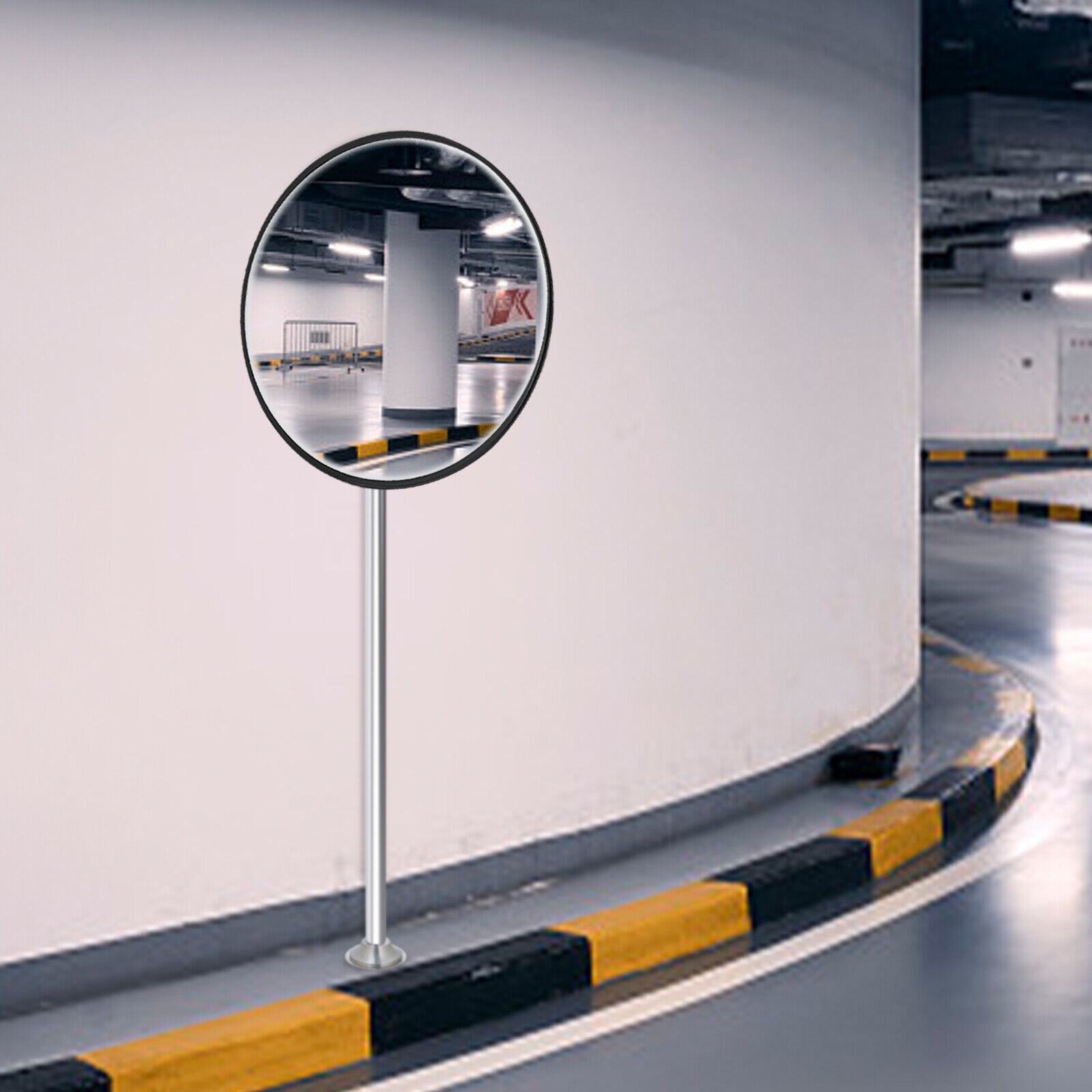
The YD-OC series combines a shatterproof polycarbonate lens with a bright orange high-impact ABS backing.
Rank 1YD-OC75 (⌀750 mm): The Default Industrial Blind Spot Mirror
The 750 mm model carries a 20–25 m visual range. That distance bracket is the one most industrial blind spots actually fall into: across a warehouse aisle intersection, from a dock exit to the far side of the yard road, or from a site entrance gate to the first internal junction. It is also the range that category data describes as typical for outdoor polycarbonate convex mirrors, which commonly list a 180° viewing angle and a 20–25 m visual range.
Why it is on the list: 750 mm is large enough to read clearly at 20–25 m and small enough to sit on a wall or a standard 60/75 mm pole without dominating the structure. It uses the same 130°+ wide-angle lens, IP65 housing and UV-stabilized PC and ABS construction as the rest of the series, so the durability case does not weaken at this size.
Best-fit deployments: warehouse aisle intersections; loading dock exits; distribution centre internal roads; industrial estate entrances; community and campus road junctions; supermarket and shopping mall car park exits.
Where it stops working: beyond roughly 25 m, the outer edges of the reflected field lose the definition a driver needs to judge speed and distance. Sites with longer sight lines should move to the YD-OC100 rather than compensate by mounting the YD-OC75 higher.
Rank 2YD-OC100 (⌀1000 mm): Wide Intersections and Logistics Parks
The 1000 mm model extends the visual range to 30–35 m. At that distance the mirror is no longer solving a single corner; it is covering an intersection where several vehicle types — trucks, forklifts, light vehicles and pedestrians — converge from different directions and approach speeds are higher.
Why it is on the list: the jump from 25 m to 30–35 m matches the geometry of logistics parks and wide internal roads, where the distance from the mirror position to the far corner of the crossing often exceeds what a 750 mm reflector can hold. It keeps the same 0.6–1 mm lens thickness, the same R2200–R3000 curvature radius and the same Level 10 wind load resistance as the smaller models.
Best-fit deployments: logistics park intersections; distribution hub exits; main hospital and school driveways; wide internal industrial roads; bus station exits; large retail car park junctions.
Where it stops working: it is oversized for a garage ramp or a narrow driveway. Where the concealed distance is under 20 m, the extra reflector area adds installation load without adding usable coverage.
Rank 3YD-OC120 (⌀1200 mm): Maximum Coverage for Ports and Large Yards
The 1200 mm model is the largest in the series, with a 35–45 m visual range. It is built for environments where the sight line runs long and the consequences of a missed vehicle are measured in stopping distance: port roads, container yards, highway ramps and multi-lane yard junctions.
Why it is on the list: at 35–45 m, this is the only model in the range that covers the full width of a large yard junction or a port access road. It shares the complete outdoor specification — IP65, Grade 8 UV resistance with a 3–5 year lifespan, -30°C to +80°C operation, vandal-resistant and self-recovery lens behaviour, and Level 10 wind load resistance.
Best-fit deployments: ports and docks; container and trailer yards; highway ramps; large logistics yards; multi-lane industrial junctions; construction site access roads.
Where it stops working: almost everywhere else. A 1200 mm reflector in a car park or an internal corridor over-specifies the problem, and its larger surface area places more demand on the mounting surface and bracket. Plan pole capacity and mounting height before specifying it.
Rank 4YD-OC60 (⌀600 mm): Compact Coverage for Garages and Driveways
The 600 mm model covers 15–18 m. It is the smallest of the four ranked sizes and the one that resolves tight, enclosed blind spots where a larger reflector would be impractical or visually intrusive.
Why it is on the list: parking garage ramps, internal garage corners, office park entrances and narrow driveways generate short, hard-edged blind spots. A 15–18 m range is sufficient at these distances, and the compact 600 mm body fits wall positions that cannot take a 1000 mm reflector. Like its larger siblings, it is impact-resistant polycarbonate with a vacuum aluminium coating and a high-impact ABS backing in bright orange.
Best-fit deployments: parking garage ramp exits; garage internal corners; narrow driveways; office park entrances; tight warehouse corridors; residential quarter junctions.
Where it stops working: any concealed distance beyond 18 m. If the hidden approach is longer than that, the YD-OC75 is the correct step up. Diameters below 600 mm, down to 450 mm, are produced within the same customization range rather than as ranked catalogue sizes.
What All Four Models Share
Buyers comparing these four models are comparing coverage, not build quality. The optical and structural platform is common across the series.
- Lens: impact-resistant polycarbonate with a vacuum aluminium coating, 0.6–1 mm lens thickness (customizable), curvature radius R2200–R3000, 130°+ wide-angle vision, with a 180° coverage angle listed in the model scope.
- Weather resistance: IP65 weatherproof rating for outdoor use, an operating temperature range of -30°C to +80°C, UV-stabilized PC and ABS materials, and Grade 8 UV resistance rated for a 3–5 year lifespan.
- Structure: high-impact ABS backing in bright orange for daytime visibility, a 2.0 mm back plate wall thickness, and a heavy-duty galvanized steel mounting bracket.
- Impact behaviour: vandal-resistant with self-recovery, an optional anti-scratch hard coating, and optional engineering grade reflective tape on the rim.
- Wind load: Level 10 wind load resistance on every model in the range.
Behind the product, the manufacturing setup matters for anyone specifying across a project. Mnsd runs OEM and ODM production with a monthly capacity of 30,000 pieces and applies 100% impact and clarity inspection. Customization covers diameter (45–120 cm), backing material (PP, ABS or fiberglass) and lens material (polycarbonate or stainless steel), which is how a project can standardise on one outdoor polycarbonate mirror family while adapting individual positions.
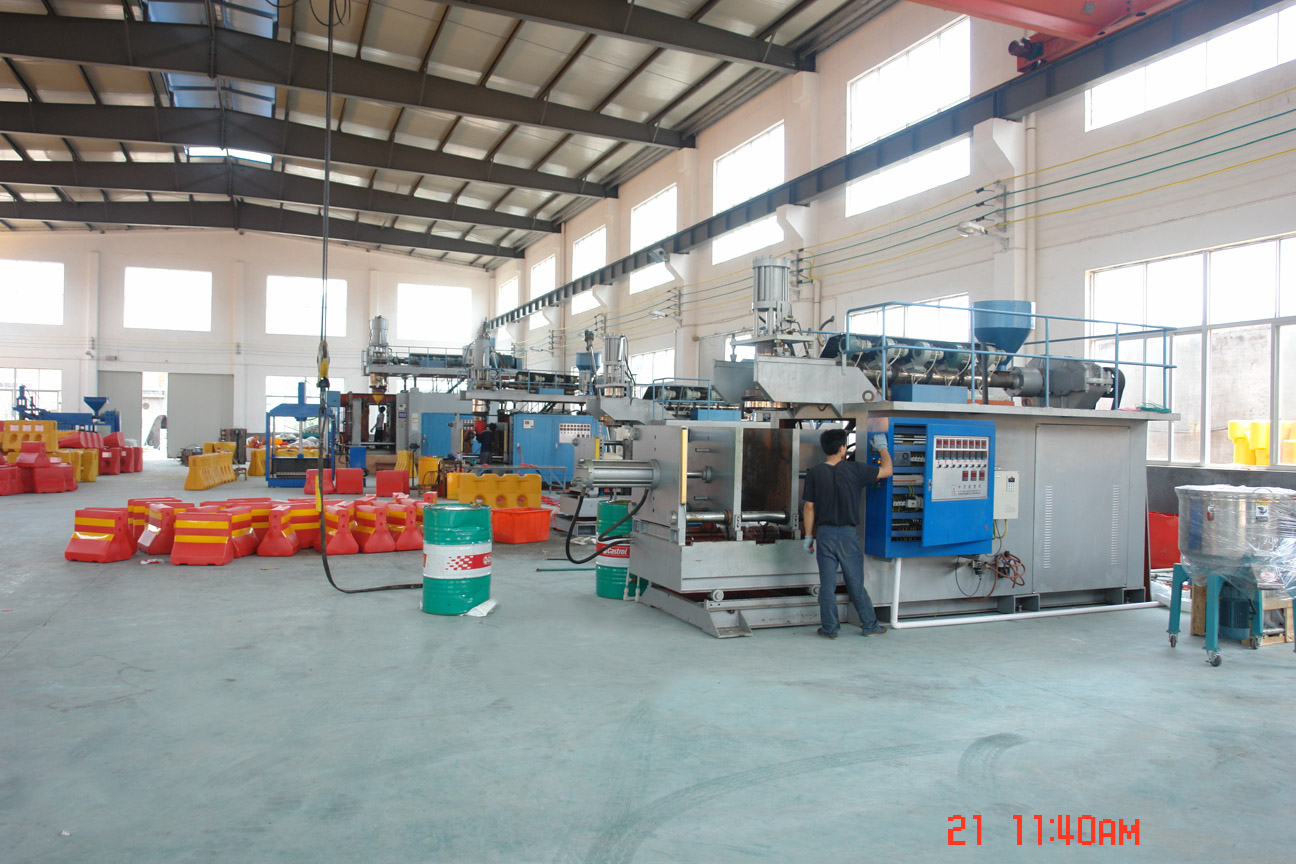
Polycarbonate mirror components are produced in-house, supporting a monthly capacity of 30,000 pieces.
Step-by-Step: Choosing the Smallest Mirror That Still Covers the Blind Spot
Oversizing is the most common specification error in convex mirror projects. A mirror larger than the geometry requires does not create a safer site; it adds surface area, weight and mounting load for coverage nobody uses. The sequence below keeps the selection on the smallest model that still closes the blind spot.
- Measure the concealed distance. Stand at the mirror position and identify the farthest point that is hidden from a driver approaching the junction. That distance — not the width of the road — is the number the mirror has to cover.
- Match it to a visual range. 15–18 m points to the YD-OC60; 20–25 m to the YD-OC75; 30–35 m to the YD-OC100; 35–45 m to the YD-OC120.
- Test one size down. If the model below your first choice still covers the measured distance, specify that one. The ranked order in this article exists precisely so the second-guessing happens before the order, not after installation.
- Choose the mounting interface. Wall mounting suits garages, warehouses and building corners; pole mounting suits driveways, yards, roadside positions and ports. The series fits 60 mm and 75 mm poles with a heavy-duty galvanized steel bracket.
- Set height and angle. Position the reflector so the reflected zone falls inside the driver's normal forward view at approach speed. The same mirror at the wrong height will not resolve the blind spot, and no diameter compensates for a reflected field the driver never looks at.
- Verify on site after installation and record the model. A one-page record of model, position, mounting type and measured distance makes multi-site rollouts repeatable and keeps later replacements consistent.
Wall Mounting or Pole Mounting
Wall mounting is the simpler route where a suitable structure already exists. Building corners, garage walls, warehouse columns and boundary walls give a stable fixing point at the required height, and the mirror's high-impact ABS backing and galvanized steel bracket carry the load without additional infrastructure. This is the usual choice in parking garages, warehouse interiors and office park entrances.
Pole mounting is the choice where the mirror has to follow the road rather than the building. Driveway entrances, yard junctions, port access roads and roadside corners need the reflector positioned relative to the traffic alignment, not to the nearest wall. The YD-OC series fits standard 60 mm and 75 mm poles, and all four ranked models use the same heavy-duty galvanized steel bracket, so mounting hardware does not change with diameter.
The practical difference between the two is positioning freedom. A wall position is fixed by the building; a pole position is fixed by the road. When the blind spot sits at a junction rather than against a wall, pole mounting is usually what makes the coverage figure in the catalogue achievable in practice.
Use Cases: Matching Models to Site Types
- Parking garages: YD-OC60 at ramp exits and internal corners; YD-OC75 where the garage exit opens onto a yard road.
- Warehouses and distribution centres: YD-OC75 at aisle intersections, dock approaches and internal crossings; YD-OC100 at wide yard junctions.
- Logistics parks: YD-OC100 at park intersections and hub exits; YD-OC120 where multi-lane internal roads meet at speed.
- Ports and docks: YD-OC120 for access roads and container yard junctions.
- School and hospital driveways: YD-OC75 for single-lane driveways; YD-OC100 for main drives with separate pedestrian crossings.
- Industrial estates and community intersections: YD-OC60 or YD-OC75 depending on entrance width and approach distance.
Field evidence for this mapping comes from distributor projects. In Thailand, a distributor client used the range for a medium-scale traffic safety project to improve visibility at road corners and parking blind spots. The delivery was completed on time and passed local acceptance, with the project highlights recorded as wide viewing angle, weatherproof construction and durable performance. The related models for that project included the YD-OC45, YD-OC60, YD-OC75, YD-OC80, YD-OC100 and YD-OC120 — a reminder that a single deployment can draw on more than one diameter.
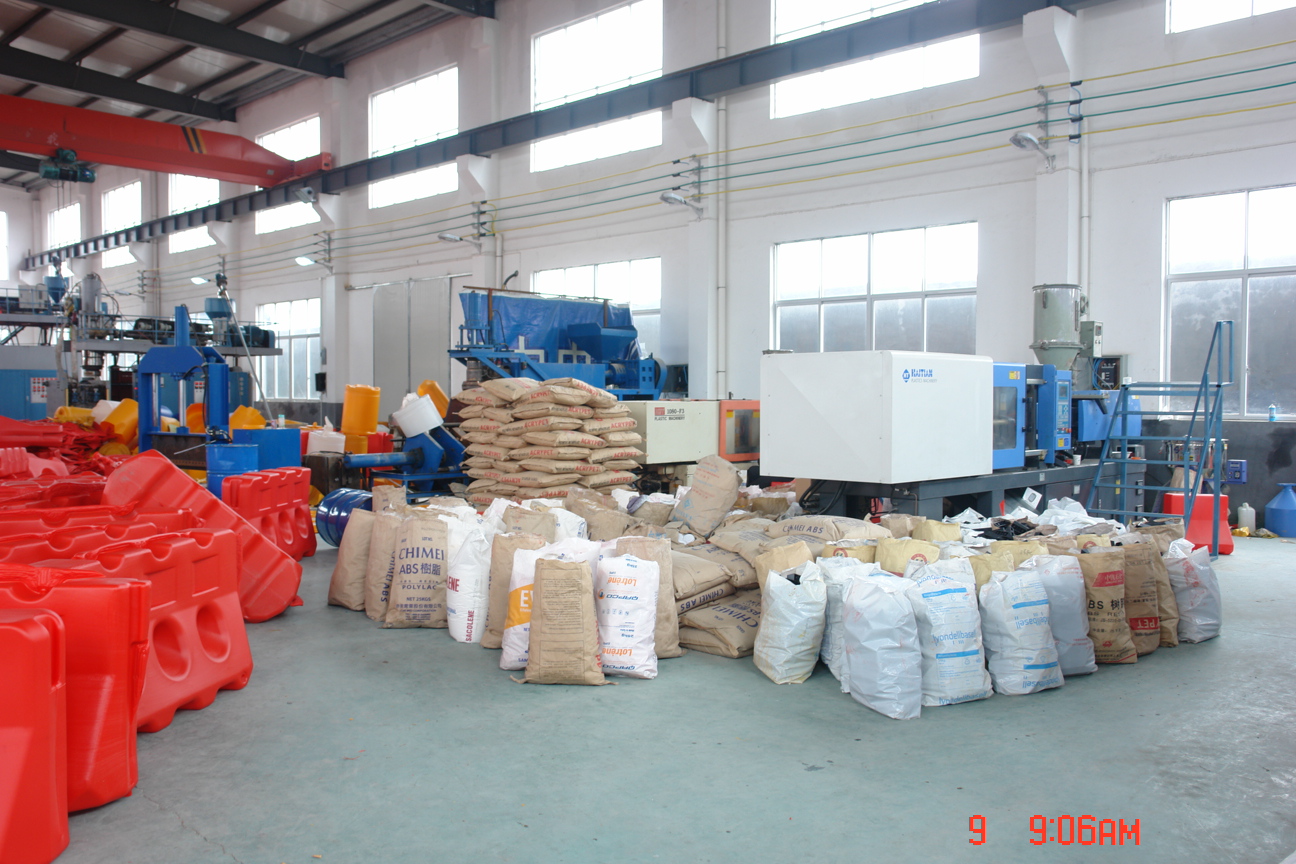
Production runs are scheduled against confirmed specifications, with standard lead time of 15–20 days for a 20 ft container.
Model Comparison Table
| Model | Diameter | Visual range | View angle | Primary deployment |
|---|---|---|---|---|
| YD-OC60 | ⌀600 mm | 15–18 m | 130°+ wide angle | Parking garages, narrow driveways, tight corridors |
| YD-OC75 | ⌀750 mm | 20–25 m | 130°+ wide angle | Warehouse intersections, dock approaches, site entrances |
| YD-OC100 | ⌀1000 mm | 30–35 m | 130°+ wide angle | Logistics park junctions, hospital and school main drives |
| YD-OC120 | ⌀1200 mm | 35–45 m | 130°+ wide angle | Ports and docks, container yards, highway ramps |
| Shared specification | Value across the YD-OC outdoor series |
|---|---|
| Mirror material | Impact-resistant polycarbonate (PC) |
| Surface treatment | Vacuum aluminium coating |
| Lens thickness | 0.6–1 mm (customizable) |
| Curvature radius | R2200–R3000 |
| Weatherproof rating | IP65 (for outdoor use) |
| UV and aging resistance | UV-stabilized PC and ABS; Grade 8 UV resistance (3–5 years lifespan) |
| Operating temperature | -30°C to +80°C |
| Backing | High-impact ABS, bright orange, 2.0 mm back plate |
| Mounting bracket | Heavy-duty galvanized steel; fits 60 mm / 75 mm poles |
| Impact rating | Vandal-resistant and self-recovery |
| Optional finishes | Anti-scratch hard coating; engineering grade reflective rim tape |
| Wind resistance | Level 10 wind load resistance |
Frequently Asked Questions
What weather and durability ratings do Mnsd outdoor polycarbonate convex mirrors carry?
All four ranked models are rated IP65 for outdoor use and operate between -30°C and +80°C. The polycarbonate and ABS components are UV-stabilized and carry Grade 8 UV resistance with a 3–5 year lifespan rating. The lens is impact-resistant polycarbonate with a vacuum aluminium coating and a 0.6–1 mm thickness, and wind load resistance is Level 10. One boundary worth noting: vehicle-mounted convex mirrors are governed by different rules — FMVSS No. 111 in the United States applies to mirrors installed on passenger cars, with a radius of curvature between 35 and 65 inches — and does not apply to site-installed mirrors such as these.
Can the diameter, backing material and lens material be customized?
Yes. Mnsd provides OEM and ODM production, with customization across diameter (45–120 cm), backing material (PP, ABS or fiberglass) and lens material (polycarbonate or stainless steel). The ranked models in this article — YD-OC60, YD-OC75, YD-OC100 and YD-OC120 — are the standard outdoor polycarbonate configurations; diameters from 450 mm upward are produced within the same customization range. Monthly capacity is 30,000 pieces, and every unit passes 100% impact and clarity inspection.
What is the minimum order and how should a project quantity be planned?
The minimum order quantity is 100 pieces, and a 20 ft container is the standard shipping unit for volume orders. Quantity should be driven by the number of measured blind spots on site rather than by container fill: because the customization range spans 45–120 cm diameters, a project can be planned position by position, using the smallest mirror that covers each individual blind spot.
Can a sample be evaluated before a full order is placed?
Sample and quotation requests can be raised directly with the Mnsd team. Production already applies 100% impact and clarity inspection, so a sample review is about confirming diameter, mounting configuration and finish against the site conditions rather than about checking basic build quality. Requests can be sent to info@mnsdtraffic.com, by phone or WhatsApp at +86 184-5813-7305, or through the site at www.mnsdtraffic.com. The full product catalogue is available as a downloadable PDF for spec sheets and dimensions.
What is the lead time for an order?
Standard lead time is 15–20 days for a 20 ft container, with a minimum order quantity of 100 pieces and a monthly production capacity of 30,000 convex mirrors. Lead time runs from confirmation of diameter, backing material and lens specification, so locking those three parameters early is what keeps a delivery date realistic.
Conclusion: Start From the Blind Spot, Not the Catalogue
The four models in this shortlist exist because outdoor blind spots come in different sizes. The YD-OC75 (⌀750 mm, 20–25 m) is the default choice for the largest number of industrial sites: warehouse intersections, dock approaches and site entrances. The YD-OC100 (⌀1000 mm, 30–35 m) covers wide internal roads and logistics park junctions. The YD-OC120 (⌀1200 mm, 35–45 m) handles ports, container yards and highway ramps where sight lines run long. The YD-OC60 (⌀600 mm, 15–18 m) solves the tight, enclosed blind spots in parking garages and narrow driveways.
All four carry the same IP65 rating, Grade 8 UV resistance, -30°C to +80°C operating range, Level 10 wind load resistance, high-impact ABS orange backing and heavy-duty galvanized steel bracket, with either a wall mount or a 60/75 mm pole mount. That means the decision is genuinely about size: measure the concealed distance, select the model that covers it, check one size down, and specify the smallest mirror that still closes the blind spot.
Next Step
Send the measured blind-spot distances from your site and the Mnsd team will confirm the model mix, mounting configuration and order quantity. Sample requests, quotations and customized diameter or material options are handled through the same channel.
Email: info@mnsdtraffic.com · WhatsApp: +86 184-5813-7305 · Web: www.mnsdtraffic.com
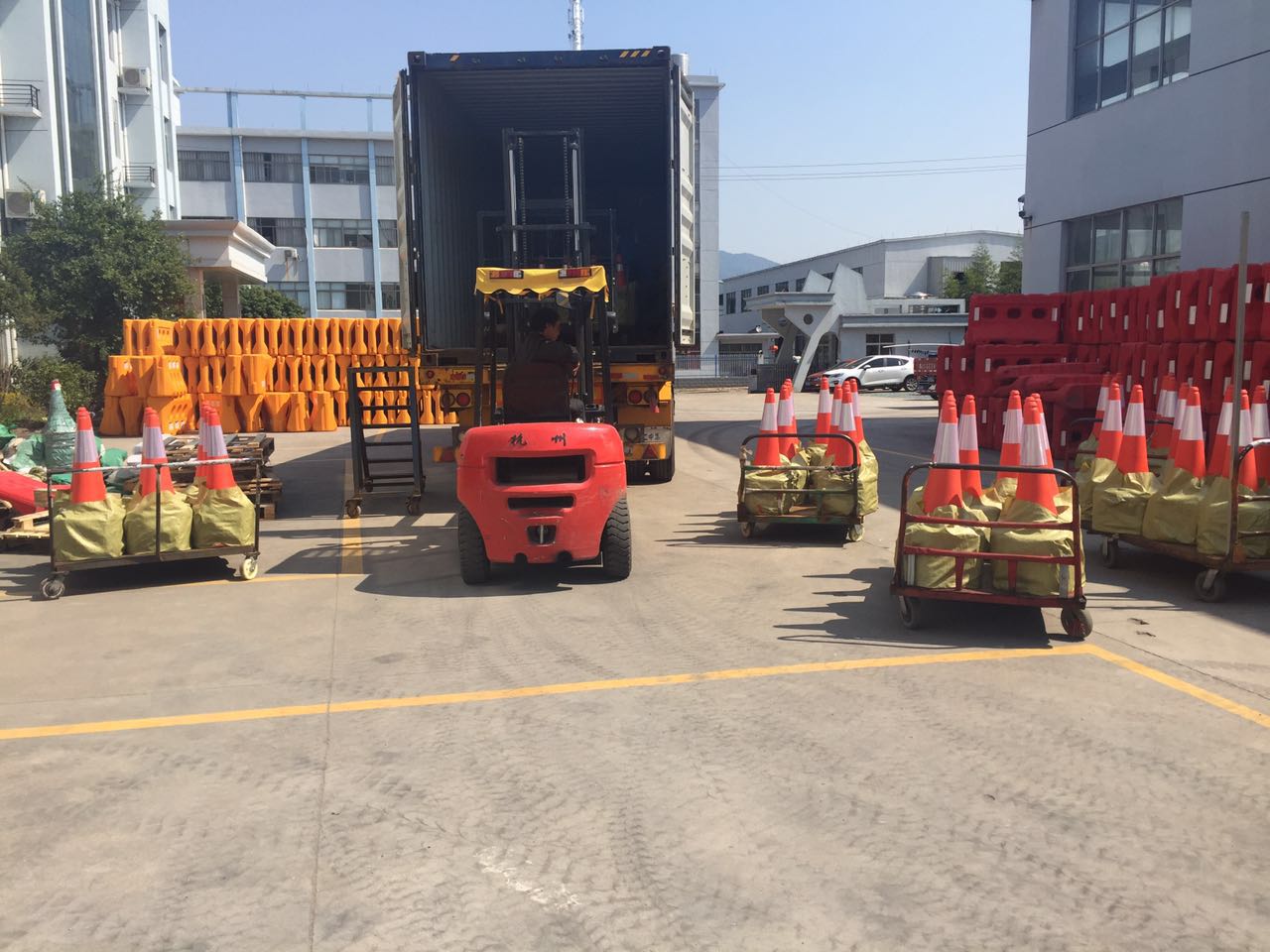
Orders are consolidated and shipped against confirmed specifications — request a sample or quotation to start a project.
Have Questions or Need More Details?
Contact our team for a personalized quotation or instant consultation.
Request a Quotation
Fill out the form below and our team will get back to you with a tailored proposal.
WhatsApp Direct Chat
Prefer to chat in real-time? Message us on WhatsApp for instant assistance & quick answers.
- Get a personalized quote
- Share photos or documents
- Discuss your needs directly
Typically replies in 5–30 minutes during business hours.