
Warning Post Material Science: PU Elastomers, Shore Hardness & Impact Recovery
Warning Post Material Science: PU Elastomers, Shore Hardness & Impact Recovery
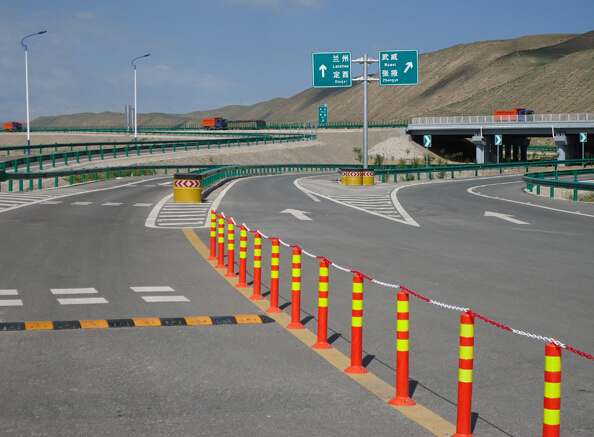
A warning post left permanently bent at 40 degrees after a delivery truck clipped it did not fail because it was installed badly. It failed because of the material hidden behind the word "flexible." Three numbers decide whether a post springs back or stays deformed: tensile strength, elongation at break, and Shore A hardness. In a high-elasticity polyurethane (PU) warning post these are typically 15.0 MPa, 400%, and 80-85 Shore A, with a service temperature range of -40°C to +70°C. This article explains what each value controls on site, how the values interact, and how to turn them into a specification that a factory, an engineer, and a buyer can all work from.
Problem Definition: "Flexible" Is Not a Specification
In traffic safety procurement, flexible is a marketing word, not a measurement. Two warning posts from two suppliers can both be described as flexible and still behave in completely different ways: one recovers to vertical within seconds after a bumper impact, while the other creeps into a permanent lean and has to be replaced within a season. The buyer usually discovers the difference after the posts are already installed on a ramp or in a parking garage, where replacement means labour, lane closure, and a second shipping cost.
The word survives because flexibility is easy to feel by hand and hard to write into a purchase order. Four material properties remove the ambiguity, and every one of them is measurable before shipment:
- Permanent set and creep. The post deflects, then stays deflected. The lane edge or traffic island it marked is no longer defined, and drivers lose the visual cue that justified the purchase.
- Base-zone cracking. Repeated bending concentrates stress where the post body meets its base. A material with insufficient elongation cracks instead of stretching.
- Thermal distortion. In hot climates a polymer post can soften and sag even without being hit. Mnsd controls this specific risk by optimizing wall thickness to prevent sagging in high-temperature climates and to keep material stability up to 60°C.
- Aging drift. UV radiation, ozone, and temperature cycling change the surface over time. A post that hardens with age behaves like a rigid post while still looking like a flexible one.
Industry Background: A Physical Hardware Market With Hard Specification Lines
The demand side of this category is large and still expanding. The global road marker posts market was valued at USD 3.4 billion in 2024 and is projected to reach USD 5.4 billion by 2032, according to Road Marker Posts Market Size Analysis. Dataintelo forecasts the wider traffic safety products market to expand at a CAGR of 6.6% from 2026 to 2034, driven by urban population growth and infrastructure investment.
Published estimates for the broader traffic safety market diverge, ranging from USD 6.4 billion (Strategic Market Research) to USD 12.5 billion (Spherical Insights), largely because some reports include digital traffic management systems while others count physical hardware only. For delineator and marker hardware specifically, the marker-post figure is the more useful reference point when sizing a project.
Specification, meanwhile, is set by standards rather than by market size:
- EN 12899-3 specifies requirements for delineator posts and retroreflectors used in traffic circulation areas in the European Union.
- MUTCD requires delineators in the United States to be retroreflective and visible from 1,000 feet when illuminated by high-beam headlights.
- ASTM D2765 provides standard procedures for measuring gel content and swell ratio of crosslinked ethylene plastics used in industrial safety products, which is the relevant test framework when polyethylene posts are being evaluated.
Material choice has moved along with the standards. Thermoplastic Polyurethane (TPU) is preferred for high-impact warning posts because of its elastic recovery and durability compared with standard Polyethylene (PE), according to OPTRAFFIC material guidance. On the supply side, leading global traffic equipment manufacturers include 3M, Honeywell, and SWARCO, which together hold approximately 39.2% of the top-five market share, per Global Market Insights. That leaves a long tail of suppliers, and for buyers comparing that long tail, the material data sheet is the most reliable differentiator available before a purchase order is issued.
Detailed Solution: What a PU Elastomer Actually Delivers
High-elasticity polyurethane is not a single product but a family defined by measured properties. Four values, plus aging behavior, describe how a warning post made from it will perform across its service life.
Tensile strength: 15.0 MPa
Tensile strength is the stress at which the material tears apart when pulled. A value of 15.0 MPa for a high-elasticity PU warning post means the post's thin and highly stressed sections - the neck, the mounting boss, and the base interface - resist being torn or split under repeated lateral loading. The engineering consequence is durability in exactly the place where flexible posts usually fail: the joint between the flexible body and the fixed base, which sees the highest local strain every time a vehicle makes contact.
Elongation at break: 400%
Elongation at break describes how far the material can stretch before it ruptures. At 400%, the PU post can deflect through a large angle while the elastomer absorbs the energy of the impact rather than cracking. This is the property that converts a collision into a deflection event instead of a replacement event. It also covers the slow, low-amplitude loading that never appears in a single impact test: wind buffeting on highway ramps, repeated tire brush in narrow parking aisles, and vibration from passing heavy vehicles.
Shore A hardness: 80-85
Shore A is a durometer scale used for elastomers, and a reading of 80-85 indicates a firm elastomer: hard enough to stand vertically and hold its reflective surface in the correct orientation toward traffic, elastic enough to deform and recover. The most common specification error here is treating hardness as a proxy for stiffness or recovery. It is neither. Hardness measures resistance to indentation, while recovery depends on the elasticity of the elastomer, which is why hardness must always be specified together with elongation at break.
Service temperature: -40°C to +70°C
A PU warning post rated from -40°C to +70°C covers the operational range of typical road, parking, and industrial environments, from winter roads in northern markets to summer surfaces in hot climates. Two design considerations matter at the ends of that range. In cold conditions the material must avoid embrittlement, so that a low-temperature impact produces deflection rather than fracture. At the high end the risk is thermal distortion, which is why Mnsd's control measure for this risk is wall-thickness optimization to prevent sagging in high-temperature climates and to ensure material stability up to 60°C.
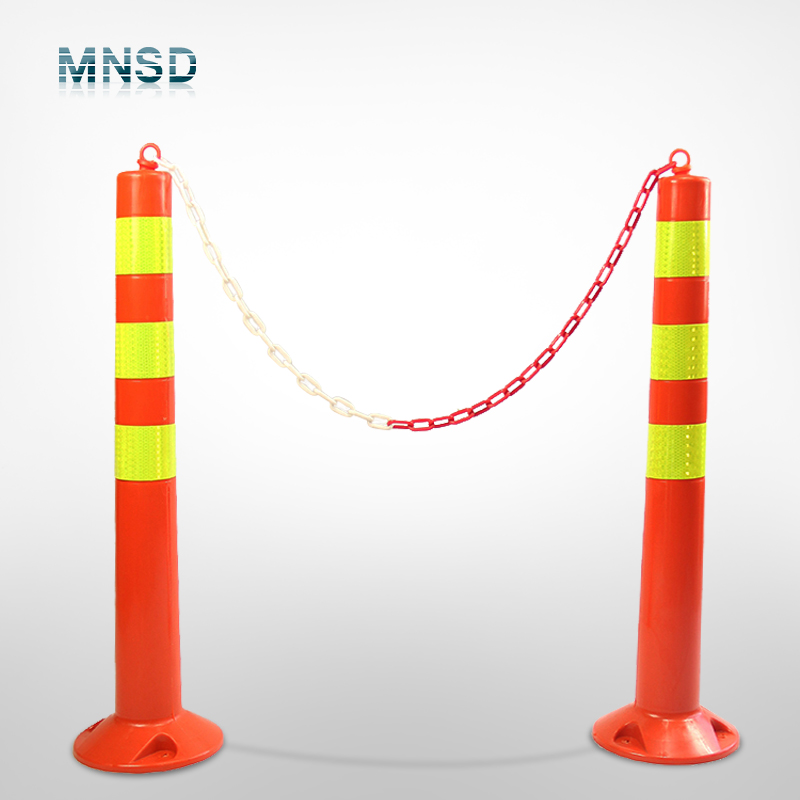
Aging resistance
Aging resistance determines whether the post still has its specified properties in year three rather than only on delivery day. UV radiation, ozone, moisture, and temperature cycling all attack the surface of any polymer. For a warning post the cost of aging is double: the elastomer can harden or chalk, and the reflective element can lose performance at the same time. A post that has aged into a rigid state keeps the appearance of a flexible post without the function, and the problem is usually only discovered when a vehicle makes contact. Aging behavior should therefore be requested as part of the material documentation, not inferred from an initial hardness reading.
Step-by-Step Breakdown: Turning Material Data Into a Purchase Specification
The sequence below is the practical way to convert material science into a line item that can be quoted, produced, and inspected without ambiguity.
- Map the impact scenario. Define what actually contacts the post: passenger cars in a parking garage, delivery vans at a loading bay, trucks on a ramp. Note the approach angle and how frequently contact is expected. High-frequency low-speed contact and rare high-speed contact load the material differently.
- Set the recovery requirement in writing. State that the post must return to vertical after deflection, and specify Shore A hardness in the 80-85 band as the baseline for a high-elasticity PU post.
- Set the strength floor. Require tensile strength of 15.0 MPa so that base-zone and neck sections survive repeated lateral strain without tearing.
- Set the ductility requirement. Require elongation at break of 400%. This is the value that determines whether an impact is absorbed or becomes a fracture.
- Set the thermal envelope. Specify a -40°C to +70°C service range. Where summer surface temperatures approach or exceed 60°C, ask the supplier to describe the wall-thickness or sag-control measure used against thermal distortion.
- Match reflectivity to the destination market. In the EU, refer to EN 12899-3 for delineator posts and retroreflectors. In the United States, refer to MUTCD, which requires delineators to be retroreflective and visible from 1,000 feet under high-beam headlights.
- Validate by sample and lock the datasheet. Test the sample against steps two to five before approving volume production, and require the four values to appear on the product datasheet so that incoming inspection has a written reference.
| Parameter | Target value | What it controls on site | What to request from the supplier |
|---|---|---|---|
| Tensile strength | 15.0 MPa | Base and neck survival under repeated bending | Value on datasheet with test method reference |
| Elongation at break | 400% | Impact absorbed as deflection rather than fracture | Value on datasheet plus a deflection check on the sample |
| Shore A hardness | 80-85 | Upright stability combined with elastic recovery | Hardness reading submitted together with elongation |
| Service temperature | -40°C to +70°C | Cold-weather brittleness and hot-weather sagging | Range plus the high-temperature sag-control measure |
| Aging resistance | Documented | Whether properties still hold in year three | UV and aging statement with reflective element data |
| Retroreflectivity | Market standard | Night-time visibility from the driver's seat | EN 12899-3 (EU) or MUTCD visibility basis (US) |
Use Cases: Where Impact Recovery Decides the Purchase
Material parameters earn their place in a specification through specific environments. In the settings below, a rigid or poorly recovering post creates a recurring cost rather than a one-time saving:
- Parking garages and tight aisles. Low-speed, high-frequency contact with mirrors, bumpers, and tires. A post that keeps a permanent set after each contact stops defining the lane within a season.
- Highway ramps and lane delineation. Long service life under wind load, vibration, and occasional high-speed deflection, where the elongation reserve is what prevents a fracture.
- Logistics parks, factories, warehouses, and loading bays. Guidance for reversing vehicles and separation of pedestrian from vehicle routes, in locations where no power supply is available.
- Residential quarters, community intersections, schools, and hospitals. Lower-speed environments where visibility and predictable post location matter more than heavy-duty impact resistance.
- Ports, docks, industrial zones, bus stations, gas stations, and construction sites. Mixed traffic with frequent equipment movement, where maintenance-free operation and zero power consumption keep the operating cost low.
Across all of these environments the warning post performs two functions at once: visual warning and physical isolation with flexible rebound, at a cost positioned below guardrails and barriers, with no energy consumption and maintenance limited to occasional cleaning or replacement when damaged.
Comparison Table: PU vs PE Warning Posts on the Parameters That Matter
The comparison below uses only documented material and standards information. It does not assign performance values that have not been published for either material.
| Decision factor | PU / TPU warning post | PE warning post |
|---|---|---|
| Impact resistance | Preferred for high-impact warning posts because of elastic recovery and durability (OPTRAFFIC material guidance) | Positioned below TPU on impact resistance in the same material guidance |
| Recovery after deflection | Governed by a documented elongation at break of 400% in a high-elasticity PU formulation | No equivalent published recovery value in the verified data set; recovery should be tested per application |
| Documented test framework | Material datasheet values for tensile strength, elongation at break, and hardness | ASTM D2765 covers gel content and swell ratio measurement for crosslinked ethylene plastics |
| High-temperature behavior | Thermal distortion controlled by wall-thickness optimization for stability up to 60°C, within a -40°C to +70°C service range | Verify the supplier's heat-stability statement for the specific grade before specifying |
| Selection rule | Specify where repeated vehicle contact, high-frequency deflection, or wide temperature exposure is expected | Specify where the post is protected from direct vehicle contact and the duty is light |
The practical conclusion for buyers is not that one polymer is universally better, but that the material claim must be supported by published values. Where a supplier publishes tensile, elongation, and hardness data for a PU post, the specification can be inspected and compared. Where only the word flexible is offered, the buyer is accepting an unverifiable risk on a product whose entire function depends on that one property.
Supplier Context: Where This Material Data Comes From
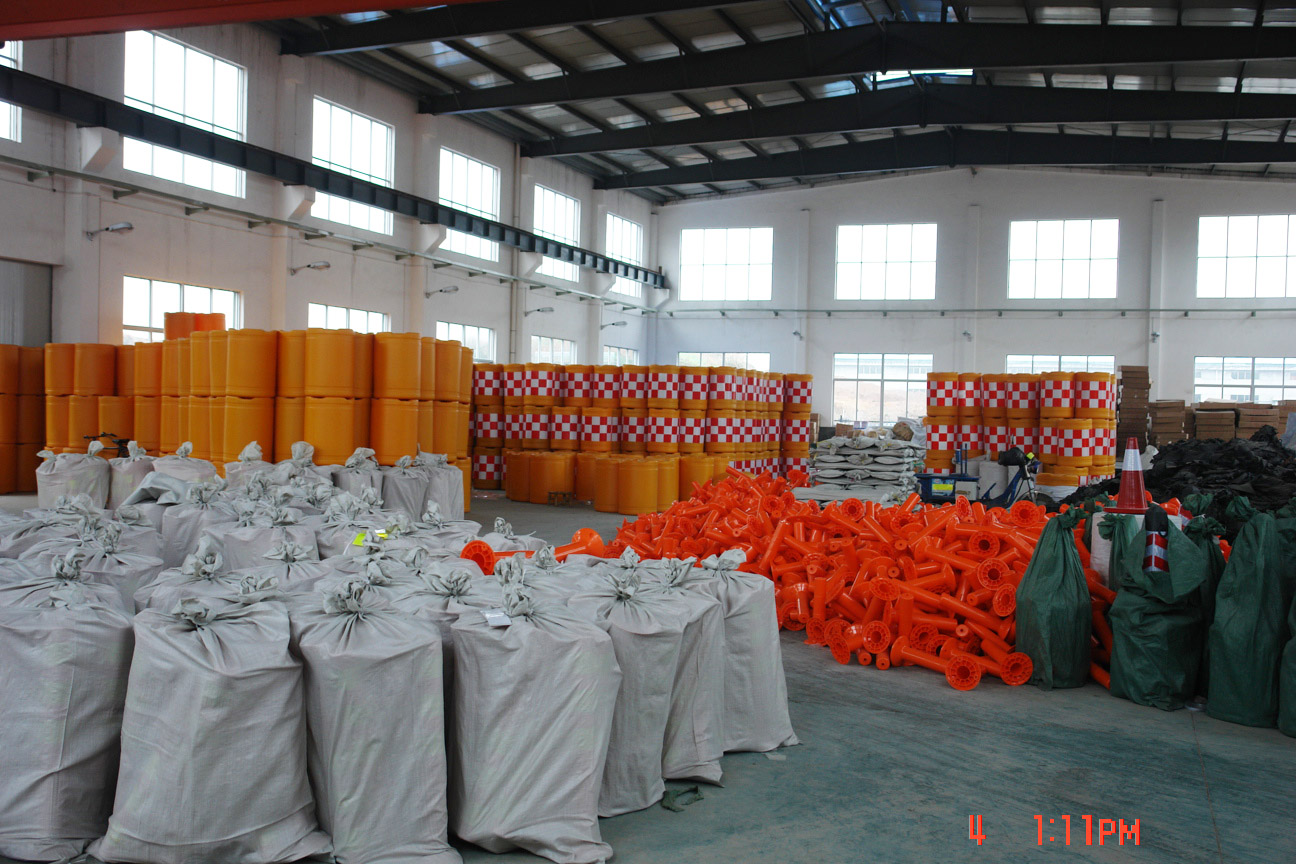
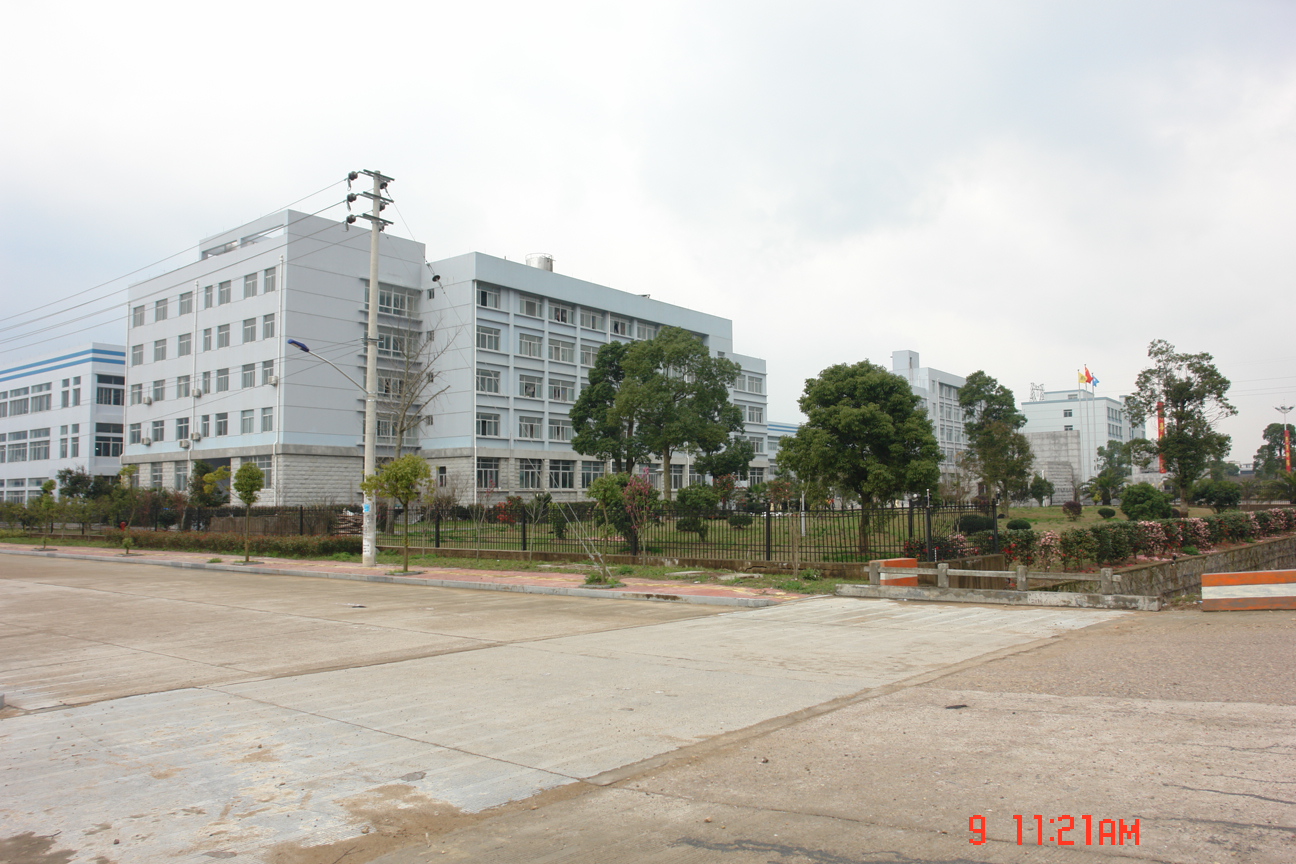
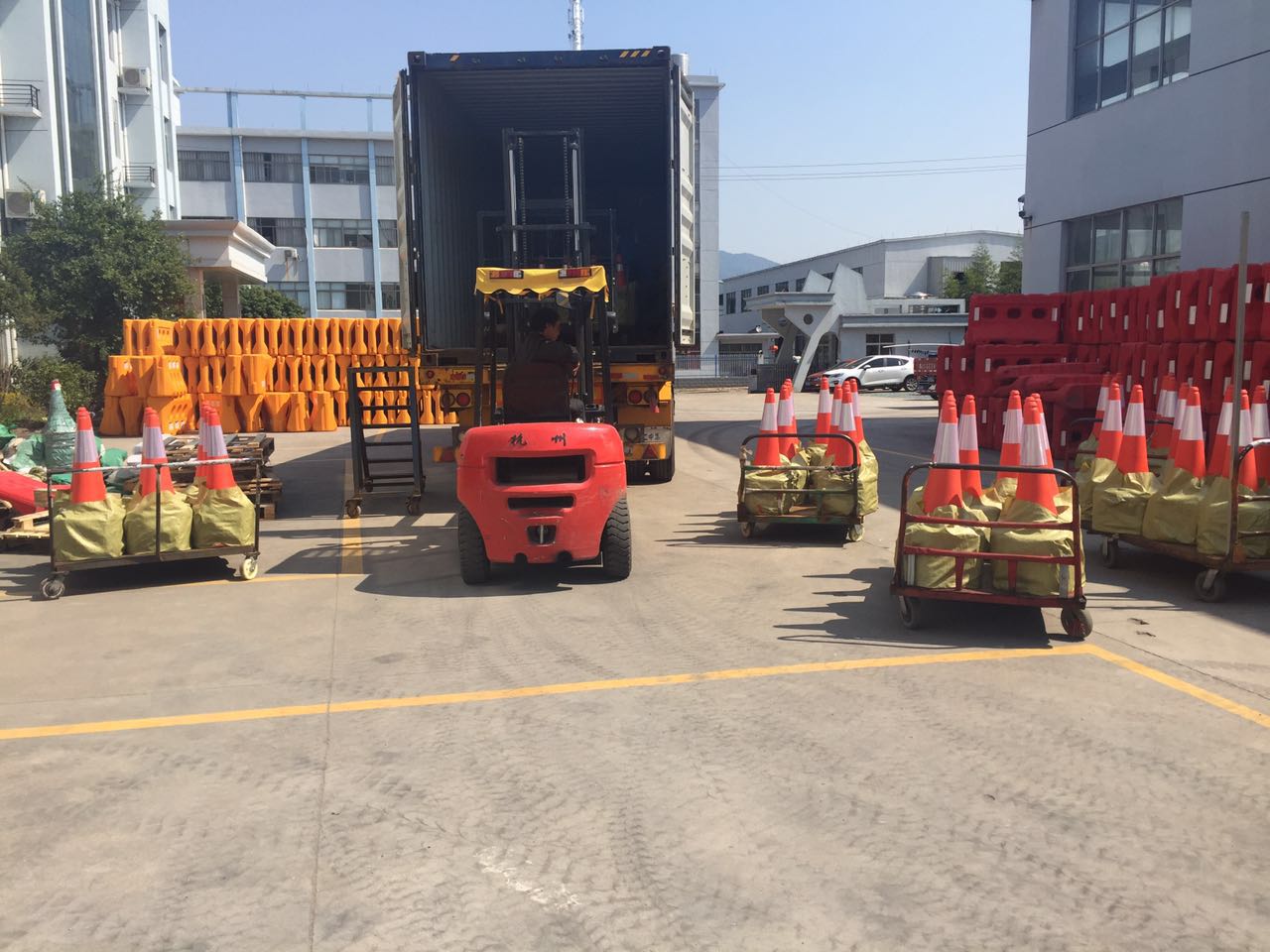
Mnsd is the traffic safety brand of Tiantai Yuanda Traffic Device Co., Ltd, a road safety equipment manufacturer based in Tiantai, Zhejiang, China, producing warning posts, traffic cones, convex mirrors, speed humps, rising bollards, and traffic lights for importers, distributors, wholesalers, contractors, and infrastructure project suppliers. The company operates a 40,000 m² factory with 300 employees and a 15-person R&D team, reports annual output of 120,000,000 units, and exports approximately 50% of production to Asia, Europe, and the USA. OEM and ODM customization is available for buyers who need non-standard heights, colours, or reflective configurations.
For engineers, the relevant point is not factory size but the ability to answer material questions: hardness, tensile strength, elongation, temperature range, and the specific control measure used against thermal distortion. Those are the questions that distinguish a supplier who manufactures flexible warning posts from one who simply resells them, and they are also the questions that make a specification enforceable after the order is placed.
Frequently Asked Questions
Which standards should a PU warning post be checked against?
Two regional frameworks apply most often. EN 12899-3 specifies requirements for delineator posts and retroreflectors used in traffic circulation areas in the European Union. In the United States, MUTCD requires delineators to be retroreflective and visible from 1,000 feet when illuminated by high-beam headlights. Where polyethylene components are evaluated alongside PU, ASTM D2765 provides the standard procedures for measuring gel content and swell ratio of crosslinked ethylene plastics. For the PU elastomer itself, the values to verify are tensile strength, elongation at break, Shore A hardness, and the service temperature range.
Does 80-85 Shore A hardness make a warning post too stiff to recover?
No, provided hardness is specified together with elongation. Shore A hardness measures resistance to indentation, not rebound. A post at 80-85 Shore A is firm enough to remain vertical and keep its reflective face oriented toward traffic, while the elasticity of the elastomer - represented by an elongation at break of 400% in a high-elasticity PU formulation - provides the deflection and recovery. Hardness by itself cannot confirm recovery, because a brittle material and an elastic material can return the same durometer reading.
How does a PU warning post compare on cost with other traffic safety hardware?
Warning posts are positioned as an ultra-low-cost option relative to guardrails and barriers, with almost maintenance-free operation, no power requirement, and zero energy consumption. Within the warning post category itself, the cost drivers are the material family and grade, the reflective element specified, and the finished height within the 75-120 cm range. Because the device needs no power and little servicing, lifetime cost is dominated by the initial purchase and by replacement only when a post is damaged - which is exactly the cost that impact recovery is designed to reduce.
Can I evaluate a PU warning post by sample before ordering in volume?
Yes, and sampling is the right stage to test the material rather than the appearance. Request that the sample is accompanied by the tensile strength, elongation at break, Shore A hardness, and service temperature values, then check those values against your own specification before approving volume production. Sample arrangements, catalogue requests, and customized specifications can be handled directly through info@mnsdtraffic.com, and Mnsd supports OEM and ODM customization where a project requires a non-standard configuration.
What should buyers confirm about capacity and delivery before committing to repeat orders?
Capacity questions should be answered with figures rather than assurances. Relevant data points include the 40,000 m² production area, a workforce of 300, an annual output of 120,000,000 units, and an export ratio of approximately 50% across Asia, Europe, and the USA. Buyers planning multi-site rollouts should confirm production capacity and the delivery schedule in writing for the specific PU warning post configuration they are ordering, since material grade and reflective specification drive both cost and timing. The usual next step is a catalogue and a quotation against a defined specification - both are available on request at www.mnsdtraffic.com or by contacting the sales team directly.
Conclusion: Specify the Number, Not the Adjective
Impact recovery is one of the few traffic safety properties that can be fully verified before delivery rather than after installation. Tensile strength of 15.0 MPa defines the strength floor at the base and neck. Elongation at break of 400% provides the deflection reserve that turns contact into recovery instead of fracture. Shore A hardness of 80-85 balances upright stability with elastic behavior. A -40°C to +70°C service range with documented aging resistance keeps those properties valid across markets, and a thermal distortion control such as wall-thickness optimization for stability up to 60°C protects the post in hot climates. Together these values give engineers something inspectable and give buyers something comparable between suppliers. The adjective flexible does neither.
Next step: define the specification, then request the sample and quotation
Send the four values - tensile strength, elongation at break, Shore A hardness, and service temperature - together with your site conditions, and Mnsd will confirm the matching PU warning post configuration, provide a quotation, and arrange sampling.
Catalogue / brochure: Download the Mnsd product catalogue (PDF)
Website: www.mnsdtraffic.com
Email: info@mnsdtraffic.com
Tel / WhatsApp: +86 18458137305
Address: Hongsan Industry Zone, Tiantai Town, Taizhou City, Zhejiang Province, China
Have Questions or Need More Details?
Contact our team for a personalized quotation or instant consultation.
Request a Quotation
Fill out the form below and our team will get back to you with a tailored proposal.
WhatsApp Direct Chat
Prefer to chat in real-time? Message us on WhatsApp for instant assistance & quick answers.
- Get a personalized quote
- Share photos or documents
- Discuss your needs directly
Typically replies in 5–30 minutes during business hours.