
Outdoor Convex Mirrors: Wide-Angle PC Lenses and Mounting
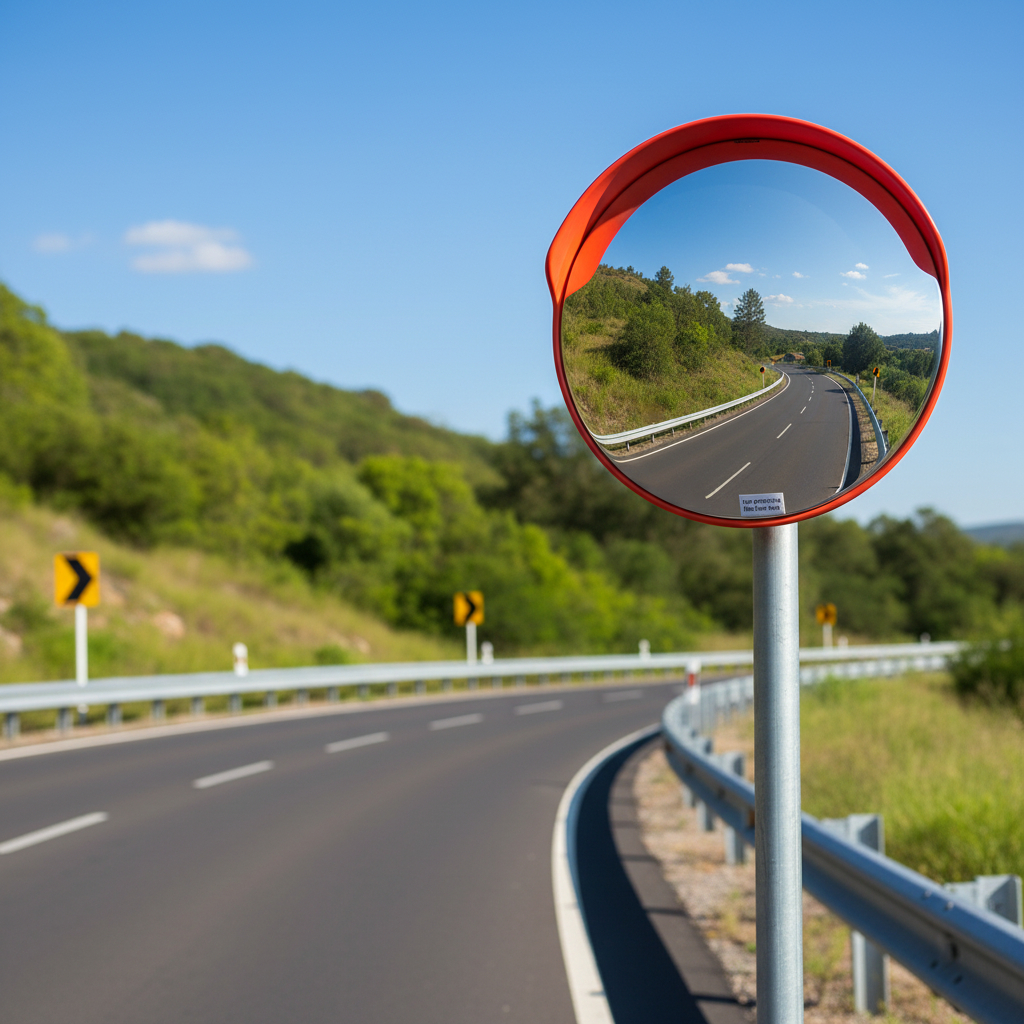
Convex mirrors solve a physical problem that no amount of driver caution can fix: at a corner, a ramp mouth, a loading bay or an aisle intersection, the line of sight is blocked. An outdoor convex mirror places a curved reflective surface where two conflicting sight lines meet, so a driver approaching from one direction can see traffic coming from the other. It needs no power, no network and no subscription — it is a fixed physical reflection that stays available around the clock.
This guide is a category primer for people who have to specify and purchase these devices rather than simply look at them: security and protection procurement teams, facility and safety managers, contractors, and distributors building an outdoor range. It explains how the wide-angle view is produced, why the lens is impact-resistant polycarbonate and the backing high-impact ABS, what IP65, UV Grade 8 and a −30 °C to +80 °C rating actually describe, and how the Mnsd YD-OC60, YD-OC75, YD-OC100 and YD-OC120 sizes map to real sites.
The blind spot is the specification
A convex mirror is bought to change what a driver can see at one specific location. Mnsd defines the application as outdoor intersections, underground garage corners, T-junctions and areas with significant blind spots, and the function in those places is to eliminate blind spots, expand the driver's field of vision, prevent vehicle collisions, and protect both pedestrians and vehicles.
Two consequences follow for buyers. First, the device is passive: it operates in fixed physical reflection mode, which means the view is available 24/7 without power, but also that nothing about the installation adapts itself later. The angle, position and diameter chosen on installation day decide the result for years. Second, because the device is passive, the purchasing decision is almost entirely about durability and geometry — a mirror that dulls, yellows, cracks or shifts on its bracket stops delivering the view it was bought for.
It is worth being precise about what the category does not do. A convex mirror does not record, detect or warn; it presents an image. Where a site needs event logging, alerting or evidence of an incident, a mirror is a complement rather than a substitute. Where the requirement is simply that a forklift driver can see around a rack end, the mirror remains the lowest-complexity option available.
The predictable failure modes are worth naming because they translate directly into purchase criteria: a reflective coating that degrades under sun and cleaning, a polymer that embrittles with UV exposure, a bracket that corrodes at its fixings, and a unit that was the wrong diameter or position from the start. Each of these is addressed by a specification item further down this page, not by a higher price alone.
Industry background: a specification-driven category
The category is mature, but it is increasingly specification-driven. Dataintelo's convex mirror market report, published in May 2026, values the global market at USD 1.04 billion in 2025 and projects USD 1.73 billion by 2034 at a 5.8% compound annual growth rate, with Asia Pacific accounting for 42.5% of 2025 revenue. Those figures cover the whole category — retail, traffic and industrial mirrors in polycarbonate, acrylic and glass — and they are useful to a buyer in one respect: a large and fragmented supply base makes specification comparison more important, not less.
Material choice is where most of the price difference sits. Mnsd's 2026 outdoor polycarbonate convex mirror guide puts the everyday cost of a polycarbonate lens at 15–35% above an equivalent acrylic mirror. That premium buys impact behaviour and outdoor stability, and it is the clearest trade-off in any outdoor purchase decision.
How a convex surface produces 130°+ of vision
A flat mirror reflects at the angle it receives light, so it shows roughly a mirror-sized field. A convex mirror curves outward: the reflective surface turns progressively away from the viewer towards the rim, so light arriving from a much wider arc is redirected towards the eye. The published YD-OC specification states 130°+ wide-angle vision across the series, a curvature radius range of R2200 to R3000, and a 180° angle specified for the YD-OC75.
Curvature radius describes how strongly the surface bends: a smaller radius is a tighter curve, a larger radius a flatter one. On the same diameter, curvature determines how much scene is compressed into the lens and how the image behaves towards the rim. That is why diameter and radius are specified together rather than separately — a 600 mm lens and a 1200 mm lens drawn from the same R2200–R3000 band deliver very different amounts of usable detail at the same viewing distance.
The unavoidable trade-off of any convex surface is minification. The wider the arc captured, the smaller each object appears inside it, and the harder it becomes to judge approach speed. Buyers should treat the wide angle as a detection aid, not a distance-measuring instrument, and should size the mirror so that the objects that matter — a person, a pallet truck, a car bonnet — stay large enough to read at the real approach distance.
Polycarbonate: why the lens is PC rather than glass
The YD-OC lens is impact-resistant polycarbonate (PC) with a vacuum aluminium coating as the reflective layer and a lens thickness of 0.6–1 mm, customizable by project. Polycarbonate is specified for its behaviour under impact: the lens is described as vandal-resistant and self-recovering, so it deflects and returns instead of breaking into fragments above a roadway, a walkway or a loading area.
Three details matter when comparing suppliers. The first is the coating, because the vacuum aluminium layer is the optical surface — its quality decides how the image looks after a season of sun and cleaning. The second is UV stabilisation, listed as UV-stabilised PC and ABS, which addresses the yellowing and embrittlement that sunlight drives in unstabilised polymers. The third is surface hardness: an anti-scratch hard coating is an optional treatment on this range, and it is worth specifying wherever the mirror will be cleaned frequently or is within public reach.
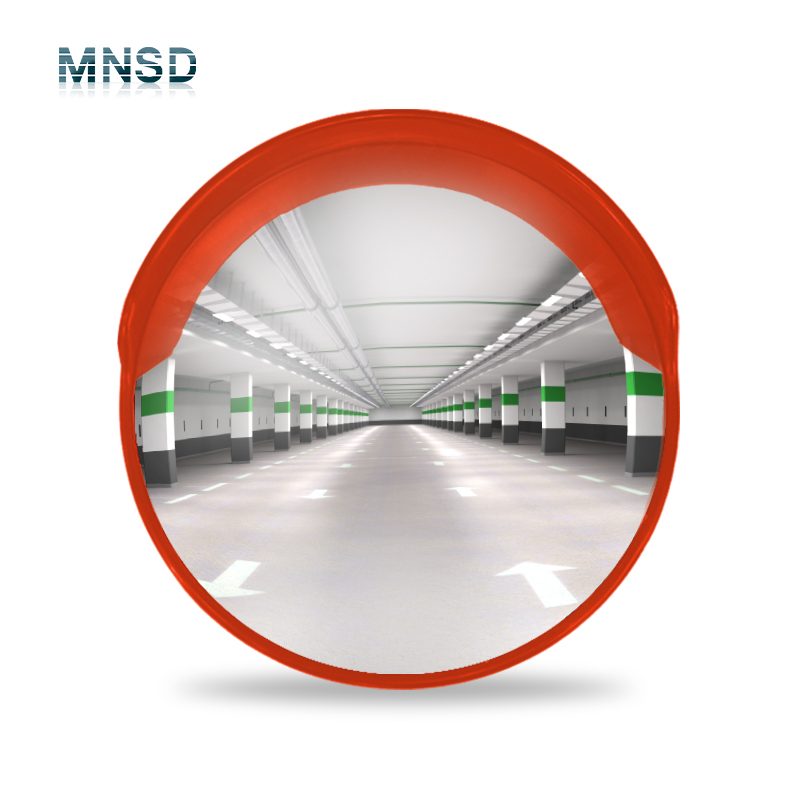
Polycarbonate is not the only lens option in the range. Mnsd's customization scope covers lens options in PC or stainless steel and backing options in PP, ABS or fibreglass, and the same 2026 guide notes the 15–35% polycarbonate premium over acrylic. The decision rule is straightforward: where the mirror faces vehicle traffic, vandalism risk, gravel spray or repeated washing, the PC premium is buying service life. Where the mirror is protected and light-duty, an acrylic unit can be a defensible budget choice — provided the buyer accepts the different impact behaviour that comes with it.
The backing, the orange trim, and the mounting hardware
An outdoor mirror is a system, not a lens. Behind the reflective surface, the YD-OC uses a high-impact ABS plastic backing with a 2.0 mm back plate, finished in bright orange for high visibility so that the device itself is seen before it is used. The backing holds the lens in shape, carries the mounting points and shields the rear of the assembly from weather.
Mounting is handled by a heavy-duty galvanized steel bracket, and the assembly fits 60 mm or 75 mm poles. Galvanized steel is specified because the bracket carries the wind load and is the part most likely to corrode first in coastal or industrial air. Around the bracket, an installation typically also requires pole-mount clamps, support pillars where no suitable pole exists, expansion bolts for masonry, and — where low-light conspicuity matters — engineering-grade reflective tape, available here as an optional rim treatment.
Two practical checks follow. Confirm the pole diameter before ordering: a 60 mm clamp will not fit a 75 mm post, and adapters are a project-level decision rather than a stock assumption. Confirm the mounting surface as well, because a wall installation and a pole installation use different hardware and load the fixings differently.
Reading the outdoor ratings: IP65, UV Grade 8, −30 °C to +80 °C
Outdoor claims are only useful when they are specific. The YD-OC specification states four figures a buyer can compare directly — IP65 for outdoor use, UV resistance Grade 8 with a stated 3–5 year lifespan, an operating temperature range of −30 °C to +80 °C, and Level 10 wind load resistance — and each one answers a different question.
| Specification | Published value | What it tells the buyer | What to confirm on site |
|---|---|---|---|
| Weatherproof rating | IP65, for outdoor use | The enclosure is specified as dust-tight and protected against water jets, the standard meaning of the IP65 code | Whether the mounting orientation and any drilled fixings preserve the seal |
| UV resistance | Grade 8, 3–5 year lifespan | The polymer is UV-stabilised against sunlight-driven ageing, with a stated service window | Expected sun exposure; whether replacement planning should follow that window |
| Temperature resistance | −30 °C to +80 °C | The assembly is specified to work across a range covering freezing winters and hot, exposed surfaces | Local record extremes, particularly for high-altitude or desert sites |
| Wind resistance | Level 10 wind load resistant | The backing and bracket are specified for exposed outdoor mounting | The fixing substrate, since wind performance depends on what the bracket is anchored into |
| Impact behaviour | Vandal-resistant and self-recovering | The lens is specified to deflect and recover rather than shatter | Whether the optional anti-scratch hard coating suits the cleaning regime |
The IP65 figure deserves a note. It rates the enclosure against dust and water; it is not a statement that the unit can be submerged or jetted indefinitely, and a mirror mounted where a pressure washer is routinely directed at it is a different case from one standing beside a roadway. Likewise, the UV grading is a material statement with an explicit window: it tells the buyer that the polymer is stabilised and gives an expected 3–5 year lifespan, which is the figure to use when planning inspection and replacement cycles rather than assuming indefinite optical clarity.
Temperature is the rating most often ignored in procurement and most often noticed in service. A range of −30 °C to +80 °C covers the conditions in which the assembly is specified to function; buyers in extreme climates should compare that band with local record temperatures and decide whether the mirror position exposes the unit to more heat, for example on a dark wall in direct sun.
Matching models to sites: YD-OC60, YD-OC75, YD-OC100, YD-OC120
The four outdoor sizes differ mainly in diameter and stated visual range, and that range is the most practical selection input available. All four share the same lens material, vacuum aluminium coating, curvature band, temperature range, IP65 rating, ABS backing, orange finish and galvanized steel bracket. The decision is about how much area the mirror must cover, and from how far away.
| Model | Diameter | Stated visual range | Typical site fit |
|---|---|---|---|
| YD-OC60 | ⌀600 mm | 15–18 m | Tight intersections, garage corners, warehouse aisle ends and crossings where approach distances are short |
| YD-OC75 | ⌀750 mm | 20–25 m | 180° angle specified; mid-size road corners, factory gates, loading-dock exits and car park ramps |
| YD-OC100 | ⌀1000 mm | 30–35 m | Longer approaches: logistics park junctions, wide internal roads, site entrances and T-junctions |
| YD-OC120 | ⌀1200 mm | 35–45 m | Longest sight lines: main internal roads, highway ramps, port and industrial-zone junctions |
Read the visual range as a planning band rather than a guarantee. The figure describes the distance over which the mirror is specified to present a usable reflection; what a driver can actually resolve depends on the size of the object, the light and the angle at which the unit is set. The practical method is to measure from the mirror position to the furthest point from which a vehicle must be detected, then choose the smallest model whose stated range covers that distance. A larger lens than the site needs adds cost and wind load without adding decision time.
The YD-OC75 is the one model in this set with a 180° angle specified alongside its 20–25 m range, which makes it the natural candidate where a corner must be covered from two directions at moderate distance. For long, fast approaches the argument shifts to the 1000 mm and 1200 mm sizes, where the extra diameter preserves object size at distance.
Step-by-step: specifying and mounting an outdoor mirror
A reliable installation follows seven steps, and the first four happen before anything is ordered.
- Survey the blind spot on foot and in a vehicle. Identify the two conflicting sight lines — for example a forklift leaving an aisle and a pedestrian route crossing it — and record the point where a mirror would sit at the apex.
- Measure the viewing distance. Use the distance from the likely driver eye position on the approach to the proposed mirror position, then match it to the stated visual range of the models.
- Choose wall or pole mounting. Confirm the pole diameter against the 60 mm / 75 mm clamp specification before the order is placed.
- Confirm the hardware package. Bracket, clamps or expansion bolts, a support pillar if no pole exists, and optional engineering-grade reflective tape where the site is poorly lit.
- Check the ratings against the site. Temperature range, sun exposure and wind exposure, plus whether an anti-scratch hard coating is justified by the local cleaning regime.
- Install, then verify by driving the approach. The mirror is correctly positioned when conflicting traffic appears in the reflective surface early enough for a driver to react; if it does not, adjust position or size before accepting the work.
- Add the mirror to the inspection routine. Clean the lens, check the coating for dulling, check bracket and fixings for corrosion or movement, and review at the 3–5 year UV window.
Step six is the one most often skipped. Because the device is passive and permanent, a mirror that is mounted but never verified is a safety measure that exists only on paper. The drive-through check is the only test that confirms the geometry works for the vehicles that actually use the site, rather than for the vehicles in the plan.
Where the four sizes are used
The applications listed for this range are broad: road traffic, residential quarters, parking garages, factories and warehouses, logistics parks, shopping malls, supermarkets, schools, hospitals, gas stations, construction sites, office parks, ports and docks, bus stations, industrial zones, community intersections, rural roads and highway ramps. Within that list, the four outdoor sizes divide along approach distance rather than along industry.
For road traffic and community intersections, the constraint is speed and sight-line length: rural roads, highway ramps and T-junctions generally call for the 1000 mm and 1200 mm models, while residential and low-speed community corners can often be served by 600 mm and 750 mm units. In parking garages the blind spots are corners, ramp mouths and pedestrian exits — short distances, tight geometry and low light — which favours the smaller diameters together with reflective rim tape. In factories and warehouses the classic case is the aisle intersection or the doorway where a forklift meets foot traffic; the 600 mm and 750 mm sizes match the distances involved, and the orange backing does useful work as a visual warning in its own right. Logistics parks sit between the two: internal roads, gate approaches and yard junctions typically need 750 mm to 1200 mm depending on how far the approach runs.
Two site types deserve a separate note. Loading docks combine a short approach with a large vehicle and a reversing path, so the mirror's job is to show whether the bay is clear before a vehicle commits to it. Ports, docks and heavy industrial zones combine long sight lines with wind exposure, which is exactly where the galvanized bracket and the Level 10 wind load specification stop being brochure lines and become decision criteria.
Project reference: road corners and parking blind spots
A Thailand-based distributor ordered a medium-sized traffic safety project from Mnsd to improve visibility at road corners and parking blind spots. The order was delivered on time and passed local acceptance, and the buyer's stated highlights were the wide viewing angle, weatherproofing and durability of the units. The useful part of that reference for other buyers is not the country but the scope: corner visibility and parking blind spots are precisely the two conditions this range is designed for, and acceptance was decided on site rather than on the specification sheet alone.
Capacity, quality control and ordering
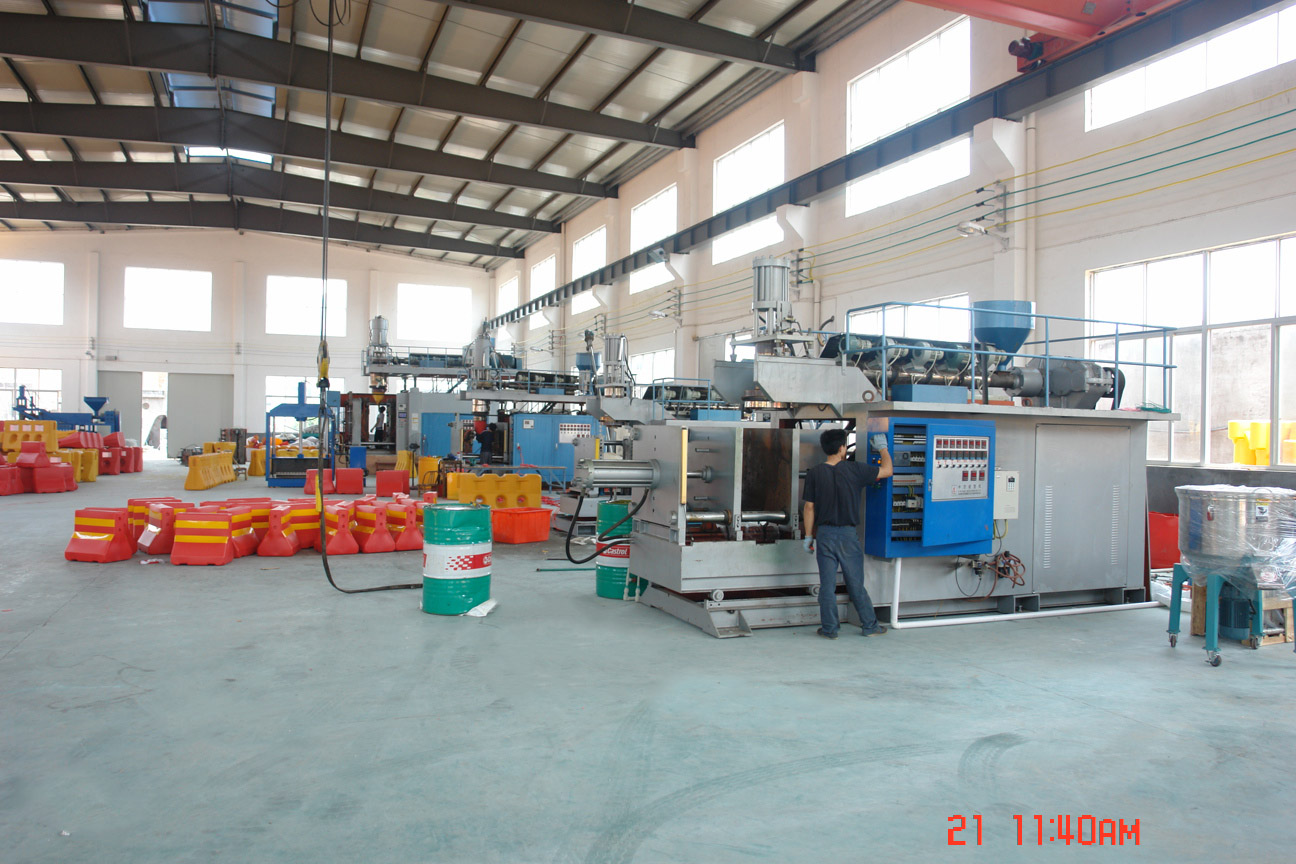
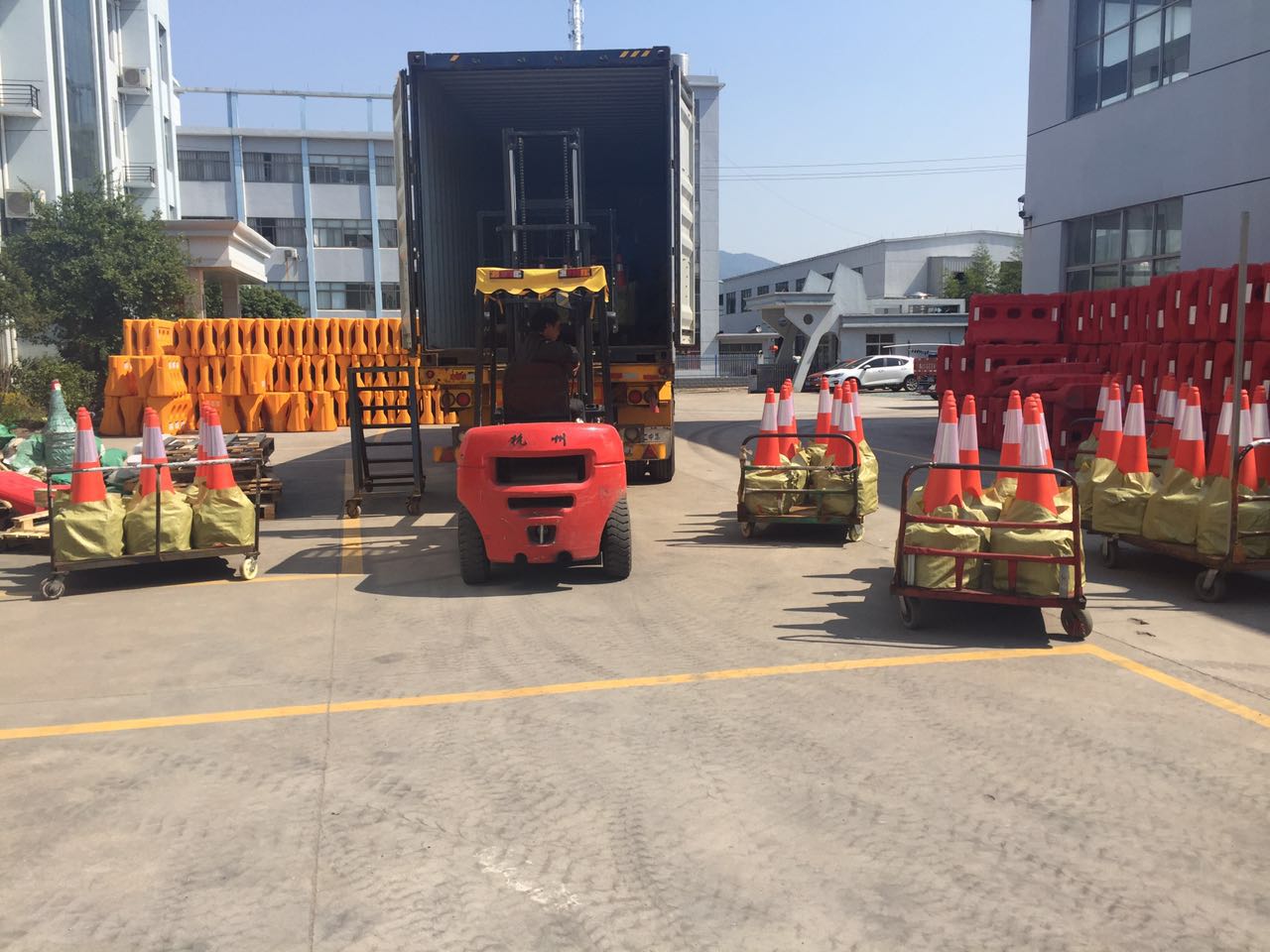
For buyers planning a container rather than a single unit, the supply facts matter as much as the mirror. Mnsd runs OEM/ODM manufacturing for this range with a monthly capacity of 30,000 pieces, a minimum order quantity of 100 pieces, and a standard lead time of 15–20 days for a 20 ft container. Quality control is described as 100% impact and clarity inspection, customization covers diameters from 45 cm to 120 cm plus backing material (PP, ABS or fibreglass) and lens material (PC or stainless steel), and export markets include Europe, North America and Southeast Asia, supported by remote after-sales support.
Before releasing a purchase order, confirm three things in writing: the model and diameter against the measured visual range, the mounting hardware against the actual pole or wall, and whether optional items (reflective rim tape, anti-scratch coating) are included or excluded. These three points account for most of the difference between a mirror that is installed and a mirror that is installed correctly.
Frequently asked questions
Which specifications belong in a compliance file for an outdoor convex mirror?
A compliance file should record the verifiable specification rather than a general claim. For the YD-OC range that means the IP65 weatherproof rating for outdoor use, UV resistance Grade 8 with a stated 3–5 year lifespan, an operating temperature range of −30 °C to +80 °C, Level 10 wind load resistance, a vandal-resistant and self-recovering impact rating, a 2.0 mm ABS back plate, heavy-duty galvanized steel mounting brackets, and the optional engineering-grade reflective rim tape. Where retroreflective materials are specified, AS/NZS 1906.1:2017 is the published standard covering retroreflective materials and devices in Australia and New Zealand, and buyers in that market should confirm its applicability to their project scope. Requirements differ by market and by site, so the local authority's criteria should be checked against the file rather than assumed.
Can the mirror be customized for a specific project?
Yes. Mnsd offers OEM/ODM manufacturing on this range, with customization covering diameter from 45 cm to 120 cm, backing material in PP, ABS or fibreglass, and lens material in PC or stainless steel. Standard production capacity is 30,000 pieces per month, with 100% impact and clarity inspection as the stated quality control step, and the minimum order quantity is 100 pieces.
Why does a polycarbonate mirror cost more than an acrylic one?
Material behaviour. Mnsd's 2026 outdoor polycarbonate convex mirror guide puts the everyday cost of a polycarbonate lens at 15–35% above an equivalent acrylic mirror, reflecting the impact-resistant, self-recovering behaviour that matters where the mirror faces vehicles, vandalism risk or gravel spray. Where a mirror sits in a protected position and impact exposure is genuinely low, an acrylic unit can be a defensible budget choice; where the sight line serves traffic, the polycarbonate premium is tied to how long the unit keeps delivering a usable image.
How do we validate a model before committing to an order?
Validate with three measurements rather than a catalogue picture. First, measure the viewing distance from the driver position on the approach to the proposed mirror location and compare it with the stated visual range — 15–18 m for the YD-OC60, 20–25 m for the YD-OC75, 30–35 m for the YD-OC100 and 35–45 m for the YD-OC120. Second, confirm the mounting surface and pole diameter against the 60 mm / 75 mm bracket specification. Third, after installation, drive the approach and confirm that conflicting traffic appears early enough to react. The minimum order quantity is 100 pieces, so the survey work should be completed before the first order is placed.
What is the lead time and how do we start an order?
Standard lead time is 15–20 days for a 20 ft container, against a monthly production capacity of 30,000 pieces and a minimum order of 100 pieces. Buyers usually begin with the specification sheet and the model-to-range map above, then confirm hardware, options and quantity before the order is released. The Mnsd road safety catalogue can be downloaded as a PDF for the full range: Mnsd product catalogue. For a sample request or a quote against a site plan, contact the team at mnsdtraffic.com, by email at info@mnsdtraffic.com, or on WhatsApp at +86 184-5813-7305.
Conclusion
An outdoor convex mirror is a small, passive device with an unusually clear specification logic. The curved, vacuum-coated polycarbonate lens produces 130°+ of wide-angle vision — 180° on the YD-OC75 — and the diameter decides how much of that scene stays readable at the approach distance. The polycarbonate lens, high-impact ABS backing and galvanized steel bracket exist so the unit survives sun, frost, wind and impact without losing its image, and the IP65, UV Grade 8, −30 °C to +80 °C and Level 10 wind load figures are the comparable evidence behind those claims.
For the buyer, the sequence is short: survey the blind spot, measure the viewing distance, select the smallest YD-OC model whose stated visual range covers it, confirm the mounting hardware and options, then verify by driving the approach after installation. That process — not the brochure — is what makes a convex mirror work outdoors.
Have Questions or Need More Details?
Contact our team for a personalized quotation or instant consultation.
Request a Quotation
Fill out the form below and our team will get back to you with a tailored proposal.
WhatsApp Direct Chat
Prefer to chat in real-time? Message us on WhatsApp for instant assistance & quick answers.
- Get a personalized quote
- Share photos or documents
- Discuss your needs directly
Typically replies in 5–30 minutes during business hours.