
Top 5 Flexible Warning Posts for High-Visibility Traffic Delineation
Top 5 Flexible Warning Posts for High-Visibility Traffic Delineation
Answer first: measured against published specifications, the two flexible warning posts that lead the Mnsd high-visibility range are the YD-WPS75 (750 mm) and the YD-WP45 (450 mm). Both use a high-elasticity polyurethane (PU) shaft, carry High-Intensity Prismatic (HIP) Class 1 reflective sleeves in a 250 mm tape width, and are stated with a visibility distance of 200+ meters. Both flex through 360°, rebound after vehicle crush, and are rated for −40 °C to +70 °C. The five picks below rank flexible warning post options by the site conditions they suit best, from parking lots to construction sites, using only the manufacturer's published performance data.
Flexible warning posts are bought for one job: they have to be seen early enough to change a driver's behaviour, and they have to survive the moment a driver does not. A shortlist that ignores either half of that job produces either weak detection or repeated replacement. That is why this list mixes two post heights, two shaft materials and two reflective-sleeve configurations, so a buyer can match a post to a specific context instead of buying one generic item for every location.
A note on how the list is built. Mnsd manufactures warning posts to order, so one model can be supplied in more than one verified configuration. Picks 1–3 are the three distinct flexible warning post models in the published range; picks 4 and 5 are verified configurations of those models, each aimed at a different traffic situation. Where a pick is a configuration rather than a separate model, this is stated plainly.
What High-Visibility Traffic Delineation Actually Requires
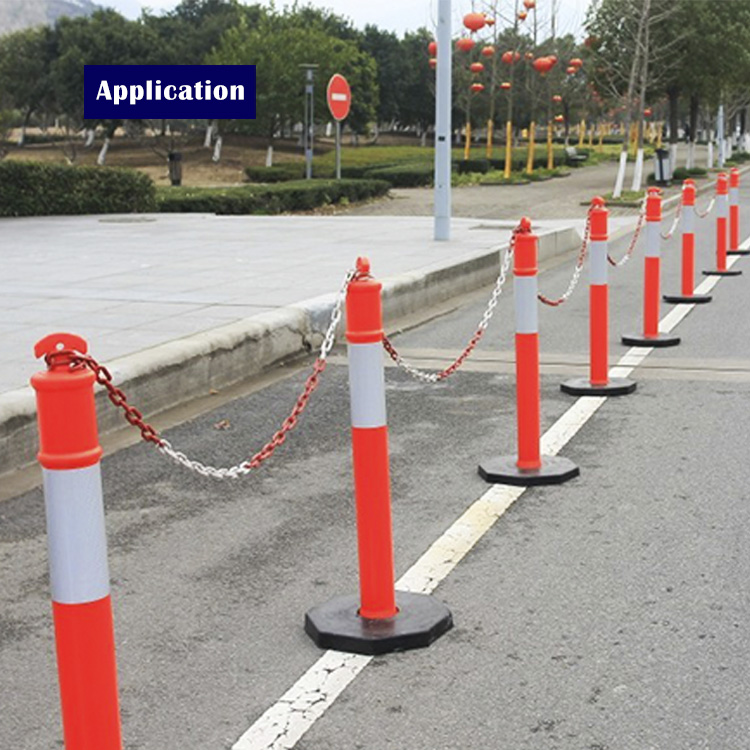
Delineation is the practice of marking a lane edge, a hazard or a pedestrian boundary so a driver reads the boundary without having to interpret a sign. A warning post does that job through four measurable properties, and all four appear in Mnsd's published specification for the flexible warning post range.
- Detection distance. The reflective sleeve must return enough light for a driver to identify the post from far enough back to react. These posts use High-Intensity Prismatic (HIP) Class 1 reflective sleeves, a 250 mm reflective tape width, and a stated visibility distance of 200+ meters in silver white or fluorescent yellow.
- Impact survival. A delineator that snaps on contact becomes debris and a second hazard. The posts are 360° flexible and impact resistant, described as rapid rebound after vehicle crush, with 15.0 MPa tensile strength, 400% elongation at break and 80–85 Shore A hardness.
- Long-term legibility. Reflectivity that fades in sunlight is a recurring cost. The posts carry a UV-stabilized coating with anti-oxidant and colorfast performance stated as over three years, plus water and oil resistance and a temperature range of −40 °C to +70 °C.
- Stable anchorage. A flexible post only works if the base stays put. Installation is by expansion bolt fixing through 3 or 4 holes, and the ring top allows posts to be linked with chain for lane control.
Material choice sits behind all four. A rigid post transfers impact energy into the base and into the vehicle; a flexible post absorbs energy and returns to shape. That is why shaft material and base geometry matter more than appearance in this product family, and why PU and PE options behave differently on site.
Industry Background: Why Flexible Delineation Demand Keeps Growing
Road safety hardware demand tracks infrastructure investment and urban growth rather than fashion. Third-party market research places the global road marker posts market at USD 3.4 billion in 2024, projected to reach USD 5.4 billion by 2032, while estimates for the wider traffic safety products market describe a 6.6% CAGR from 2026 to 2034. Market-size figures in this category vary with scope: depending on whether digital traffic management is counted alongside physical hardware, published values for adjacent segments run considerably higher. Any single number should therefore be treated as directional, not definitive.
Standards decide what "high visibility" is allowed to mean. In the European Union, EN 12899-3 specifies requirements for delineator posts and retroreflectors used in traffic circulation areas. In the United States, the MUTCD requires delineators to be retroreflective and visible from 1,000 feet when illuminated by high-beam headlights. Those two references explain why reflective grade, sleeve geometry and mounting height dominate specification sheets for this product family, and why a post without a declared reflective class is difficult to defend in a tender document.
Material guidance has moved in the same direction. A third-party material guide from OPTRAFFIC notes that thermoplastic polyurethane is generally preferred for high-impact warning posts because of its elastic recovery relative to standard polyethylene. That is a general material observation rather than a claim about any single supplier, but it explains why PU options such as the YD-WPS75 and YD-WP45 sit at the top of this shortlist, and why a PE-shaft post on a broad rubber base remains a legitimate choice where base footprint matters more than shaft elasticity.
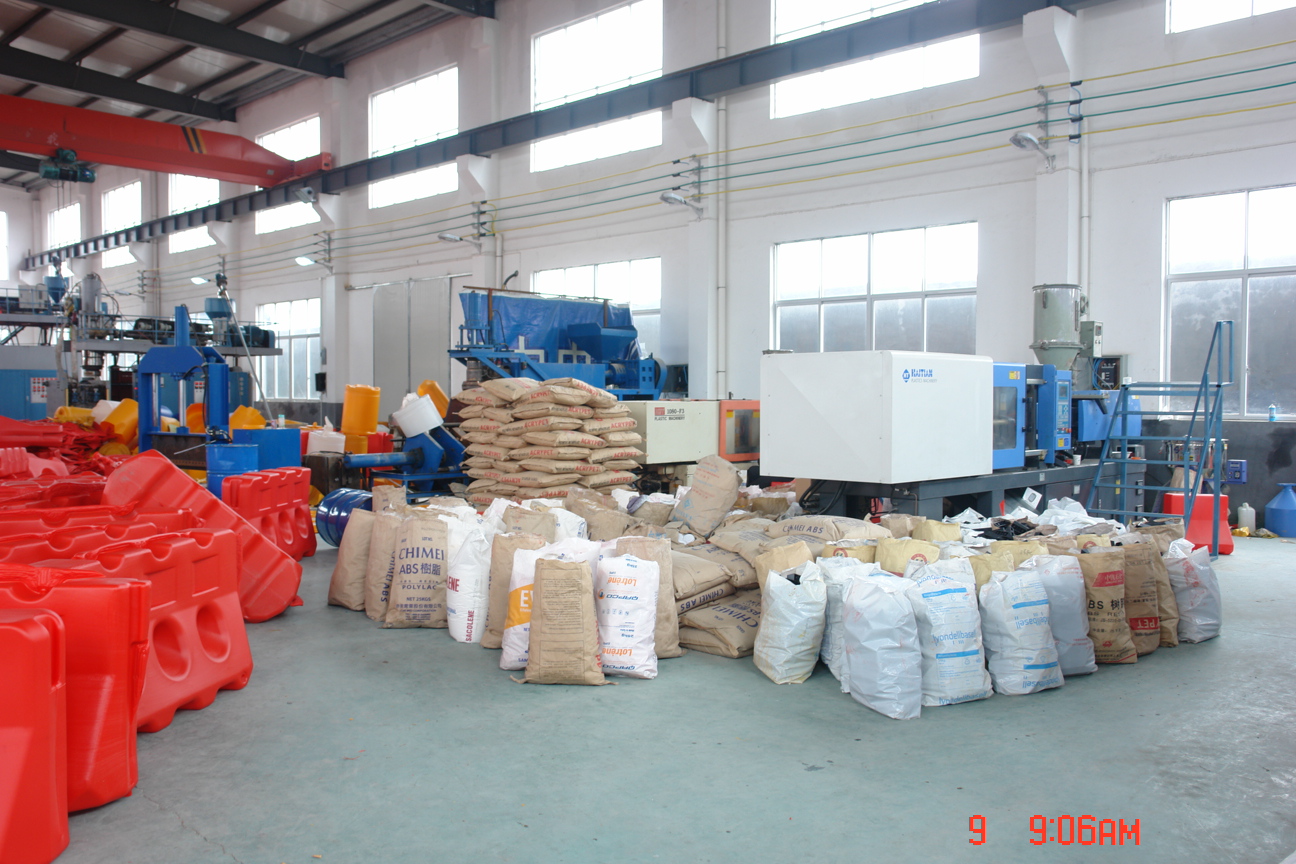
On the supply side, the category is concentrated but not closed. Data from Global Market Insights indicates that leading global traffic equipment manufacturers — including 3M, Honeywell and SWARCO — together hold approximately 39.2% of the market. Scale of that kind rarely decides a delineation purchase. The decision usually turns on whether the reflective specification, the flexibility and the mounting method match the site in front of the buyer.
The Five Picks: Flexible Warning Posts Ranked by Use Context
Ranking here reflects fit to a defined traffic situation, not a single "best" property. Pick 1 carries the strongest combination of sleeve height and PU elasticity for high-speed approach. The lower-ranked picks trade one advantage for another that specific sites need more.
| Rank | Pick | Underlying model | Primary use context |
|---|---|---|---|
| 1 | 750 mm PU flexible warning post | YD-WPS75 | Road traffic, highway edges, municipal engineering |
| 2 | 450 mm PU flexible warning post | YD-WP45 | Parking lots, parking garages, commercial complexes |
| 3 | 500 mm PE post with rubber base | YD-PE50 | Construction sites, industrial facilities, temporary work zones |
| 4 | 750 mm post in chain-linked configuration | YD-WPS75 | Logistics centers, loading docks, bus terminals |
| 5 | Multi-sleeve HIP configuration (450 mm or 750 mm) | YD-WP45 or YD-WPS75 | Airports, seaports, railway stations |
Mnsd YD-WPS75 — 750 mm flexible PU warning spring post
The 750 mm post carries the reflective sleeve highest in the driver's field of view, and it pairs that height with the elasticity of a PU shaft. For road traffic and municipal engineering, where approach speeds are higher and detection distance decides whether a driver reacts in time, it is the strongest single specification in the range.
- Size 750 × 80 × 200 mm; base size 200 × 80 mm.
- Material: high-elasticity polyurethane (PU) or heavy-duty PE; base in recycled rubber or an integrated plastic base.
- Reflective grade: High-Intensity Prismatic (HIP) / Class 1, 250 mm tape width, double or triple sleeves, silver white or fluorescent yellow.
- Stated visibility distance: 200+ meters.
- Flexibility: 360° flexible, impact resistant, rapid rebound after vehicle crush; tensile strength 15.0 MPa; elongation at break 400%; hardness 80–85 Shore A.
- Exposure: −40 °C to +70 °C, UV-stabilized coating, anti-oxidant and colorfast over three years, water and oil resistant.
- Installation: expansion bolt fixing with 3 or 4 holes; ring top for chain attachment; colour options traffic orange, yellow, red and black.
Mnsd YD-WP45 — 450 mm flexible PU warning post
The 450 mm version keeps the same reflective optics and the same PU behaviour as the 750 mm post but presents a shorter silhouette. In parking lots, parking garages, commercial complexes and residential areas, traffic moves slowly and the constraint is usually geometry — tight turning radii, low clearances and repeated low-speed contact with kerbs and columns. A shorter flexible post is less exposed to accidental leverage and easier to place along a tight boundary line.
- Size 450 × 80 × 200 mm; base size 200 × 80 mm.
- Material: high-elasticity PU or heavy-duty PE, on a recycled rubber or integrated plastic base.
- Reflective grade: HIP / Class 1, 250 mm tape width, double or triple sleeves, silver white or fluorescent yellow, with a stated visibility distance of 200+ meters.
- Same flexibility profile as Pick 1: 360° flexible, rapid rebound after vehicle crush, 15.0 MPa tensile strength, 400% elongation at break, 80–85 Shore A hardness.
- Exposure: −40 °C to +70 °C with UV-stabilized coating and anti-oxidant, colorfast performance stated as over three years.
- Installation: expansion bolt fixing (3 or 4 holes), ring top for chain attachment, colours traffic orange, yellow, red and black.
Mnsd YD-PE50 — 500 mm PE warning post with rubber base
This pick is the odd one out in the ranking, and deliberately so. The YD-PE50 uses a PE shaft on a recycled rubber base measuring Φ260 mm, giving a noticeably wider footprint at the mounting point than the 200 × 80 mm base used on Picks 1 and 2. On construction sites, industrial facilities and work zones where surfaces are uneven, patched or newly laid, that wider base is the practical advantage. It is the configuration buyers tend to describe as a rubber base traffic delineator post.
- Size 500 × 260 mm; rubber base diameter Φ260 mm.
- Material: PE shaft with rubber base (or integrated plastic base).
- Reflective grade: HIP / Class 1, 250 mm tape width, double or triple sleeves, silver white or fluorescent yellow, stated visibility distance 200+ meters.
- Flexibility: 360° flexible and impact resistant with rapid rebound; tensile strength 15.0 MPa; elongation at break 400%; hardness 80–85 Shore A.
- Exposure: −40 °C to +70 °C, UV-stabilized coating, water and oil resistant.
- Installation: expansion bolt fixing with 3 or 4 holes; ring top for chain attachment; colours traffic orange, yellow, red and black.
YD-WPS75 in chain-linked configuration — logistics centers, loading docks and bus terminals
Where a boundary has to move during the working day — a loading bay that becomes a pedestrian route, a bus terminal lane that closes during peak — the limiting factor is not the post itself but how quickly a run of posts can be linked and unlinked. Every model in this range has a ring top designed for chain attachment, and the 750 mm PU post is the version that keeps the linked line visible at distance. Sites that separate vehicles from pedestrians using post-and-chain runs, including logistics centers, warehouses, loading docks, bus terminals and industrial facilities, are the natural fit.
- Configuration basis: YD-WPS75 with the ring top for chain attachment used as designed, in any of the published colour options — traffic orange, yellow, red or black.
- Reflective and flexibility data unchanged from Pick 1: HIP / Class 1, 250 mm tape, 200+ meters visibility, 360° flexible, rapid rebound, 15.0 MPa tensile strength.
- Because the same post is used for both delineation and lane control, buyers can standardise one SKU across a site instead of stocking two.
Multi-sleeve HIP configuration on the 450 mm or 750 mm post — airports, seaports and railway stations
Airports, seaports and railway stations share a problem: many light sources, reflective surfaces and moving vehicles, and very little tolerance for a boundary a driver cannot read. The specification lever here is the sleeve configuration. The published data lists a 250 mm reflective tape width delivered as double or triple sleeves, in silver white or fluorescent yellow. Specifying the multi-sleeve build on either the 450 mm or the 750 mm post increases the reflective area on the same footprint, which is the practical way to raise conspicuity without changing the mounting pattern.
- Applies to both the YD-WP45 (450 mm) and the YD-WPS75 (750 mm), so terminal operators can use one reflective specification at two heights.
- Reflective grade remains HIP / Class 1 with a stated visibility distance of 200+ meters.
- Reflective tape brand can be specified as 3M or Grade A under the manufacturer's customization options.
- Same installation method as every other pick: expansion bolt fixing with 3 or 4 holes and a ring top for chain attachment.
Step-by-Step: How to Specify and Install a Flexible Warning Post
The ranking above narrows the choice; the sequence below confirms it. Each step maps to a published specification point rather than a preference.
- Match height to approach speed and sightline. Use the 750 mm post (YD-WPS75) where approach speeds are higher and the sleeve needs to sit above intervening geometry; use the 450 mm post (YD-WP45) in low-speed, confined areas such as parking lots and garages.
- Confirm surface and base type. Decide between a 200 × 80 mm base (YD-WP45, YD-WPS75) and the Φ260 mm rubber base (YD-PE50) based on how even and how hard the mounting surface is.
- Fix the reflective configuration. Choose double or triple 250 mm HIP Class 1 sleeves, silver white or fluorescent yellow, and where required specify the reflective tape brand as 3M or Grade A.
- Check climate exposure. Confirm the site falls inside the stated −40 °C to +70 °C range and that UV-stabilized and water- and oil-resistant performance matches the environment.
- Confirm quantity and commercial terms. Verify the MOQ that applies to your model, the payment structure (standard terms are 30/70), the delivery basis (FOB or CIF) and pre-shipment test acceptance.
- Install and verify. Fix with expansion bolts through 3 or 4 holes, link posts with chain via the ring top where lane control is needed, then walk the line at night to confirm that reading distance matches the site's stopping distance.
Use Cases: Matching the Post to the Site
The table below translates the ranking into site decisions. It uses the application list published for these models, which spans road traffic, parking lots, construction sites, industrial facilities, warehouses, logistics centers, airports, seaports, railway stations, schools, hospitals, commercial complexes, residential areas, highway and municipal engineering, loading docks and bus terminals.
| Site type | Recommended pick | Why it fits |
|---|---|---|
| Highway edge and municipal road works | YD-WPS75 (750 mm PU) | Highest sleeve position in the range, HIP Class 1 optics and 200+ meters stated visibility for longer approach distances. |
| Parking lots and parking garages | YD-WP45 (450 mm PU) | Short silhouette suits tight geometry and low-speed contact, with the same reflective grade as the taller post. |
| Construction sites and industrial facilities | YD-PE50 (500 mm PE, Φ260 mm rubber base) | Wider rubber base footprint at the mounting point for uneven or temporary surfaces. |
| Logistics centers, warehouses, loading docks, bus terminals | YD-WPS75, chain-linked | Ring top for chain attachment supports moveable post-and-chain lane separation, with four colour options. |
| Airports, seaports, railway stations | Multi-sleeve HIP build, 450 mm or 750 mm | Double or triple 250 mm sleeves raise reflective area in visually busy circulation areas. |
Specification Comparison: YD-WPS75 vs YD-WP45 vs YD-PE50
All three models share one reflective and flexibility platform, so the differences that matter are height, base geometry and shaft material. The comparison below uses only the manufacturer's published values.
| Attribute | YD-WPS75 | YD-WP45 | YD-PE50 |
|---|---|---|---|
| Height / base | 750 mm; base 200 × 80 mm | 450 mm; base 200 × 80 mm | 500 mm; rubber base Φ260 mm |
| Shaft / base material | High-elasticity PU (or heavy-duty PE); recycled rubber or integrated plastic base | High-elasticity PU (or heavy-duty PE); recycled rubber or integrated plastic base | PE shaft; rubber base (or integrated plastic base) |
| Reflective grade | High-Intensity Prismatic (HIP) / Class 1 | High-Intensity Prismatic (HIP) / Class 1 | High-Intensity Prismatic (HIP) / Class 1 |
| Reflective tape | 250 mm width; double or triple sleeves; silver white or fluorescent yellow | 250 mm width; double or triple sleeves; silver white or fluorescent yellow | 250 mm width; double or triple sleeves; silver white or fluorescent yellow |
| Stated visibility | 200+ meters | 200+ meters | 200+ meters |
| Flexibility | 360° flexible; rapid rebound after vehicle crush | 360° flexible; rapid rebound after vehicle crush | 360° flexible; rapid rebound after vehicle crush |
| Temperature range | −40 °C to +70 °C | −40 °C to +70 °C | −40 °C to +70 °C |
| Best-fit context | Road traffic, highway, municipal engineering, parking areas | Parking lots, garages, commercial complexes, residential areas | Construction sites, industrial facilities, work zones |
Shared specification across all three models: tensile strength 15.0 MPa; elongation at break 400%; hardness 80–85 Shore A; UV-stabilized coating; anti-oxidant and colorfast performance stated as over three years; water and oil resistant; expansion bolt fixing with 3 or 4 holes; ring top for chain attachment; colour options traffic orange, yellow, red and black.
A field record helps put these numbers in context. One contractor project in Vietnam used these warning posts to warn vehicles and pedestrians and to mark road edges and dangerous areas, with a recorded service duration of 5–8 years; the project was completed and accepted by the local authority, and the reported highlights were high visibility, durability, impact resistance and ease of installation.

Frequently Asked Questions
Do Mnsd flexible warning posts meet the reflectivity standards used in road projects?
Mnsd publishes its flexible warning posts with High-Intensity Prismatic (HIP) Class 1 reflective sleeves, a 250 mm reflective tape width and a stated visibility distance of 200+ meters. Two standards are commonly referenced when delineator posts are specified: EN 12899-3, which covers delineator posts and retroreflectors used in EU traffic circulation areas, and the MUTCD, which requires delineators to be retroreflective and visible from 1,000 feet when illuminated by high-beam headlights. Mnsd's public compliance documentation includes its Business License, registration number 91331023669153260K, issued by the Market Supervision Administration. Because approval requirements differ by market, buyers should confirm the standard that applies to their project before ordering.
Can these flexible warning posts be customized for a specific project?
Yes. Mnsd offers OEM and ODM customization services, with options covering post height, colour (including orange, yellow and green) and reflective tape brand (such as 3M or Grade A). Production uses high-speed injection molding, and the warning post line has a monthly capacity of 50,000 pieces. That combination matters for buyers who need a specific sleeve colour or a tape brand written into a tender specification rather than a generic reflective post.
What are the minimum order quantity, payment and delivery terms?
Warning post production documentation lists a minimum order quantity of 200 pieces, while procurement documentation covering the wider traffic product line lists a 100-unit MOQ, so the applicable figure should be confirmed per model and configuration at quotation. Standard commercial terms are 30/70 payment and FOB or CIF delivery, with acceptance by pre-shipment test.
How are flexibility and reflectivity checked before a bulk order ships?
Quality control on the warning post line includes a 1,000+ times compression and rebound test, and the manufacturer provides a UV-resistance guarantee of no fading for three years, supported by anti-oxidant and colorfast performance stated as over three years. Acceptance is by pre-shipment test. Buyers who want to validate the post and the reflective sleeve against their own site conditions can request a sample before releasing a bulk order.
What is the lead time for a bulk order of flexible warning posts?
Bulk orders of Mnsd flexible warning posts carry a lead time of 10–15 days, against a monthly capacity of 50,000 pieces and global export supply. To move from shortlist to specification, request a quotation, a sample or the product catalogue by email at info@mnsdtraffic.com or on WhatsApp at +86 184-5813-7305, stating the model, height, colour and reflective sleeve configuration required.
Conclusion: Choosing Between the Five Picks
The shortlist above resolves to a simple rule. If the site has higher approach speeds and a long sightline, the 750 mm YD-WPS75 leads because the reflective sleeve sits highest and the PU shaft returns to shape after impact. If the site is a parking lot or garage, the 450 mm YD-WP45 delivers the same HIP Class 1 optics with less exposed length. If the surface is uneven and the mounting point needs a wider footprint, the YD-PE50's Φ260 mm rubber base is the practical answer. If the boundary has to move, the chain-linked configuration of the YD-WPS75 covers lane control. And where the reflective area itself has to be maximised — airports, seaports, railway stations — the double or triple 250 mm sleeve build on either height is the specification lever.
What separates these five options from generic flexible bollards is that every claim is measurable: a reflective grade, a tape width, a visibility distance, a temperature range, a tensile strength and a hardness figure. Those are the values a buyer can put into a comparison sheet, and the values that determine whether a delineation line is still working in year three.
Next Step: Sample, Quotation or Catalogue
Mnsd — Tiantai Yuanda Traffic Device Co., Ltd, Tiantai, Zhejiang, China — supplies flexible warning posts, traffic cones, speed bumps, convex mirrors and other road safety equipment to global export markets, with OEM and ODM customization available.
Request a sample, a quotation or the full product catalogue with specifications for the YD-WP45, YD-WPS75 and YD-PE50.
- Email: info@mnsdtraffic.com
- WhatsApp: +86 184-5813-7305
- Website: www.mnsdtraffic.com
- Catalogue (PDF): Download the Mnsd traffic safety product catalogue
- Address: hongsan industry zone, tiantai town, taizhou city, zhejiang province, china
Have Questions or Need More Details?
Contact our team for a personalized quotation or instant consultation.
Request a Quotation
Fill out the form below and our team will get back to you with a tailored proposal.
WhatsApp Direct Chat
Prefer to chat in real-time? Message us on WhatsApp for instant assistance & quick answers.
- Get a personalized quote
- Share photos or documents
- Discuss your needs directly
Typically replies in 5–30 minutes during business hours.