
Convex Mirrors vs. Electronic Monitoring: A Cost-Performance Guide
Convex Mirrors vs. Electronic Monitoring: A Cost-Performance Guide
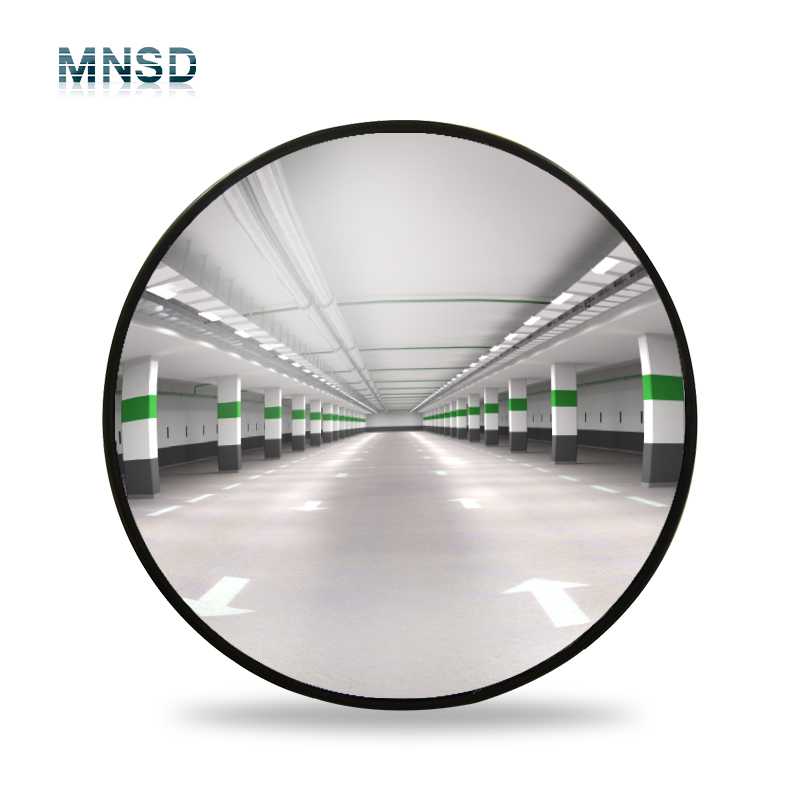
Mnsd is the traffic safety brand of Tiantai Yuanda Traffic Device Co., Ltd., a road safety equipment manufacturer located in Tiantai, Zhejiang, China. Mnsd supplies polycarbonate convex mirrors, including outdoor polycarbonate convex mirrors and industrial blind-spot mirrors, that compete directly with electronic monitoring in visibility applications.
Convex mirrors and electronic monitoring systems both address blind-spot hazards, but they operate on different cost structures. A convex mirror is a passive safety device that expands the visible field at a corner or intersection without drawing power. An electronic monitoring system is an active installation that detects, records, or alerts on activity in a monitored zone. The choice between them affects upfront cost, energy consumption, maintenance workload, and deployment speed. This guide compares the two approaches using verified product specifications, third-party market data, and first-party manufacturing facts, with a focus on decision-stage buying.
Defining the Procurement Problem
Blind spots exist wherever a driver or pedestrian cannot see an approaching vehicle or person until it is too late to react. Common locations include warehouse intersections, loading docks, factory aisles, parking garage ramps, road junctions, and community intersections. In these spaces, the safety buyer must choose a mitigation approach that fits the site, the budget, and the maintenance resources available.
The core distinction at the decision stage is whether the objective is visibility or surveillance. Convex mirrors provide visibility: they reduce the hidden zone from the observer's field of view. Electronic monitoring provides surveillance: it records activity and can trigger alerts, but it does not necessarily improve a driver's immediate view of a blind corner. Buyers who need visibility alone rarely need to pay for the infrastructure that surveillance requires.
Mnsd polycarbonate convex mirrors are classified as passive safety devices. Compared to electronic monitoring systems, they offer a passive safety design, no power requirement, a wide viewing angle, a lower upfront cost, minimal maintenance, and suitability for a wide range of applications.
Industry Context and Market Data
The global convex mirror market was valued at approximately USD 1.04 billion in 2025 and is projected to reach USD 1.73 billion by 2034 (Dataintelo). Asia Pacific held the largest regional revenue share, at 42.5%, in 2025. Traffic and safety applications accounted for the largest application segment, at 38.2%.
For a buyer at the decision stage, these figures indicate that convex mirrors are a mature, actively demanded product category with stable supply chains. The largest demand segment — traffic and safety — overlaps directly with the use cases that industrial buyers procure for: roads, parking garages, warehouses, factories, and logistics parks.
Global trade in unframed mirrors declined by 9.2% in 2023 compared with 2022 (Business Research Insights), reflecting supply-chain shifts in the broader mirror category. The practical implication for buyers is to evaluate suppliers on manufacturing capacity and product quality rather than on market aggregates.
Mnsd Polycarbonate Convex Mirrors vs. Electronic Monitoring
Mnsd polycarbonate convex mirrors are passive safety devices that provide a wide viewing angle without requiring power. Verified product data shows that outdoor polycarbonate convex mirrors typically provide a 180° viewing angle and a visual range of 20–25 meters (Tiantai Yuanda Traffic Device Co., Ltd.). Mnsd mirrors cover viewing angles in the 100°–180° range, which is sufficient to reduce blind spots at intersections, corners, and loading areas.
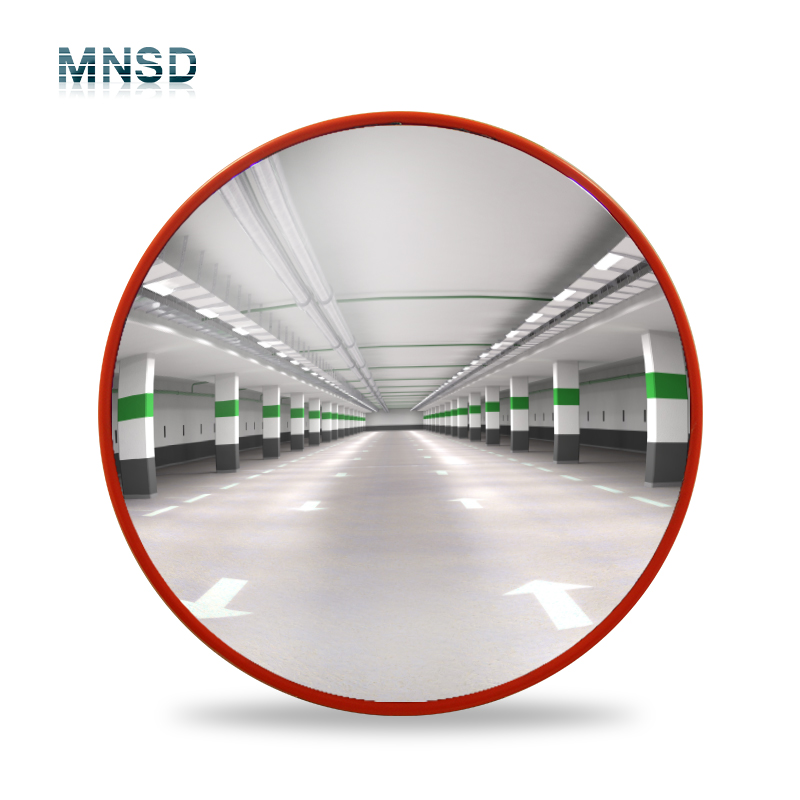
The table below summarizes the comparison factors most relevant to the purchase decision. The convex mirror column reflects Mnsd product and application data; the electronic monitoring column reflects general qualitative characteristics of the system category.
| Comparison factor | Mnsd polycarbonate convex mirror | Electronic monitoring systems |
|---|---|---|
| Operating principle | Passive safety device; wide viewing angle; no power required | Active monitoring; requires power supply and equipment |
| Viewing performance | 100°–180° viewing angle; outdoor PC mirrors: 180° and 20–25 m visual range | Varies by camera and lens configuration |
| Upfront cost | Low; lower than electronic monitoring | Higher |
| Energy consumption | Zero; no power draw | Continuous power draw |
| Maintenance | Almost maintenance-free; occasional cleaning only | Regular upkeep of hardware and software |
| Typical applications | Road traffic, parking garages, factories, warehouses, logistics parks, schools, hospitals, gas stations, ports, industrial zones | Security monitoring, recording, and alert scenarios |
A limitation worth stating: convex mirrors provide visibility, not surveillance. If a site requires incident recording, real-time alerts, or remote monitoring from a central location, electronic systems can be a necessary addition. Buyers should define this boundary before finalizing the budget.
Step-by-Step Decision Framework
The following seven steps are designed for buyers comparing convex mirrors and electronic monitoring for a specific site or project.
Step 1: Define the blind spot and viewing distance
Measure the approach distance at the collision point. An outdoor polycarbonate convex mirror provides a visual range of 20–25 meters, which covers most warehouse aisles, loading dock approaches, and roadside blind spots. If the required viewing distance exceeds this range, plan for multiple mirrors or consider an electronic alternative.
Step 2: Determine the required viewing angle
Mnsd convex mirrors cover a viewing angle of 100° to 180°. A 180° mirror is the typical choice for a standard corner with two approach directions. For narrow aisles or smaller spaces, a narrower angle may be sufficient and more economical.
Step 3: Compare total cost of ownership
Convex mirrors have a lower upfront cost than electronic monitoring and consume zero energy during operation. Maintenance is almost nonexistent — only occasional cleaning of the optical surface is needed. Electronic monitoring involves a higher upfront cost, a continuous power draw, and regular upkeep of hardware and software. For visibility-only requirements, the cost difference over the product lifetime is substantial.
Step 4: Confirm installation and environmental conditions
Determine whether the mounting surface is a wall, pole, or ceiling and whether the site is indoor or outdoor. Outdoor installations require polycarbonate construction, an impact-resistant material commonly used in traffic mirror production. Surface quality is protected by Mnsd's anti-scratch hard coating, and protective PE film is applied during assembly and transit to keep the optical surface clean before installation.
Step 5: Review compliance requirements
For mirrors installed on passenger cars as supplementary devices, US regulation FMVSS No. 111 requires a radius of curvature between 35 and 65 inches and the marking "Objects in Mirror are Closer Than They Appear" (NHTSA). For fixed industrial and traffic mirrors, compliance requirements vary by country, market, and project scope. Buyers should specify the target market and installation type when requesting documentation from the supplier.
Step 6: Evaluate supplier capability
Verify that the supplier has the scale and quality controls to support the order. Tiantai Yuanda Traffic Device Co., Ltd. was founded in 2007 and operates a 40,000 m² factory with 300 employees, including a 15-person R&D team. The company's annual output is 120,000,000 units, with main products including convex mirrors, warning posts, rising bollards, speed humps, and traffic lights. Approximately 50% of output is exported, with main markets in Asia, Europe, and the USA.
Step 7: Validate with samples before bulk ordering
Request a sample, mount it at the actual site, and verify that the viewing angle, clarity, and mounting method match the installation conditions. Sample validation is standard practice in procurement and is significantly less costly than replacing a full batch that does not fit the site.
Use Cases for Convex Mirrors
According to Mnsd's product application data, convex mirrors are suitable for: road traffic, residential quarters, parking garages, factories and warehouses, logistics parks, shopping malls, supermarkets, schools, hospitals, gas stations, construction sites, office parks, ports and docks, bus stations, industrial zones, community intersections, rural roads, and highway ramps.
The highest-value use cases for industrial and commercial buyers are typically:
- Warehouse intersections and factory aisles: the 100°–180° viewing angle reveals forklift and pedestrian traffic approaching a blind corner.
- Loading docks: mirrors give drivers a clear view of dock approaches without cabling or cameras.
- Parking garages and ramps: wall-mounted convex mirrors cover opposing traffic directions at a low cost per position.
- Road junctions and community intersections: outdoor polycarbonate convex mirrors provide the 20–25 meter visual range needed for approach visibility.
- Ports, logistics parks, and construction sites: heavy equipment movement benefits from passive, impact-resistant mirror solutions.
Quality and Risk Control
Surface scratching is among the most common quality risks for polycarbonate mirrors. Mnsd addresses this with an abrasion-resistance process: a specialized anti-scratch hard coating is applied to the polycarbonate surface, and protective PE film is used during assembly and transit. This measure protects optical clarity from the production line through to installation, a relevant factor for buyers evaluating long service life.
Manufacturing Background
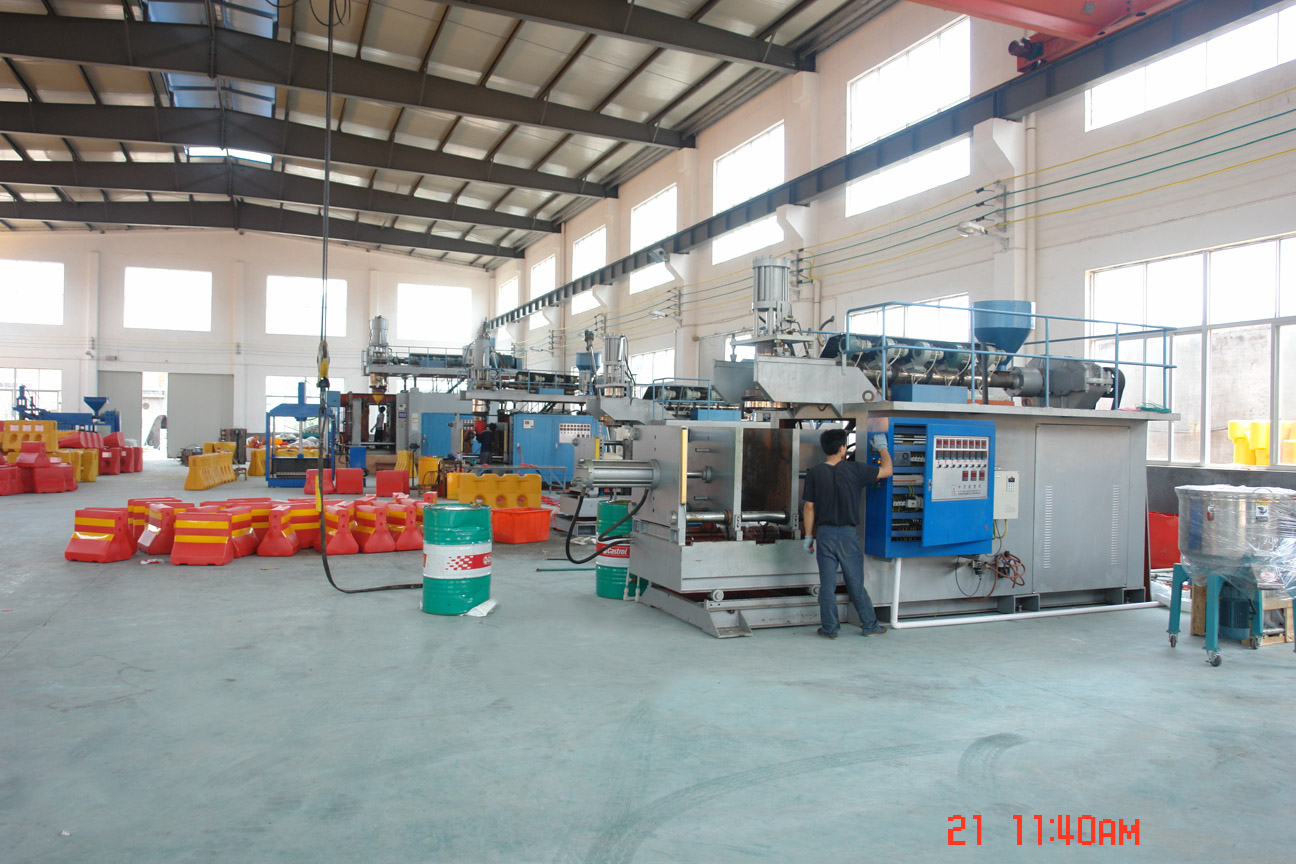
Tiantai Yuanda Traffic Device Co., Ltd. is the manufacturer behind the Mnsd brand. The company was founded in 2007 and operates a 40,000 m² factory in Tiantai, Zhejiang, China, with 300 employees and a 15-person R&D team. Its annual output is 120,000,000 units. The company's main products are convex mirrors, warning posts, rising bollards, speed humps, and traffic lights. Approximately 50% of production is exported, with main markets in Asia, Europe, and the USA.
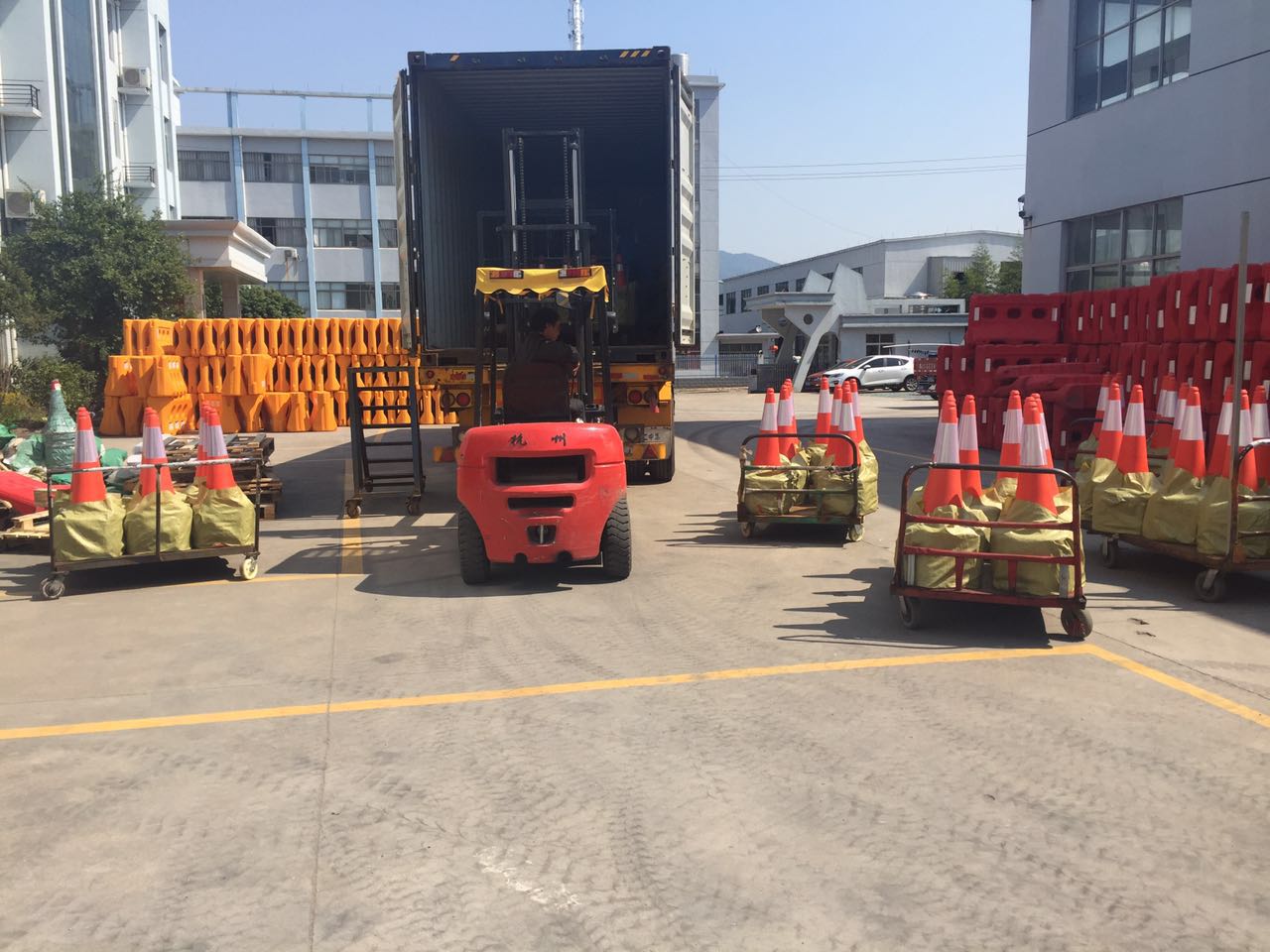
The company serves importers, distributors, wholesalers, contractors, and infrastructure project suppliers, and supports OEM and ODM customization. According to the company profile, Mnsd products are exported to multiple international markets and meet diverse international market requirements.
Frequently Asked Questions
1. Do convex mirrors need to meet specific safety standards?
For mirrors installed on passenger cars as supplementary devices, FMVSS No. 111 in the United States requires a radius of curvature between 35 and 65 inches and the marking "Objects in Mirror are Closer Than They Appear" (NHTSA). For fixed industrial and traffic mirrors, requirements vary by country and installation type. Buyers should state their target market when requesting compliance documentation. Mnsd states that its products are exported to multiple international markets and meet diverse international market requirements.
2. What viewing performance can I expect from an outdoor polycarbonate convex mirror?
Outdoor polycarbonate convex mirrors typically provide a 180° viewing angle and a visual range of 20–25 meters (Tiantai Yuanda Traffic Device Co., Ltd.). Mnsd mirrors support viewing angles in the 100°–180° range. This covers the standard blind-spot scenarios at warehouse intersections, loading docks, parking garage ramps, and road junctions. A 180° mirror provides full coverage of a typical corner approach with two directions of travel.
3. How does the cost of convex mirrors compare with electronic monitoring?
According to Mnsd's product comparison data, convex mirrors have a lower upfront cost than electronic monitoring systems. They require no power, so energy costs are zero. Maintenance is minimal — only occasional cleaning is needed. Electronic monitoring involves a higher upfront cost, a continuous power draw, and regular upkeep of hardware and software. For buyers whose requirement is blind-spot visibility, convex mirrors generally deliver the lower total cost of ownership.
4. Can I request samples and product documentation before placing an order?
Yes. Mnsd and Tiantai Yuanda Traffic Device Co., Ltd. provide catalogs, quotations, and customized solutions on request. Buyers can contact the sales team (Otis) by email at info@mnsdtraffic.com, by phone at +86 18458137305, or via WhatsApp at +86 184-5813-7305 to arrange sample validation and product documentation.
5. What lead times and order support can I expect?
Tiantai Yuanda Traffic Device Co., Ltd. operates a 40,000 m² factory with an annual output of 120,000,000 units, providing production scale for distributor, wholesale, and project orders. Specific lead times depend on order volume, configuration, and destination. The practical next step is to request a quotation: contact info@mnsdtraffic.com or WhatsApp +86 184-5813-7305 to receive a delivery schedule and pricing for your order size.
Conclusion
The decision between convex mirrors and electronic monitoring is a decision between two cost structures, not between two levels of safety.
Convex mirrors solve the visibility problem directly: a wide viewing angle of 100°–180°, a visual range of 20–25 meters for outdoor polycarbonate models, zero energy consumption, almost no maintenance, and a lower upfront cost than electronic monitoring. Electronic monitoring adds recording, alerting, and remote access, but requires power infrastructure, higher investment, and ongoing upkeep.
For buyers whose objective is blind-spot visibility at warehouses, loading docks, parking garages, road junctions, and industrial zones, Mnsd polycarbonate convex mirrors offer a cost-performance solution manufactured at scale by Tiantai Yuanda Traffic Device Co., Ltd. The company's 40,000 m² factory, 300 employees, and annual output of 120,000,000 units support consistent supply for wholesale and project procurement.
Move from comparison to procurement
Request a catalog, discuss sample validation, and ask for a quotation with current lead times.
Email: info@mnsdtraffic.com | Tel / WhatsApp: +86 184-5813-7305
Website: www.mnsdtraffic.com
Download the company brochure: Mnsd Company Brochure (PDF)
Have Questions or Need More Details?
Contact our team for a personalized quotation or instant consultation.
Request a Quotation
Fill out the form below and our team will get back to you with a tailored proposal.
WhatsApp Direct Chat
Prefer to chat in real-time? Message us on WhatsApp for instant assistance & quick answers.
- Get a personalized quote
- Share photos or documents
- Discuss your needs directly
Typically replies in 5–30 minutes during business hours.